
This guest post was written by Nathan of Kambu Campers, our tour services partner. Kambu Campers is a Tourism Regulatory Authority (TRA) licensed tour operator authorized to operate safaris across Kenya, including Nairobi National Park, and is among the partners we have engaged to offer tour services.
At Kambu Campers, and in line with the mission of NairobiPark.org, our approach to tourism is grounded in conservation, sustainability, and ethical responsibility. We aim to create travel experiences that protect natural ecosystems, respect local communities, and contribute fair value to Kenya’s tourism sector. For this reason, we do not organize or promote slum tours in Nairobi, including visits to Kibera.
I’ll explain.
I’ll explain why. This is not a superficial branding decision; it reflects a considered position shaped by research on poverty tourism, development ethics, postcolonial critique, and sustainable travel frameworks. When examined critically, slum tourism raises significant moral, social, and structural concerns that are difficult to reconcile with our principles as a conservation-oriented organization.
Our First Request for a Slum Tour
When we first received an email request asking whether we could arrange a tour of Kibera, we replied – politely and directly – that we do not offer such tours. The prospective visitor responded by noting that figures such as Barack Obama, Hillary Clinton, and Ban Ki-moon have visited Kibera, and asked, in effect, whether it could really be problematic if such high-profile individuals had gone there. The implicit argument was simple: would Obama have visited if it were morally questionable?
With respect, public figures are not the benchmark for ethical judgment. Their visits are shaped by diplomacy, politics, advocacy, media optics, and security considerations – not by the same moral framework that should guide tourism, especially when it involves extreme poverty and human vulnerability. The fact that a famous or powerful person has been somewhere does not, on its own, confer ethical legitimacy on turning that place into a tourist experience.
When we reflected seriously on why someone might consider a “slum tour” a good idea, the reality of what such tours entail became impossible to ignore.
About Kibera Slums
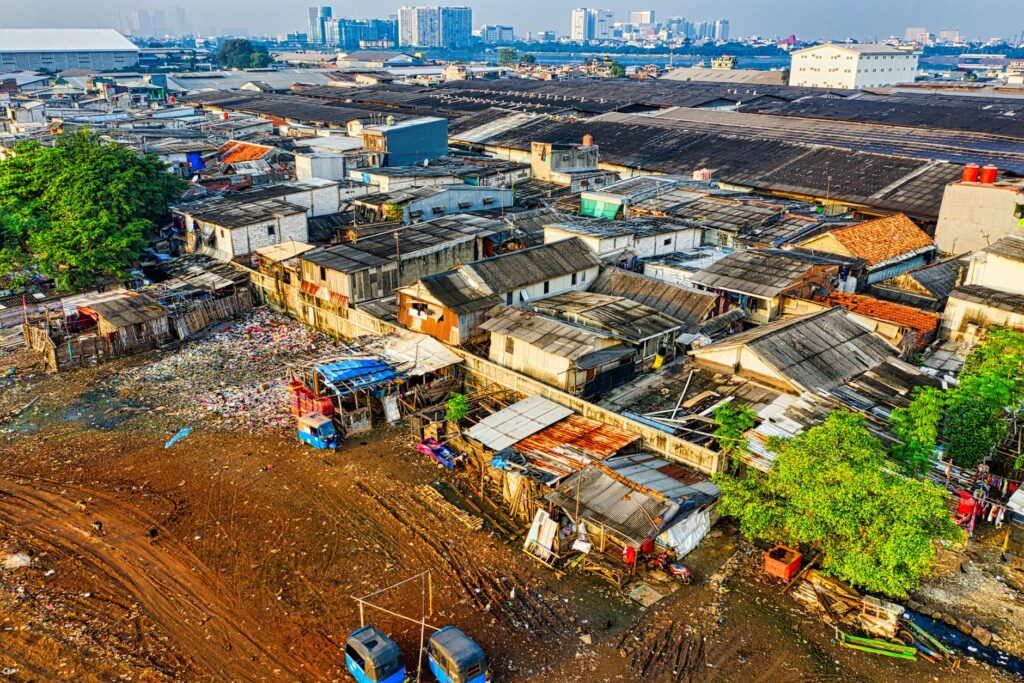
Kibera is a place where many residents live on less than 2 dollars a day. Large areas lack reliable access to clean water and sanitation. Open sewers run alongside footpaths. Roads are often unfinished, dusty, and strewn with waste. Many homes are built from mud, timber, or rusted iron sheets, offering minimal protection from weather, illness, or insecurity. This is not a backdrop; it is people’s daily life.
- Population uncertainty and poverty: Kibera is widely described as one of Africa’s largest informal settlements, with estimates ranging from ~170,000 (2009 census) to potentially 500,000–1,000,000+ residents; many live on very low incomes, often below $2 per day.
- Severe sanitation and waste challenges: More than 85% of mapped solid waste locations in the settlement are in dilapidated states, reflecting chronic waste management and hygiene deficits.
- Sanitation constraints can be extreme. A World Bank/UNDP rapid needs assessment found reports of up to ~150 people sharing a single pit latrine.
- It also documented “flying toilets” (polythene-bag disposal) as a coping strategy—reported by a majority of focus groups, especially at night when using outside latrines can feel unsafe. See more on this World Bank Report.
- Infrastructure failures are not rare edge cases. Research on upgrading and service delivery in Kibera has documented major functionality gaps – for example, one study notes that ~75% of ablution blocks connected to a sewer line were not functioning at the time of writing, with flooding/blockages contributing to failures.
- Limited access to basic services: Urban slum residents including those in Kibera face significant constraints in clean water, sanitation, housing, employment, nutrition and hygiene services.
- Water and sanitation accessibility gaps: Quantitative spatial research found that ≈77% of Kibera residents had limited access to adequate water and sanitation facilities, with only a small minority able to reach multiple options within a short distance—conditions that hinder basic hygiene practices.
- Water access is not just scarce—it can be structurally expensive and time-costly. The same assessment reported that the unit price paid by Kibera residents for water can be ~10× higher than what is paid in middle/high-income areas of Nairobi, with retail prices per 18-litre jerrican rising sharply during shortages—and queuing times during acute shortages reported as up to ~4 hours as per this Report by World Bank-UNDP
- High disease burden linked to poor WASH: Slum settings in Nairobi, including Kibera, show some of the highest prevalence of diarrhoeal disease (≈18.7–25.6%) among children under five due to inadequate water and sanitation. Read more on from this Research on diarrhoeal disease prevalence in Kibera.
- Child health inequities: Studies of under-five mortality in Nairobi’s informal settlements have documented mortality rates far exceeding those in higher-income contexts, and health risks such as chronic malnutrition and disease are persistent.
The ethical question, then, is not whether famous people have visited, but whether it is right to package these conditions as an “experience” for outsiders to observe. Poverty is not a spectacle. Human suffering is not a product. Turning extreme deprivation into a point of curiosity risks reducing real lives to scenery, and real communities to objects of consumption. It shifts the focus from dignity, rights, and long-term solutions to momentary observation and emotional tourism.
This question sent Sarah and me down a deeper research path into the ethics and real-world impacts of poverty tourism. Below is a summary of our findings, along with resources you can review to explore the range of perspectives and understand why we stand firmly against these tours. We were pleased that NairobiPark.org fully agreed with this position and supported the decision not to list slum tours on the site.
The Academic Critique of Slum Tourism
Slum tourism – sometimes framed as township tourism or reality tours – has been studied extensively in urban sociology and development research. Scholars have described it as a form of “poverty commodification,” where economic hardship becomes a product for consumption.
Three core critiques consistently emerge:
1. Poverty as a Commodity:
Academic literature often frames slum tourism as a power-imbalanced gaze. Visitors enter marginalized communities primarily as observers, not participants. Even when framed as educational, the structural asymmetry remains:
Even when framed as educational, the structural asymmetry remains:
- Visitors leave after a few hours.
- Residents remain in conditions shaped by systemic inequality.
- Poverty becomes a spectacle rather than a policy issue.
This dynamic risks transforming lived hardship into curated narrative. The ethical question is not whether tourists are well-intentioned; it is whether the format itself reinforces unequal power relations.
Read these two studies on Poverty as a Commodity:
- Freire-Medeiros, B. (2013). Touring Poverty. Routledge. Read a short review of the Touring Poverty book here (PDF).
- Frenzel, F. (2016). Slumming It: The Tourist Valorization of Urban Poverty. Zed Books.
2. The Illusion of Awareness Without Structural Change
Proponents often claim slum tours raise awareness. However, sociologist Kevin O’Reilly (2005) cautions that experiential tourism frequently produces what he calls “light-touch engagement”- short-term emotional exposure without systemic commitment.
In summary short-term exposure can generate:
- Temporary empathy
- Photographic documentation
- Social media narratives
But it rarely addresses:
- Urban planning failures
- Infrastructure deficits
- Land tenure insecurity
- Structural poverty drivers
In this sense, the activity risks becoming symbolic rather than transformative.
3. Revenue Distribution and Economic Leakage
While some slum tours claim to benefit local communities, empirical findings show revenue capture is inconsistent. In many cases:
- Tour operators outside the community control bookings.
- Local residents receive limited economic share.
- The activity may increase exposure without improving services.
From a sustainability standpoint, tourism must generate measurable, equitable benefit. Without transparent revenue structures, slum tours struggle to meet responsible travel criteria.
Read this 2012 Study for More: Frenzel, F., Koens, K., & Steinbrink, M. (Eds.). (2012). Slum Tourism: Poverty, Power and Ethics. Routledge.
The Counter-Argument: Why Some Support Slum Tourism
To engage this issue responsibly, it is necessary to consider the other side.
Advocates of slum tourism typically argue:
- It generates income for local guides.
- It provides global exposure to urban inequality.
- It challenges stereotypes by showing resilience and entrepreneurship.
- It encourages philanthropy or volunteer engagement.
On the surface, these arguments appear compelling. However, each has limitations.
Income Generation Argument
Yes, guided tours can create jobs. But job creation alone does not justify an activity if the core product is exposure to vulnerability. Ethical tourism requires not only economic benefit, but dignity-preserving structure.
Moreover, the same economic benefit can often be generated through:
- Skills workshops
- Artisan cooperatives
- Community-led cultural initiatives
- Social enterprise partnerships
Income is not a sufficient ethical defense if the underlying format reinforces structural inequity.
Awareness Argument
Awareness is frequently cited as justification. Yet awareness tourism often simplifies complex socio-economic realities into digestible narratives.
Urban informality is not a spectacle – it is a policy outcome. Turning it into an attraction risks flattening systemic issues into experiential storytelling.
True awareness requires policy literacy, civic engagement, and long-term institutional advocacy – not a two-hour guided walk.
Philanthropy Argument
Some tours claim that visitors donate after witnessing conditions firsthand. However:
- Philanthropy triggered by shock is often short-term.
- It can reinforce dependency models.
- It centers the donor rather than the community.
Development research increasingly emphasizes dignity-centered and agency-driven models rather than externally triggered charity.
Why This Matters for a Conservation Organization
As a platform rooted in the ecosystem of Nairobi National Park, our mission intersects wildlife conservation, land-use ethics, and sustainable development.
Conservation is fundamentally about respecting habitats – human and ecological alike.
We cannot advocate:
- Habitat protection for wildlife
- Anti-poaching ethics
- Community land stewardship
While simultaneously commodifying human vulnerability as an experience.
Sustainable travel requires consistency.
The Ecological Link: Kibera, Ngong Forest, and the Nairobi Ecosystem
Kibera borders the Ngong Forest, which forms part of Nairobi’s broader green infrastructure network.
Ngong Forest is ecologically significant because:
- It contributes to watershed protection.
- It functions as an urban carbon sink.
- It provides habitat connectivity within the greater Nairobi ecosystem.
- It sits within dispersal landscapes that historically linked to the open southern plains associated with Nairobi National Park.
Urban poverty and ecological degradation are structurally intertwined:
- Fuelwood pressure affects forest margins.
- Informal settlements often expand toward ecological buffer zones.
- Infrastructure inequities increase environmental vulnerability.
However, this intersection strengthens – not weakens – the argument against commodified slum tourism.
If conservation and community welfare are linked, then our responsibility is to support:
- Urban greening initiatives
- Environmental education
- Community-led restoration
- Policy advocacy
Not observational tourism centered on deprivation.
Responsible Alternatives in Nairobi
We believe there are far more ethical and intellectually rich ways to understand Nairobi.
1. Downtown Nairobi Walking Tours
A well-designed city walking tour can explore:
- Colonial urban planning legacies
- Informal economic networks
- Civic history
- Post-independence transformation
- Architecture and governance evolution
Such tours provide socio-political context without commodifying hardship.
If you’re interested in tours that aim to make a positive impact—and in being more than just a passive observer—there are far better alternatives than poverty tourism. Consider experiences like the Nai Nami Walking Tour in Nairobi City, which supports local guides and community initiatives.
Although our tours are not as explicitly social-impact-driven as Nai Nami’s, we have also recently launched a CBD Walking Tour and a Driving City Tour that focus on Nairobi’s history, culture, conservation, and the living fabric of the city. These experiences are designed to deepen understanding, support local livelihoods, and engage with Nairobi in a way that respects dignity while still offering meaningful, eye-opening perspectives.
2. Community Partnership Engagement
If visitors are deeply interested in Kibera, a more responsible pathway is:
- Partnering with long-standing community organizations
- Volunteering through structured, vetted programs
- Supporting locally governed social enterprises
- Participating in skill-building workshops rather than observation
Engagement should prioritize reciprocity over spectacle.
If you’re interested in supporting an organization in Kibera that is doing truly impactful work, consider Shining Hope for Communities (SHOFCO), an NGO founded by Kennedy Odede and his wife, Jessica Posner Odede. Kennedy grew up in Kibera and returned after receiving a scholarship in the United States to build an organization focused on education, health, clean water, and community empowerment.
I visited them a few years ago and was genuinely impressed by the depth and impact of their work. You can support them by donating through this link.
3. Conservation-Centered Experiences
For those interested in sustainability and inequality intersections:
- Urban forest conservation visits in Ngong Forest
- Environmental education programs
- Community conservation storytelling
These approaches situate inequality within systems analysis rather than voyeurism.
Read more on ways to get involved in Nairobi Conservation here.
Our Ethical Position
Travel is not neutral. It shapes narratives, redistributes money, and influences global perception.
As a conservation-aligned platform, NairobiPark.org and Kambu Campers cannot in good conscience promote tours that risk:
- Objectifying marginalized communities
- Reinforcing unequal gaze dynamics
- Reducing systemic poverty to consumable experience
We believe tourism should:
- Elevate dignity
- Strengthen ecosystems
- Redistribute value equitably
- Expand understanding without exploitation
Poverty is not a safari.
Responsible travel in Nairobi means engaging with the city’s complexity, culture, conservation, and civic evolution – without turning structural inequality into an attraction.
That is the standard we hold ourselves to.
This article was written by Nathan Rotich, a Nairobi-based conservation-focused tourism practitioner and sustainability advocate. Nathan runs Kambu Campers, a licensed tour operator dedicated to responsible, low-impact safari experiences, and also manages Kambu Mara Camp, an eco-conscious tented camp in the Maasai Mara built around principles of minimal environmental impact and meaningful community integration.
Beyond operations, Nathan and his team run a portfolio of conservation-first digital platforms that promote evidence-based dialogue on wildlife protection, habitat conservation, and ethical tourism in Kenya. These are designed not just as travel resources, but as strategic communication tools for policymakers, conservation stakeholders, researchers, and responsible travelers – aimed at positioning Kenya as a global leader in tourism rooted in sustainability, community dignity, and long-term land stewardship.
Through this integrated model- linking on-the-ground operations with policy-informed advocacy – Nathan promotes a vision of tourism that actively contributes to conservation financing, ecosystem resilience, and ethically grounded travel practice.
You can reach Nathan Rotich on nkyrotich@gmail.com
Core Academic Works on Slum Tourism
- Freire-Medeiros, B. (2013). Touring Poverty. Routledge.
https://www.routledge.com/Touring-Poverty/Freire-Medeiros/p/book/9780415529432 - Frenzel, F. (2016). Slumming It: The Tourist Valorization of Urban Poverty. Zed Books.
https://www.bloomsbury.com/uk/slumming-it-9781783603076/ - Frenzel, F., Koens, K., & Steinbrink, M. (Eds.). (2012). Slum Tourism: Poverty, Power and Ethics. Routledge.
https://www.routledge.com/Slum-Tourism-Poverty-Power-and-Ethics/Frenzel-Koens-Steinbrink/p/book/9780415694932 - Rolfes, M. (2010). Poverty tourism: Theoretical reflections and empirical findings regarding an extraordinary form of tourism. GeoJournal, 75(5).
https://link.springer.com/article/10.1007/s10708-009-9313-8
Tourism, Gaze, and Representation
- Urry, J. (1990). The Tourist Gaze. Sage Publications.
https://uk.sagepub.com/en-gb/eur/the-tourist-gaze/book205841 - O’Reilly, K. (2005). Ethnographic Methods. Routledge.
https://www.routledge.com/Ethnographic-Methods/OReilly/p/book/9780415300611 - Butler, J. (2004). Precarious Life: The Powers of Mourning and Violence. Verso Books.
https://www.versobooks.com/products/1794-precarious-life
Development and Aid Critiques
- Easterly, W. (2006). The White Man’s Burden. Penguin Press.
https://www.penguinrandomhouse.com/books/295249/the-white-mans-burden-by-william-easterly/ - Sachs, J. (2015). The Age of Sustainable Development. Columbia University Press.
https://cup.columbia.edu/book/the-age-of-sustainable-development/9780231173154
Urban Inequality and African Cities
- Myers, G. (2011). African Cities: Alternative Visions of Urban Theory and Practice. Zed Books.
https://www.bloomsbury.com/uk/african-cities-9781848135245/ - Schlosberg, D. (2007). Defining Environmental Justice. Oxford University Press.
https://global.oup.com/academic/product/defining-environmental-justice-9780199286293
Conservation and Urban Ecology Context
- Western, D. (1994). Ecosystem conservation and rural development: The case of Amboseli. Ambio.
https://www.jstor.org/stable/4314234 - Ogutu, J. O., et al. (2013). Wildlife population dynamics in Kenyan ecosystems. PLoS ONE.
https://journals.plos.org/plosone/article?id=10.1371/journal.pone.0055968
Good bonus read: Creative Tourism in Smaller Communities.