Ecological Processes in an Urban-Proximate Semi-Open Savannah System
Nairobi National Park constitutes one of the most ecologically distinctive protected areas globally: a 117 km² tropical savannah ecosystem embedded directly within the metropolitan periphery of Kenya’s capital. Unlike fully enclosed reserves, the park operates as a semi-open dispersal system, historically connected to the Athi–Kapiti plains through its southern boundary. This structural feature fundamentally shapes its animal ecology.
The ecological identity of Nairobi National Park is defined not merely by species presence, but by dynamic processes: predator–prey feedback loops, rainfall-driven primary productivity, seasonal biomass oscillations, fire-mediated vegetation restructuring, density-dependent herbivore regulation, and increasing anthropogenic fragmentation.
To understand animal ecology in this landscape, one must move beyond species lists and examine system-level interactions.
1. Landscape Context and Structural Ecology
Nairobi National Park lies within the East African savannah biome, a grass-dominated ecosystem interspersed with Acacia woodland and riverine corridors. At approximately 1,600–1,800 meters above sea level, the park experiences a highland tropical climate characterized by bimodal rainfall:
- Long rains: March–May
- Short rains: October–December
Annual precipitation variability exerts strong bottom-up ecological control through its influence on primary productivity. In wet years, grass biomass increases substantially, supporting larger herbivore densities and improving juvenile survival rates. In drought years, nutritional stress intensifies interspecific competition and elevates predation vulnerability.
The park’s ecological functioning is therefore climate-sensitive and productivity-limited.
2. Primary Productivity and Herbivore Guild Structure
Grazers: Biomass Conversion and Grassland Regulation
The dominant grazers include:
- Plains zebra Equus quagga
- Blue wildebeest Connochaetes taurinus
- African buffalo Syncerus caffer
- Thomson’s gazelle Eudorcas thomsonii
These species convert primary plant biomass into trophic energy. Grazing pressure is not uniform across the landscape; rather, it is spatially heterogeneous, tracking rainfall gradients, soil fertility zones, and water availability.
Research on East African savannah systems demonstrates that zebra often function as facilitative grazers. By cropping tall grasses, they improve forage accessibility for smaller selective feeders such as gazelles. This interspecific facilitation illustrates niche partitioning and cooperative exploitation of plant resources.
During dry seasons, herbivores concentrate around permanent water sources, increasing localized grazing intensity and elevating parasite transmission risk. Spatial compression also heightens predator encounter probability.
Browsers and Mixed Feeders: Woody Vegetation Dynamics
Browsing species such as:
- Masai giraffe Giraffa camelopardalis tippelskirchi
- Eland Taurotragus oryx
- Impala Aepyceros melampus
regulate woody plant recruitment.
Black rhinoceros Diceros bicornis, for which Nairobi National Park serves as a key sanctuary, exert strong selective browsing pressure on shrub species. In systems where rhino density remains ecologically appropriate, woody encroachment is moderated. In their absence, bush thickening can alter predator visibility and grassland structure.
The interaction between browsing intensity and fire frequency influences long-term savannah structure.
3. Predator–Prey Dynamics and Top-Down Regulation
Apex Carnivores
The park supports a functional carnivore guild:
- Lion Panthera leo
- Leopard Panthera pardus
- Cheetah Acinonyx jubatus
- Spotted hyena Crocuta crocuta
Predator–prey dynamics in Nairobi National Park operate under spatial constraint. Because the park is relatively small, predator home ranges overlap extensively, increasing interspecific competition.
Lions primarily target medium to large ungulates, particularly buffalo and zebra. Cheetahs preferentially hunt gazelles in open plains. Leopards utilize woodland cover to exploit smaller prey.
Predation risk influences herbivore vigilance behavior and habitat selection. Studies in African savannahs show that prey species alter grazing patterns to balance forage quality against predation risk—a phenomenon termed the “landscape of fear.”
Trophic Cascades and Vegetation Feedback
In well-regulated systems, predators limit herbivore overabundance. This stabilizes vegetation biomass and prevents excessive grazing pressure.
If predator density declines:
- Herbivore populations may expand beyond carrying capacity.
- Grass regeneration declines.
- Soil compaction increases.
- Woody plant dynamics shift.
Such trophic cascades are particularly pronounced in small protected areas where dispersal opportunities are limited.
Nairobi National Park’s predator guild therefore performs critical ecosystem regulatory functions.
4. Elephants as Ecosystem Engineers
African elephants Loxodonta africana modify habitat structure through:
- Tree felling
- Bark stripping
- Nutrient redistribution via dung
Elephants create structural heterogeneity by opening woodland patches and facilitating grass growth. However, in spatially constrained reserves, elephant density must be carefully managed to prevent excessive woodland degradation.
In Nairobi National Park, elephant presence contributes to dynamic vegetation mosaics but requires ecological monitoring to maintain equilibrium.
5. Fire Ecology and Grassland Maintenance
Savannah ecosystems evolved with periodic fire regimes.
In Nairobi National Park, controlled burns are occasionally applied to:
- Reduce bush encroachment
- Stimulate nutrient cycling
- Promote palatable grass regrowth
Fire interacts with grazing to maintain grassland dominance. Without fire, woody vegetation may expand, altering predator visibility and herbivore movement patterns.
The ecological interplay between fire frequency, rainfall variability, and herbivore density defines grassland resilience.
6. Seasonal Dispersal and Corridor Ecology
Historically, Nairobi National Park functioned within a broader Athi–Kapiti migratory landscape. The unfenced southern boundary allowed seasonal dispersal, particularly during dry periods.
Dispersal reduces ecological compression by:
- Expanding forage availability
- Reducing density-dependent disease transmission
- Maintaining genetic exchange
Habitat fragmentation in adjacent rangelands threatens corridor functionality. Research on savannah fragmentation indicates that corridor narrowing increases mortality risk and restricts metapopulation resilience.
The semi-open dispersal system remains central to the park’s ecological stability.
7. Habitat Fragmentation and Urban Edge Effects
Urban adjacency introduces ecological pressures:
- Noise disturbance
- Light pollution
- Barrier infrastructure
- Human-wildlife conflict
Infrastructure such as the Standard Gauge Railway and Nairobi Expressway create landscape segmentation. Although mitigation measures—such as elevated sections—reduce direct mortality, behavioral displacement may still occur.
Edge effects alter species composition near park boundaries. Smaller mammals and certain predator species exhibit avoidance behavior in high-disturbance zones.
Nairobi National Park thus exemplifies an urban-edge ecological system under anthropogenic influence.
8. Carrying Capacity and Density Regulation
Carrying capacity in Nairobi National Park is influenced by:
- Annual rainfall
- Grass biomass
- Water distribution
- Predator density
- Corridor connectivity
Because of spatial constraints, wildlife populations occasionally require translocation to maintain ecological balance.
In drought years, forage limitation can reduce reproductive success and increase juvenile mortality.
Ecological monitoring therefore integrates rainfall data, biomass assessments, and predator-prey ratios to inform management decisions.
9. Disease Ecology and Human Interface
Urban-proximate ecosystems face heightened disease risk.
Potential concerns include:
- Livestock-wildlife disease transmission
- Bovine tuberculosis
- Tick-borne pathogens
Compression of wildlife near human settlements can increase pathogen exchange risk. Effective buffer zone management reduces epidemiological spillover.
10. Avian Ecology and Functional Diversity
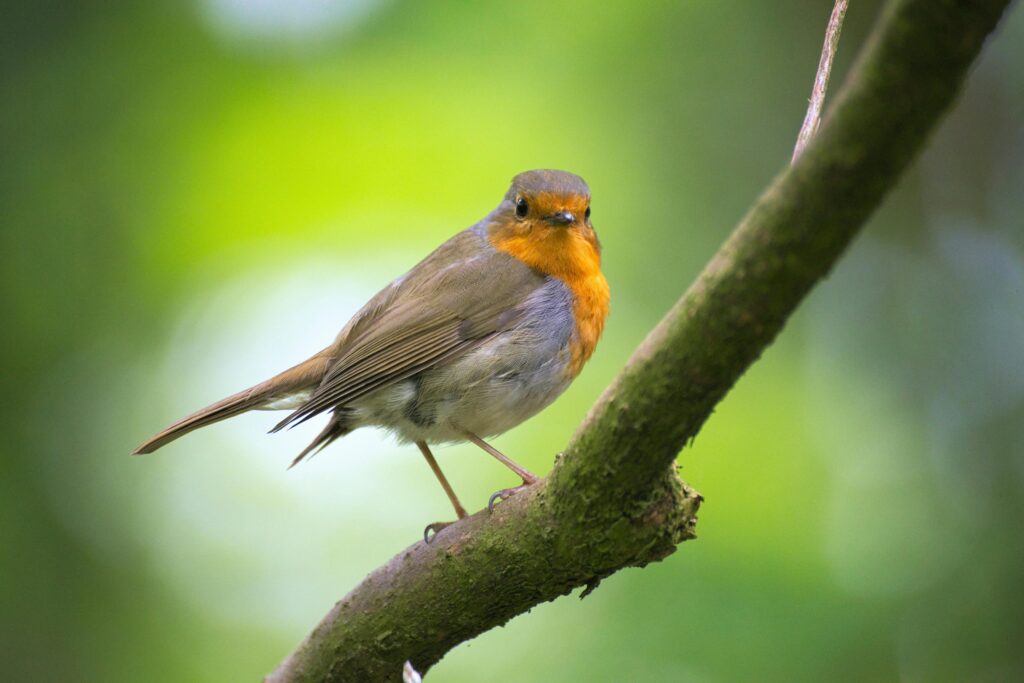
Nairobi National Park hosts over 400 bird species, including:
- Raptors such as martial eagle
- Wetland specialists
- Migratory Palearctic species
Birds provide ecological services:
- Insect population control
- Pollination
- Seed dispersal
Avian diversity enhances ecosystem resilience and indicates hydrological health.
11. Climate Variability and Long-Term Ecological Resilience
Climate change introduces uncertainty in rainfall predictability. Increased variability can:
- Intensify drought cycles
- Alter grass phenology
- Shift predator-prey synchrony
Adaptive management requires integrating climatic modeling with ecological monitoring.
12. Integrated Ecological Identity
Nairobi National Park animal ecology is defined by interacting processes:
Bottom-up forces:
Rainfall variability → Primary productivity → Herbivore biomass
Top-down forces:
Predator regulation → Herbivore density → Vegetation recovery
Disturbance regimes:
Fire → Vegetation restructuring
Anthropogenic modifiers:
Urban expansion → Habitat fragmentation → Corridor restriction
Collectively, these processes define Nairobi National Park as:
An urban-proximate semi-open savannah ecosystem operating under climatic variability, trophic regulation, and increasing landscape constraint.
Conclusion
Nairobi National Park represents a rare ecological experiment: a functional African savannah system persisting within a rapidly expanding metropolitan landscape.
Its animal ecology is neither static nor isolated. It is shaped by predator-prey feedback, seasonal rainfall oscillations, fire regimes, dispersal corridors, and urban edge pressures.
Understanding Nairobi National Park through this systems lens reveals:
A climate-sensitive grassland mosaic
A density-regulated predator guild
A managed rhino sanctuary
A partially connected migratory landscape
An urban-edge conservation frontier
The ecological future of Nairobi National Park depends on maintaining trophic integrity, safeguarding dispersal corridors, regulating carrying capacity, and mitigating fragmentation within the broader Athi–Kapiti ecosystem.
Nairobi National Park Animal Ecology Through a Conservation Economics Lens
Nairobi National Park is not only an urban-proximate savannah ecosystem; it is a natural capital asset embedded within Kenya’s metropolitan economy. Its ecological processes—predator-prey regulation, seasonal biomass dynamics, rainfall-driven productivity, and semi-open dispersal connectivity—generate measurable economic value through tourism revenue, ecosystem services, biodiversity insurance, and international conservation credibility.
Wildlife as Revenue-Generating Biological Capital
Iconic species such as the black rhinoceros (Diceros bicornis), lion (Panthera leo), and African elephant (Loxodonta africana) function as high-value biological assets. Tourism demand is strongly influenced by the probability of sighting these species, meaning predator-prey stability directly affects revenue elasticity. A decline in apex predators or megaherbivores would not only alter trophic balance but also reduce visitor satisfaction and economic returns.
Predator–Prey Dynamics as Cost Avoidance Mechanism
Lions and hyenas regulate herbivore densities, preventing overgrazing, vegetation degradation, and soil erosion. In economic terms, predators provide unpaid ecological regulation that reduces future rehabilitation, translocation, and habitat restoration costs. Trophic integrity therefore represents fiscal efficiency.
Carrying Capacity and Management Efficiency
Because Nairobi National Park is spatially constrained, herbivore populations must remain within rainfall-determined carrying capacity thresholds. Overshoot increases mortality, disease risk, and costly management interventions. Maintaining ecological equilibrium minimizes expensive corrective actions and stabilizes long-term ecological performance.
Corridor Connectivity as Risk Reduction
The park’s semi-open southern dispersal system historically allowed seasonal wildlife movement toward the Athi–Kapiti plains. Habitat fragmentation increases density pressure, conflict mitigation costs, and genetic isolation risk. From a conservation economics perspective, corridor preservation is a long-term investment that reduces extinction probability and future reintroduction expenses.
Ecosystem Services and Natural Infrastructure
Beyond tourism, the park provides regulating services including carbon storage, hydrological buffering, and microclimate moderation. Replacing these services with engineered infrastructure would impose substantial fiscal costs. Ecological integrity therefore reduces public expenditure.
Climate Variability and Economic Sensitivity
Rainfall variability influences grass biomass, herbivore reproduction, predator success, and wildlife visibility. Because wildlife sightings affect visitor satisfaction and repeat visitation rates, ecological resilience protects revenue stability. Climate-adaptive management is therefore economically rational.
Symbolic and Institutional Value
As a savannah ecosystem within a capital city hosting global environmental institutions, Nairobi National Park carries geopolitical conservation significance. Its ecological health strengthens Kenya’s credibility under international frameworks and supports donor confidence, research partnerships, and conservation financing.
In summary, Nairobi National Park’s animal ecology is not separate from economics. Predator-prey equilibrium, carrying capacity management, grassland dynamics, and dispersal connectivity form the biological engine that sustains tourism revenue, ecosystem services, and long-term conservation value. Protecting ecological function is therefore not merely environmental stewardship—it is capital preservation within Kenya’s natural asset portfolio.