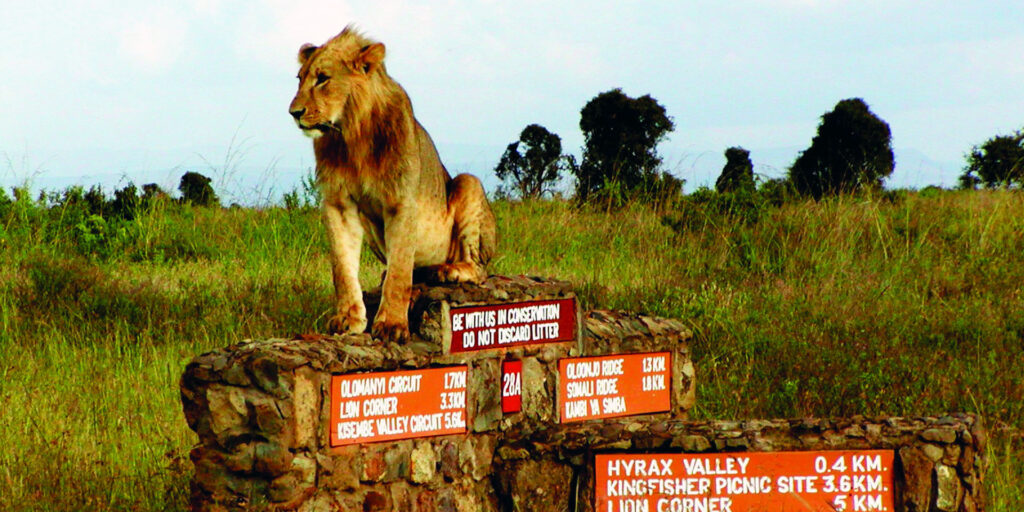
A self-guided Nairobi National Park tour (often called a self-drive Nairobi NP safari) is one of the most time-efficient ways to experience a real safari close to the city—especially if you already have a suitable vehicle and you’re comfortable navigating Kenya’s park rules and driving etiquette. Done well, a self-guided Nairobi National Park safari can be highly rewarding. Done poorly, it can become stressful fast—mainly because of ticketing requirements, gate logistics, traffic timing, and route choices.
Below is a practical, expert guide covering exactly how self-guided tours work, what to expect, where to go, and how to do it safely.
If you’re interested in a guided tour with an experienced driver-guide to maximize your time in the Park and get the most out of it, consider our 1/2-Day Tour Package and our 1-Day Safari Package or read about all our safari tours and packages for Nairobi National Park.
1) What “Self-Drive” or “Self-Guided” Really Means in Nairobi National Park
A self-guided tour means:
- You drive your own vehicle (private car or rental).
- You choose your own route and pace inside the park.
- You do not have a professional driver-guide interpreting sightings or optimizing routing.
- You must follow Kenya Wildlife Service (KWS) rules, park hours, and road restrictions.
Self-driving is allowed in Nairobi National Park, and it’s popular with Nairobi residents, returning visitors, and independent travelers who want maximum flexibility.
Guided vs Self-Guided Nairobi National Park Tour – Expert Comparison
| Attribute | Guided Nairobi National Park Tour | Self-Guided Nairobi National Park Tour |
|---|---|---|
| Wildlife Spotting Success | High probability due to trained tracking skills and radio networks | Dependent on personal luck and experience |
| Species Identification | Accurate identification of mammals, birds, and behavior patterns | Limited to personal knowledge or field guides |
| Rhino Sightings Strategy | Guides understand black and white rhino territories and movement patterns | May miss rhino hotspots without local intelligence |
| Time Efficiency | Optimized routing based on real-time wildlife reports | Risk of driving long circuits without productive sightings |
| Vehicle Type | 4×4 safari-spec vehicles with pop-up roofs for visibility | Personal vehicle; must meet KWS 4WD requirements |
| Interpretation Quality | Ecological, conservation, and behavioral insights provided | Observational experience only |
| Safety Management | Professional risk assessment near predators and buffalo | Full responsibility rests with driver |
| Photography Advantage | Strategic positioning for light, angle, and background | Limited if inexperienced in safari positioning |
| Conservation Context | Guides explain fencing, migration corridors, and park history | Requires prior research |
| Best for First-Time Visitors | Highly recommended for deeper understanding | Can feel overwhelming without safari knowledge |
| Cost Structure | Higher upfront cost but includes guide expertise | Lower cost if using own vehicle |
| Park Rules Compliance | Guide ensures adherence to KWS regulations | Driver must independently understand all rules |
| Learning Value | High educational enrichment | Primarily recreational |
| Flexibility | Route adapts to wildlife movement | Fixed to driver decisions |
| Traffic Navigation | Avoids congestion during peak hours | Risk of getting stuck in high-vehicle clusters |
| Birding Expertise | Professional guides can identify 100+ species | Limited without birding training |
| Ideal For | Photographers, first-time safari-goers, families, researchers | Experienced safari drivers, budget travelers |
Expert Summary
A guided Nairobi National Park tour maximizes wildlife encounters, ecological understanding, and overall efficiency, particularly for first-time visitors or those seeking interpretive depth.
A self-guided tour offers autonomy and cost savings but requires strong wildlife knowledge, a compliant 4WD vehicle, and familiarity with park rules.
For most travelers — especially those combining city exploration with safari — a guided experience delivers significantly higher value and conservation insight. Check out a range of our guided Nairobi National Park tours and packages.
2) Park Entry Tickets and How Payment Works (Critical)
For Nairobi National Park, you should expect:
- Entry tickets are typically purchased online via official government/KWS channels (often through the eCitizen ecosystem).
- Do not assume you can simply show up and pay cash at the gate the way some parks operate—always confirm the current procedure before you go.
| Visitor Category | Adult | Child |
|---|---|---|
| East African (EA) Citizen | KES 1,000 | KES 500 |
| Kenya Resident | KES 1,350 | KES 675 |
| African Citizen | USD 40 | USD 20 |
| Non-Resident | USD 80 | USD 40 |
Notes:
- Fees are per person per day.
- You must present valid ID / passport / residency proof at the gate.
- Tickets are purchased online via KWS eCitizen.
- Child rates usually apply to children under 18 (per KWS rules).
🚗 Vehicle & Parking Charges (Self-Drive or Private Vehicle)
| Item | EA Citizen & Kenya Resident | African Citizen & Non-Resident |
|---|---|---|
| Parking / Vehicle Entry | KES 1,000 | USD 30 |
| Vehicle Recovery (inside park) | KES 10,500 | KES 10,500 |
Notes:
- This is in addition to individual entry tickets.
- Recovery is charged only if your vehicle breaks down or gets stuck.
Expert tip: The #1 reason self-guided visitors lose time is arriving at the gate without properly sorted tickets (or with ticketing issues such as mismatched details). Sort payment and proof of purchase before you drive to the gate.
3) Park Hours and Best Times for a Self-Drive Safari
Most visitors plan around the core safari window:
- Early morning: best for predators and dramatic light
- Late afternoon: softer light, good general wildlife activity
- Midday: workable for rhinos and grazing herds, but hotter and often quieter for predators
Practical Nairobi tip: If you are self-driving from the city, leave earlier than you think. Nairobi traffic can easily turn a “quick drive” into a delay that costs you the best wildlife hours. The park opens at 6 AM and is closed at 6 PM.
4) Which Gate Should You Use? (Gate Choice Matters)
Nairobi National Park has multiple entry gates. The “best” gate depends on where you are coming from and how you want to route your drive.
Common gates include:
- Main Gate (Lang’ata Road area)
- Mbagathi Gate
- East Gate
Expert tip: Choose the gate that minimizes city driving and gives you the cleanest start into productive habitat. Ask your accommodation or a local contact which gate is most efficient from your neighborhood at the time you plan to depart—traffic patterns change daily.
5) Vehicle Choice: What You Actually Need for Self-Drive
You can self-drive with a normal car in dry weather, but it is not always ideal.
Recommended:
- 4×4 if you want full flexibility, especially after rain
- Vehicles with good ground clearance (park tracks can be rutted)
Possible (with caution):
- Standard 2WD cars in the dry season if you stay on the best-maintained tracks and drive conservatively
Not recommended:
- Very low-clearance vehicles, especially in wet months
Expert tip: In Nairobi NP, rain changes the driving experience quickly. Even light rains can create slick black cotton soil patches and rutted sections where clearance and traction matter.
6) Self-Guided Safari Routes: How to Plan a Productive Drive
Because Nairobi National Park is compact, your goal is not distance—it’s habitat strategy. A smart self-drive plan is built around rotating between:
- Open plains (for zebras, wildebeest, lions if lucky)
- Rhino areas (Nairobi is famously strong for rhinos)
- Riverine / woodland edges (birds, shade species, sometimes predators)
- Wetlands and dams (birds, buffalo, occasional predators)
A simple high-yield self-drive flow
- Start on open plains early
- Switch to rhino zones
- Loop through riverine edges
- Finish near wetlands/dams for birds and late sightings
Expert tip: If you’re not seeing much, don’t just drive faster—change habitat type. Wildlife distribution in Nairobi NP is often habitat-driven (grass quality, water, shade, wind, disturbance).
7) What You Can Realistically See on a Self-Guided Nairobi NP Tour
A self-guided safari can still deliver excellent sightings.
Most reliable:
- Rhinos (Nairobi NP is one of Kenya’s most reliable rhino parks)
- Zebra, giraffe, buffalo, hartebeest, impala, warthog, ostrich
- Many birds (Nairobi NP is a serious birding site)
Possible but less predictable:
- Lions (better early morning / late afternoon)
- Cheetah (occasional, depends on conditions and luck)
- Leopard (present but elusive—treat as a bonus)
Important expectation setting:
Nairobi NP does not have resident elephants, so it’s a “Big Four potential” park, not a full Big Five park.
8) Self-Guided Wildlife Spotting: Practical Techniques
Without a guide, your main advantage is patience and awareness.
Use these tactics:
- Scan systematically (horizon, tree lines, termite mounds, shade patches)
- Look for bird alarm calls and sudden herd behavior shifts
- Watch where other vehicles slow down—but don’t crowd sightings
- Learn a few common “tells”:
- Vultures gathering can indicate a kill nearby
- Herbivores staring in one direction can suggest predators
- Dust or running herds can signal hunting activity
Expert tip: Don’t follow the “road parade.” Some of the best sightings happen when you quietly work an area and wait rather than chasing rumors.
9) Safety Rules for Self-Drive Tours (Non-Negotiables)
Self-driving is safe if you treat it like a safari, not a city drive.
Core rules:
- Stay inside the vehicle except at designated areas
- Keep a safe distance from wildlife (especially buffalo and rhino)
- Never block an animal’s path—give them space to cross
- Do not crowd predators or surround them with vehicles
- Drive slowly and predictably; avoid sudden acceleration near animals
- Obey all KWS signage and road restrictions
Rhino safety note:
Rhinos can be surprisingly fast and reactive if pressured. If you encounter rhino close to the track, stop calmly, keep distance, and let the animal dictate movement.
10) Where Can You Stop? Picnic Sites and Break Planning
Self-guided visitors often underestimate how useful planned stops are.
- Use designated picnic sites/rest points for bathroom breaks and stretching.
- Plan a short break so you can reset attention—self-driving requires constant focus.
Expert tip: If traveling with kids or seniors, plan at least one proper stop. A comfortable group is a more observant group—and you’ll spot more wildlife.
11) Navigation: Maps, Offline Tools, and What to Use
Do not rely on mobile data alone.
Bring:
- Offline maps (download ahead of time)
- A phone car mount
- A power bank or vehicle charger
Expert tip: If you’re serious about self-guiding, carry a printed park map or a downloaded map image. It reduces wrong turns and keeps your route efficient.
12) Self-Guided vs Guided: When Self-Drive Makes Sense (and When It Doesn’t)
Self-guided is ideal if:
- You already have a vehicle and driving confidence
- You want flexibility and privacy
- You’re comfortable with wildlife etiquette
- You are cost-sensitive and don’t need interpretation
Guided is usually better if:
- It’s your first safari
- You have very limited time (half-day layover windows)
- You want to maximize predator chances
- You want conservation context and behavior interpretation
- You’re visiting in rainy months and want a capable 4×4 and an expert route planner
Practical truth: In Nairobi NP, a good guide doesn’t “create” wildlife—but they dramatically improve timing, routing, and positioning, which is often the difference between average and excellent.
13) A Strong Self-Guided Nairobi National Park Itinerary (Example)
Option A: Half-day self-drive (4–5 hours total)
- Enter early
- Work open plains + rhino areas
- Do one wetland loop for birds and buffalo
- Exit before traffic builds on the way back
Option B: Full-day self-drive (6–8 hours)
- Early plains loop (predators + herds)
- Mid-morning rhino focus
- Midday riverine and wetland birding
- Late afternoon return to open areas for golden light
- Exit before closing time (and before Nairobi evening traffic peaks)
14) What to Pack for a Self-Guided Safari
Essentials:
- Water and snacks
- Sunscreen, hat, sunglasses
- Light jacket for early morning
- Binoculars (huge upgrade for self-drive)
- Camera with zoom lens if you have it
- Offline maps + charger/power bank
- Small cash for incidentals/tips at stops outside the park
15) Common Mistakes Self-Drive Visitors Make
- Arriving without sorted entry tickets or proof
- Entering too late and missing the best wildlife window
- Driving too fast and missing animals in plain sight
- Spending too long on low-yield tracks instead of changing habitats
- Crowding wildlife (unsafe and poor etiquette)
- Relying on mobile data without offline navigation
Bottom Line: Is a Self-Guided Nairobi National Park Tour Worth It?
Yes—if you’re prepared. Nairobi National Park is one of the best places in Africa to self-drive because it’s compact, wildlife-rich, and close to Nairobi. The key is to plan your timing, handle ticketing correctly, drive slowly, rotate habitats, and respect wildlife etiquette. If you want the highest “wildlife-per-hour” performance—especially on a short window—then a guided or private Nairobi NP safari package often delivers a smoother, more optimized experience.
FAQs: Self-Guided / Self-Drive Safari at Nairobi National Park
1) Do I need a special permit to self-drive in Nairobi National Park?
No special permit is required beyond valid park entry tickets for all passengers and the vehicle. As long as your vehicle is allowed into the park and you follow KWS rules, you can self-drive.
2) Can I use a rental car for a self-drive safari?
Yes. Most visitors self-drive using rental cars. However, you should:
- Confirm the rental agreement allows park use
- Check tire condition and ground clearance
- Prefer a 4×4, especially in rainy seasons
Some rental companies restrict off-tarmac driving, so always confirm in advance.
3) Is insurance required or checked at the gate?
The park does not usually check your insurance at the gate, but:
- Your rental or private vehicle must be insured
- Any damage, recovery, or towing inside the park is your responsibility
Self-drive visitors should never assume roadside assistance is available inside the park.
4) What happens if my car breaks down inside the park?
You are responsible for:
- Calling your rental company or roadside assistance
- Arranging recovery at your own cost
- Staying safely inside the vehicle if wildlife is nearby
Park rangers may assist with safety, but they are not a repair service.
5) Can I hire a guide at the gate if I change my mind?
Sometimes independent guides or official guides are available near gates, but:
- Availability is not guaranteed
- Quality and language options vary
- It is usually better to pre-book a guided tour if you want one
Do not rely on finding a guide at the last minute.
6) Are there speed limits inside Nairobi National Park?
Yes. Speed limits are enforced to:
- Protect wildlife
- Reduce accidents
- Improve viewing quality
Driving too fast is one of the most common reasons self-drive visitors miss animals entirely.
7) Can I leave and re-enter the park on the same ticket?
This depends on current KWS ticketing rules at the time of your visit. In many cases:
- Tickets are time-bound or day-bound
- Re-entry may not be allowed without buying a new ticket
Always assume single entry unless officially confirmed otherwise.
8) Are there fuel stations inside or near the park?
There are no fuel stations inside the park. You should:
- Fill up before entering
- Plan your drive with enough fuel for city traffic + park driving
Running low on fuel inside the park is a serious planning mistake.
9) Can I bring food and drinks into the park?
Yes, you can bring:
- Water
- Snacks
- Packed meals
However:
- You should only eat at designated picnic sites
- Never leave food unattended or feed wildlife
- Always take your trash with you
10) Are toilets available inside Nairobi National Park?
Yes, but only at specific locations such as:
- Main gate areas
- Designated picnic sites
Do not expect frequent restroom stops—plan accordingly, especially with children.
11) Can I drive anywhere I want inside the park?
No. You must:
- Stay on designated tracks and roads
- Respect closed areas and signage
- Avoid off-road driving (this is illegal and damages habitat)
Off-road driving can lead to fines, penalties, or expulsion from the park.
12) Is it safe to self-drive with children?
Yes, if you:
- Keep children inside the vehicle at all times
- Plan for shorter loops and regular breaks
- Bring snacks, water, and sun protection
- Avoid stressful timing (traffic + late exits)
For families, a private guided tour is often easier—but self-drive can still work well with good planning.
13) What should I do if an animal blocks the road?
- Stop calmly
- Keep a safe distance
- Do not rev, honk, or try to force passage
- Wait for the animal to move on its own
This is especially important with rhinos, buffalo, and lions.
14) Can I take professional photos or videos on a self-drive?
For personal photography: yes.
For commercial or professional filming:
- You usually need special permits from KWS and relevant authorities
- Drones are not allowed without special authorization
Always check regulations before planning any commercial shoot.
15) Are drones allowed in Nairobi National Park?
No. Drones are strictly prohibited without special permits from:
- Kenya Wildlife Service (KWS)
- Kenya Civil Aviation Authority (KCAA)
Unauthorized drone use can lead to confiscation, fines, or legal action.
16) Can I drive at night inside the park?
No. Nairobi National Park has strict opening and closing hours.
Self-driving after hours is not allowed.
Plan your exit time carefully to avoid problems at the gate.
17) Is a self-drive safari cheaper than a guided tour?
Sometimes—but not always.
Self-drive saves:
- Guide and vehicle hire costs
But you still pay:
- Park entry fees
- Vehicle entry fees
- Fuel
- Possible rental surcharges
For groups, private guided tours can sometimes be better value than renting and self-driving.
18) How do I avoid getting lost inside the park?
- Download offline maps in advance
- Carry a printed park map if possible
- Follow main loops and signed tracks
- Avoid random shortcuts
Nairobi NP is not huge, but it is easy to waste time on low-yield loops without a plan.
19) What is the biggest risk with self-guided safaris in Nairobi NP?
The biggest risks are:
- Poor timing (missing prime wildlife hours)
- Traffic delays ruining your schedule
- Inadequate vehicle choice in wet conditions
- Overconfidence around wildlife
- Poor route planning leading to low sightings
Most disappointments come from logistics, not wildlife absence.
20) Who should NOT do a self-guided safari?
Self-drive may not be ideal if:
- It is your first safari ever
- You have very limited time (e.g., tight layover)
- You are uncomfortable driving in unfamiliar conditions
- You want maximum wildlife efficiency and interpretation
In these cases, a guided Nairobi National Park safari is usually the better experience.