Nairobi National Park is globally recognized for lions against a skyline. Yet the true engine of the park is not its predators — it is its vegetation. The grasses, trees, shrubs, wetlands and rocky flora form a tightly interwoven ecological mosaic that sustains more than 100 mammal species and over 500 recorded bird species within just 117 square kilometers.
Nairobi National Park’s flora is best summarized as: a 512-taxa plant assemblage occurring at a rare mid-elevation (about 1500–1800 m) ecological boundary where remnants of highland dry forest and savanna-woodland-grassland systems persist inside an urban edge landscape—making vegetation integrity (structure, composition, and invasive control) a first-order conservation lever, not a secondary concern.
Spanning across 117 square kilometers (45 square miles), Nairobi National Park’s plant life is adapted to a semi-arid climate, with plants ranging from drought-resistant grasses and shrubs to water-loving trees along the park’s rivers and wetlands. This guide will provide an in-depth overview of the main plant species found in the park, including the most common trees, shrubs, and grasses, with details on their ecological importance, adaptive characteristics, and interactions with wildlife.
1. The NNP Vegetation Mosaic: Understanding the Big Picture
Nairobi National Park is a high-altitude savanna ecosystem sitting at approximately 1,533 meters above sea level. Unlike lowland savannas such as Tsavo or Samburu, its elevation shapes plant composition, soil moisture patterns and species structure.
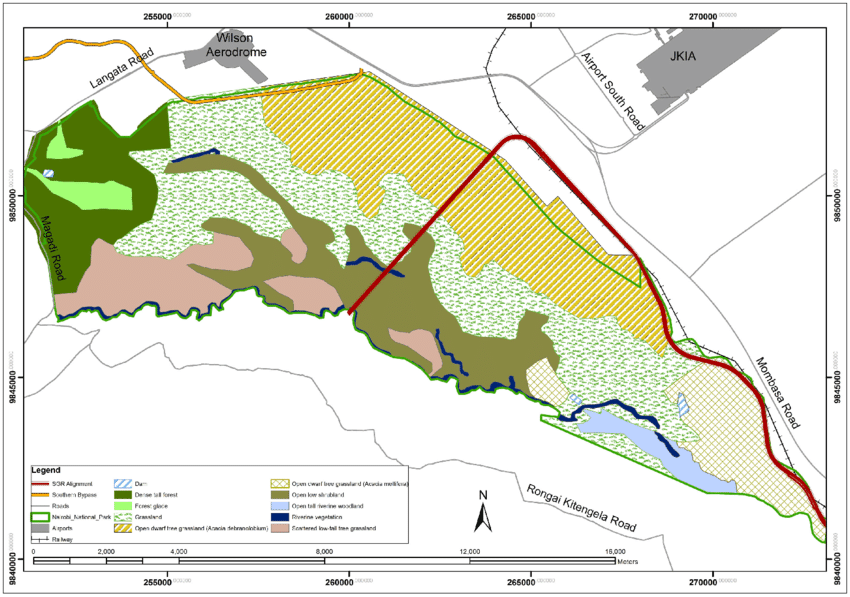
The park’s vegetation can be grouped into five primary structural systems:
- Open grasslands
- Acacia-dominated woody savanna
- Shrubland transition zones
- Riverine forests and riparian corridors
- Wetlands, dams and rocky outcrop flora
These systems overlap spatially and functionally. Together they create a vegetation mosaic that drives predator-prey dynamics, herbivore distribution, bird diversity and long-term ecosystem resilience.
For visitors, this means that every game drive is not simply wildlife viewing — it is moving through shifting plant communities that determine what animals you see and where.
2. Environmental Drivers of Plant Life in Nairobi National Park
Altitude and Climate
At 1,533 meters, the park experiences:
- Moderate highland temperatures
- Annual rainfall typically ranging between 800 and 1,200 mm
- Two rainy seasons: March–May and October–December
The altitude produces cooler conditions than many Kenyan parks. This influences grass productivity, flowering cycles and woodland structure.
Soils and Vegetation Patterns
Vegetation distribution is strongly controlled by soil variation:
- Volcanic loam supports woodland and mixed shrub systems.
- Black cotton clay dominates open plains and favors short grazing lawns.
- Alluvial soils along rivers support riparian forest trees.
Black cotton soils crack deeply in the dry season and waterlog in rains — this favors grass dominance and discourages heavy tree establishment, preserving open plains.
3. Grasslands: The Ecological Engine of the Park
The grasslands cover most of Nairobi National Park and serve as its primary energy base.
Key Grass Species
Visitors will most commonly encounter:
- Themeda triandra (Red oat grass) — tall bunch grass turning reddish-brown in dry season
- Cynodon dactylon (Bermuda grass) — short grazing lawns preferred by zebras and gazelles
- Pennisetum purpureum (Elephant grass) — high biomass grass in moist zones
- Eragrostis species — drought-adapted grasses
Why Grasslands Matter
Grasslands:
- Produce the bulk of herbivore forage biomass
- Shape predator hunting strategies
- Regulate nutrient cycling
- Store carbon below ground in root systems
Wildlife Link
- Zebras prefer shorter grasses.
- Wildebeest often follow zebras, feeding on regrowth.
- Lions use taller patches for ambush.
- Secretary birds rely on open visibility.
For visitors: observing grass height and distribution helps predict where animals may be found.
4. Acacia-Dominated Woodland: Structure, Shade and Browse
Scattered woodland patches break the open plains.
Dominant Tree Species are Mostly Acacia
- Acacia drepanolobium (Whistling thorn)
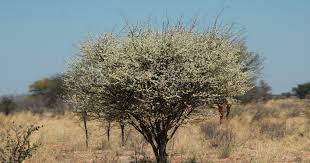
- Acacia mellifera (Black thorn)
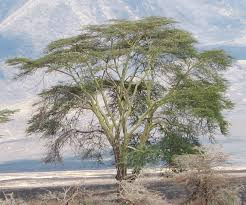
- Acacia xanthophloea (Fever tree)
- Acacia tortilis (Umbrella thorn)
- Croton megalocarpus
Ecological Significance
- Provide shade and microclimate moderation
- Support giraffe and rhino browsing
- Host bird nesting sites
- Create ambush cover for leopards
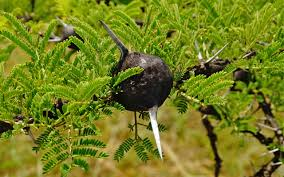
The whistling thorn’s symbiotic relationship with ants is a classic savanna ecological interaction.
For visitors: woodland density changes predator-prey visibility dynamics dramatically compared to open plains.
Read our guide to Learn the 5 Habitats Ecosystem of Nairobi National Park
5. Shrublands and Ecotones: Transitional Biodiversity Hotspots
Shrub-dominated areas represent transitional zones between grassland and woodland.
Common shrubs include:
- Grewia bicolor
- Euclea divinorum
- Tarchonanthus camphoratus
- Dichrostachys cinerea
These zones often support higher bird densities and provide browse for impala and black rhino.
Conservation Insight
Shrub encroachment can indicate shifts in grazing pressure or fire suppression. Managing this balance is critical to maintaining open savanna structure.
6. Riverine Forests: The Hydrological Backbone
Along the Athi and Mbagathi river systems lie denser, multi-layered riparian forests.
Keystone Trees
- Ficus sycomorus (Sycamore fig)
- Olea africana (Wild olive)
- Warburgia ugandensis
- Phoenix reclinata (Wild date palm)
Ecological Functions
- Stabilize riverbanks
- Regulate water flow
- Provide shade refuges
- Support fruit-based food webs
Sycamore figs are particularly important, fruiting asynchronously and sustaining many species.
For visitors: bird diversity is highest in riparian zones.
7. Wetlands and Dams: Dry-Season Anchors
Hyena Dam and other seasonal wetlands create concentrated plant zones.
Dominant Wetland Flora
- Cyperus papyrus
- Typha domingensis
- Phragmites reeds
- Nymphaea water lilies
Wetlands create grazing halos — shorter grass around water due to heavy use.
For visitors: wildlife density often increases near water sources, especially in dry months.
8. Rocky Outcrops and Specialist Flora
Escarpments and rocky terrain support drought-adapted species:
- Euphorbia candelabrum
- Euphorbia tirucalli
- Aloe secundiflora
- Drimia calcarata
These microhabitats support specialized flora rarely seen on open plains.
For visitors: rocky zones often provide dramatic plant forms and excellent photography opportunities.
9. Seasonal Vegetation Changes
During rainy seasons:
- Grass biomass surges
- Wildflowers bloom
- Shrub growth intensifies
During dry seasons:
- Grasses cure and turn golden
- Many trees shed leaves
- Water sources concentrate wildlife
Understanding seasonality helps visitors choose optimal plant-viewing periods.
10. Medicinal and Cultural Plant Value
Several species hold traditional medicinal significance:
- Warburgia ugandensis
- Aloe species
- Various Grewia shrubs
Ethnobotanical knowledge reflects deep ecological understanding embedded in local communities.
11. Urban Edge Vegetation and Corridor Connectivity
The open southern boundary toward Kitengela allows seasonal wildlife movement.
Vegetation continuity beyond park boundaries:
- Reduces overgrazing pressure
- Supports genetic flow
- Maintains ecosystem resilience
Urban encroachment threatens this plant continuity, making corridor conservation vital.
12. Conservation and Vegetation Management at NNP
Kenya Wildlife Service implements:
- Vegetation monitoring
- Invasive species control
- Controlled burns
- Habitat restoration
Plant management directly affects:
- Rhino forage availability
- Predator habitat structure
- Wetland stability
- Carbon storage
Conserving vegetation equals conserving wildlife.
13. How Vegetation Shapes Wildlife Sightings
Vegetation determines:
- Predator hunting strategy
- Herbivore feeding guilds
- Bird nesting density
- Seasonal animal distribution
Visitors who read the landscape botanically experience a far richer safari.
14. Visitor Guide: How to Interpret Plants on Safari
On a Half-Day Safari Drive
You will most likely observe:
- Open grasslands
- Whistling thorn woodlands
- Dam-edge vegetation
Focus on grass height differences and acacia structure.
On a Full-Day Safari Drive
You can explore:
- Riverine forests
- Rocky outcrop flora
- Shrubland transitions
- Wetland microhabitats
A full day reveals the park’s complete vegetation mosaic.
15. Why Nairobi National Park Vegetation Is Ecologically Exceptional
Nairobi National Park represents:
- A high-altitude savanna within an urban matrix
- A compact yet structurally diverse vegetation mosaic
- A corridor-dependent ecosystem requiring landscape connectivity
- A living research laboratory in urban conservation
Its grasses fuel herbivores.
Its trees structure predator strategy.
Its wetlands stabilize dry-season survival.
Its corridors sustain long-term resilience.
The skyline may frame the park — but the plants sustain it.
Final Reflection
A successful visit to Nairobi National Park is not measured by lion sightings alone. It is measured by whether you:
- Observed multiple vegetation systems
- Understood how soil and water shape plant distribution
- Recognized the link between plant structure and wildlife behavior
- Appreciated the conservation importance of corridor vegetation
Nairobi National Park is not merely a wildlife reserve.
It is a vegetation-driven ecological system — and understanding its plants transforms the safari experience from sightseeing into ecological insight.
Additional Helpful Guide on Trees, Grasslands and Riverine Forests of Nairobi National Park
1. Key Tree Species in Nairobi National Park
Nairobi National Park’s diverse tree cover ranges from acacia-dominated woodlands to riverine forests, each supporting distinct ecosystems and contributing to the park’s biodiversity. The trees provide critical habitat for birds, shelter for wildlife, and food for browsing herbivores.
a. Acacia Species
Acacia trees are the dominant tree species in the park, particularly in the savanna and woodland areas. These trees are well-adapted to the park’s semi-arid environment, with several species playing a critical ecological role.
- Acacia xanthophloea (Fever Tree)
- Description: This tree is easily recognized by its smooth, pale yellow-green bark, which gives it its common name, “fever tree.” It typically grows near water sources and can reach heights of 15–25 meters (50–82 feet).
- Ecological Importance: Fever trees are common along the Athi River and other watercourses in the park. They provide shade and shelter for animals such as baboons, hippos, and waterbucks. The leaves are an important food source for giraffes and elephants.
- Acacia tortilis (Umbrella Thorn)
- Description: Known for its umbrella-shaped canopy, this tree is widely distributed across the park’s savanna. It can grow up to 20 meters (66 feet) in height and has long, sharp thorns that protect it from over-browsing by herbivores.
- Ecological Importance: The umbrella thorn is crucial for many herbivores, including giraffes, eland, and impalas, which feed on its leaves, bark, and pods. The tree also provides nesting sites for birds such as weaver birds and shelter for smaller animals.
- Acacia drepanolobium (Whistling Thorn)
- Description: A smaller species of acacia, the whistling thorn grows up to 6 meters (20 feet) tall and is characterized by swollen thorns, which house symbiotic ants. When the wind blows through the thorn cavities, they produce a whistling sound, hence the name.
- Ecological Importance: The ants that live in the tree’s thorns defend it from herbivores, while the tree offers food to browsing species such as giraffes and black rhinos. The relationship between the ants and the tree is a well-known example of mutualism.
b. Riverine Forest Species
The riverine forests of Nairobi National Park, located along the Athi River and other seasonal watercourses, are rich in tree species that thrive in wetter conditions. These forests play a critical role in regulating water flow, preventing erosion, and providing habitat for numerous wildlife species.
- Ficus sycomorus (Sycamore Fig)
- Description: This large fig tree can grow up to 20 meters (66 feet) tall and is often found near rivers and streams. It has broad leaves and produces small, edible figs that attract various animals.
- Ecological Importance: The sycamore fig is a keystone species in the riverine forests, providing food for a wide range of animals, including baboons, monkeys, and bushbucks. Birds such as African green pigeons and hornbills feed on its figs, while the tree itself offers nesting and roosting sites for numerous bird species.
- Olea africana (Wild Olive)
- Description: The wild olive is a drought-tolerant tree that grows up to 15 meters (49 feet) tall. It has tough, leathery leaves and produces small, fleshy fruits.
- Ecological Importance: This tree is an important food source for birds and mammals, including elephants and bushbucks. Its dense canopy provides shade and shelter for animals during the hot, dry months.
- Warburgia ugandensis (Uganda Greenheart)
- Description: This medium-sized tree, growing up to 10–25 meters (33–82 feet) tall, is commonly found in riparian zones. It has aromatic leaves and produces small greenish fruit.
- Ecological Importance: The tree’s leaves and bark have medicinal properties, and its fruits are consumed by birds and monkeys. The dense foliage provides excellent cover for small mammals and birds, especially in the park’s wetter areas.
Major Vegetation Types in Nairobi National Park
Nairobi National Park features four primary types of vegetation that define its landscape:
A. Open Grasslands 🌾
- Characteristics: Wide, open savannah dominated by tall and short grasses.
- Key Grass Species:
- Red Oat Grass (Themeda triandra) – The most dominant grass, preferred by grazers.
- Bermuda Grass (Cynodon dactylon) – Grows in disturbed areas, vital for small herbivores.
- African Foxtail Grass (Cenchrus ciliaris) – Provides essential cover for rodents and birds.
- Where to Find It: Covers most of the park, particularly the southern and central sections.
- Importance:
- Serves as the primary feeding ground for grazers such as zebras, antelopes, and buffaloes.
- Helps prevent soil erosion and improves water retention in the ecosystem.
B. Acacia Woodlands 🌳
- Characteristics: Scattered trees, primarily from the Acacia family, mixed with grass.
- Key Tree Species:
- Whistling Thorn Acacia (Vachellia drepanolobium) – Provides food for giraffes and is home to ant colonies.
- Umbrella Thorn Acacia (Vachellia tortilis) – Recognizable by its umbrella-shaped canopy, important for shade.
- Red Acacia (Vachellia seyal) – Known for its reddish bark, found near seasonal water bodies.
- Where to Find It: Mostly in the northern and western parts of the park.
- Importance:
- Provides shade and nesting grounds for birds and primates.
- Giraffes, elands, and impalas rely on acacia leaves as a primary food source.
- The nitrogen-fixing properties of acacias improve soil fertility.
C. Riverine Forests 🌿
- Characteristics: Thick vegetation along the Mbagathi River, with tall trees and dense undergrowth.
- Key Tree & Shrub Species:
- Sycamore Fig (Ficus sycomorus) – Produces fruit that supports primates and birds.
- Wild Date Palm (Phoenix reclinata) – Found near the river, offers food and shelter for birds.
- African Olive (Olea africana) – A slow-growing evergreen that provides nectar for pollinators.
- Where to Find It: Along the Mbagathi River and seasonal streams.
- Importance:
- Essential for hippos, crocodiles, and monkeys.
- Prevents riverbank erosion and regulates water flow.
- A key birdwatching hotspot, attracting hornbills, kingfishers, and sunbirds.
D. Wetlands & Seasonal Swamps 💦
- Characteristics: Areas that retain water seasonally, often covered in marsh grasses and sedges.
- Key Plant Species:
- Papyrus (Cyperus papyrus) – Provides habitat for hippos and waterbirds.
- Reed Grass (Phragmites mauritianus) – Common along swamp edges, used by weaver birds for nesting.
- Water Hyacinth (Eichhornia crassipes) – An invasive species that occasionally affects water flow.
- Where to Find It: Around Hyena Dam, Nagolomon Dam, and other seasonal swamps.
- Importance:
- Filters water pollutants and helps control flooding.
- Home to amphibians, fish, and migratory birds.
2. Shrubs and Bushes: Adaptation and Ecological Roles
The shrub layer in Nairobi National Park is an important component of the park’s ecosystem, providing food and habitat for smaller mammals, birds, and insects. Many of these shrubs are well-adapted to the dry conditions of the park and are critical for soil stabilization.
a. Grewia bicolor (Raisin Bush)
- Description: This shrub or small tree grows up to 3 meters (10 feet) in height and produces small, raisin-like fruits. It has rough, hairy leaves and thorny branches.
- Ecological Importance: The fruits are a food source for birds and small mammals such as bushbucks and dik-diks. The shrub also provides cover for ground-nesting birds and small animals.
b. Euclea divinorum (Magic Guarri)
- Description: This evergreen shrub grows up to 6 meters (20 feet) tall and has dark green, leathery leaves. It produces small, black fruits.
- Ecological Importance: The fruits are consumed by birds, while the leaves and stems provide food for browsing animals such as giraffes and bushbucks. This shrub is also known for its role in soil stabilization, helping to prevent erosion in degraded areas.
c. Sansevieria volkensii (Snake Plant)
- Description: Commonly known as the snake plant, this succulent shrub grows in clumps and is well-adapted to arid conditions. It has long, fleshy leaves that can grow up to 1 meter (3 feet) tall.
- Ecological Importance: The snake plant is often found in rocky areas of the park and provides cover for small animals and reptiles. Its fibrous leaves are sometimes used by local communities for making ropes and baskets.
d. Tarchonanthus camphoratus (Leleshwa/Camphor Bush)
- Description: This aromatic shrub grows up to 5 meters (16 feet) tall and is characterized by its grayish-green leaves and small, clustered flowers. It thrives in dry, open areas of the park.
- Ecological Importance: The leleshwa bush provides important cover for small mammals and nesting sites for birds. It is also used by herbivores like impalas and dik-diks as a browsing species.
3. Grasses: The Foundation of the Park’s Food Chain
Grasses form the basis of the food chain in Nairobi National Park, supporting a wide range of herbivores and providing critical habitat for ground-dwelling species. The park’s grasslands are dominated by several species of savanna grasses that are adapted to seasonal rainfall and drought.
a. Themeda triandra (Red Oat Grass)
- Description: One of the most dominant grass species in the park, red oat grass grows up to 1 meter (3 feet) tall and turns a reddish color during the dry season.
- Ecological Importance: Red oat grass is a highly nutritious grass species, making it a favorite food source for large herbivores such as zebras, wildebeests, and eland. It is also important for ground-nesting birds like larks and quails, which use the grass for shelter and nesting.
b. Pennisetum purpureum (Elephant Grass)
- Description: This tall grass can grow up to 3 meters (10 feet) in height and has thick, fibrous stems. It is commonly found near water sources in the park.
- Ecological Importance: Elephant grass is a critical food source for buffalos, elephants, and other large herbivores. Its dense growth also provides cover for smaller animals, such as dik-diks and hares.
c. Cynodon dactylon (Bermuda Grass)
- Description: A hardy, low-growing grass, Bermuda grass is commonly found in grazed areas of the park and can withstand heavy grazing pressure.
- Ecological Importance: This grass is important for maintaining soil structure and preventing erosion in overgrazed areas. It is a favored grazing species for animals like zebras and impalas due to its resilience and nutritional value.
d. Eragrostis superba (Love Grass)
- Description: A tufted perennial grass, love grass grows up to 1 meter (3 feet) tall and produces feathery seed heads. It is commonly found in the park’s drier areas.
- Ecological Importance: Love grass is well-adapted to drought conditions and provides essential forage for herbivores during the dry season. Its seeds are consumed by birds and small mammals, while its dense roots help stabilize the soil.
4. Unique & Endemic Plants of Nairobi National Park
Although Nairobi National Park shares many plant species with other parts of Kenya, some species are rare or uniquely adapted to the park’s specific conditions:
- 🌿 Candelabra Euphorbia (Euphorbia candelabrum) – A succulent tree with a candelabra shape, toxic to most animals except for giraffes.
- 🌱 Kenyan Aloe (Aloe secundiflora) – A medicinal plant used by local communities for skincare and wound healing.
- 🌾 Finger Grass (Digitaria abyssinica) – A fast-growing grass crucial for preventing soil erosion in grazing areas.
- 🍂 Wild Jasmine (Jasminum fluminense) – Produces fragrant flowers and is pollinated by bees and butterflies.
5. Threats to Nairobi National Park Flora
Despite its protected status, the park’s vegetation faces several threats:
- Encroachment & Urban Expansion – Nairobi’s growth increases pressure on the park’s borders.
- Overgrazing – Some sections experience excessive grazing by wildlife and domestic livestock.
- Invasive Species – Non-native plants like Lantana camara and Parthenium hysterophorus outcompete native flora.
- Climate Change – Irregular rainfall patterns affect plant growth and regeneration.
6. The Role of Nairobi National Park Flora in the Ecosystem
Plants in Nairobi National Park support a delicate ecological balance and contribute to:
A. Wildlife Habitat & Food Source
- Herbivores like giraffes, zebras, buffaloes, and impalas depend on grasses and trees for survival.
- Birds rely on specific plants for nesting, roosting, and food sources (seeds, berries, nectar).
B. Soil Conservation & Water Regulation
- Deep-rooted trees prevent soil erosion, especially along the riverbanks.
- Grass cover retains moisture, reducing desertification.
- Wetland vegetation filters pollutants and improves water quality.
C. Carbon Sequestration & Climate Regulation
- Trees and grasslands absorb CO₂, reducing the effects of climate change.
- Forested areas moderate temperatures and provide shelter during extreme weather.
5. Seasonal Changes and Vegetation Dynamics
The vegetation in Nairobi National Park is heavily influenced by the region’s bimodal rainfall pattern, with the park experiencing two rainy seasons (March to May and October to December). The seasonal changes in rainfall have a profound impact on the growth and distribution of plant species, as well as on the availability of food for herbivores.
- Wet Season: During the rainy seasons, the park’s grasses grow rapidly, and trees and shrubs produce new leaves. This period sees an influx of herbivores from the surrounding areas, attracted by the abundance of fresh grass. The wetlands and riverine areas become more active, with water-loving species like hippos, waterbucks, and crocodiles congregating around the water sources.
- Dry Season: In the dry season, the park’s vegetation becomes more sparse, with grasses drying out and shrubs becoming the primary food source for many herbivores. Trees such as acacias drop their pods, which provide a crucial food source for animals like elephants, giraffes, and impalas. The park’s wetlands and watercourses shrink, concentrating wildlife around the remaining waterholes.
Conclusion: The Vital Role of Plants in Nairobi National Park’s Ecosystem
The diverse plant life in Nairobi National Park plays a crucial role in supporting its rich wildlife and maintaining the park’s ecological balance. From the towering acacia trees that provide food and shelter for giraffes and birds, to the grasses that sustain large herds of herbivores, each plant species contributes to the park’s complex web of life.
- Herbivores such as zebras, wildebeests, giraffes, and buffalos depend on the park’s grasses, shrubs, and trees for food throughout the year.
- Birds and small mammals rely on the park’s trees and shrubs for nesting, shelter, and foraging, while aquatic plants in the park’s wetlands provide habitat for amphibians, reptiles, and waterbirds.
- Conservationists and botanists will find the park’s plant species fascinating, as many of them are adapted to survive in the semi-arid climate of the region, showcasing nature’s resilience and diversity.
The ongoing conservation of Nairobi National Park’s vegetation is essential not only for maintaining its biodiversity but also for ensuring that the park continues to provide critical ecosystem services, such as water regulation, carbon storage, and erosion prevention, in the face of rapid urban expansion.
Frequently Asked Questions
Plants, Trees, Grass and Vegetation at Nairobi National Park
Below are expert, visitor-focused answers covering the most common search questions about plants, trees, grass and vegetation at Nairobi National Park, with both ecological and conservation context.
1. How many plant species are found in Nairobi National Park?
Nairobi National Park supports over 500 recorded plant species, including grasses, trees, shrubs, wetland plants and rocky outcrop specialists. Despite covering only 117 square kilometers, its high-altitude savanna mosaic creates exceptional botanical diversity.
2. What are the dominant grasses in Nairobi National Park?
The most ecologically important grasses include:
- Themeda triandra (Red oat grass) – tall bunch grass defining savanna structure
- Cynodon dactylon (Bermuda grass) – short grazing lawns
- Pennisetum purpureum (Elephant grass) – high biomass grass in moist areas
- Eragrostis species – drought-tolerant grasses
These grasses drive the herbivore food base and predator-prey dynamics.
3. What trees are common in Nairobi National Park?
Common tree species include:
- Acacia drepanolobium (Whistling thorn)
- Acacia xanthophloea (Fever tree)
- Acacia mellifera (Black thorn)
- Ficus sycomorus (Sycamore fig)
- Olea africana (Wild olive)
Acacia species dominate the savanna woodland system, while riverine forests support taller riparian trees.
4. Why are acacia trees important in Nairobi National Park?
Acacia trees:
- Provide browse for giraffe and rhino
- Offer shade refuges in dry seasons
- Support nesting birds
- Create structural cover for predators
The whistling thorn acacia is especially notable for its mutualistic relationship with ants.
5. What plants grow near water in Nairobi National Park?
Wetland and riparian vegetation includes:
- Cyperus papyrus
- Typha domingensis (Bulrush)
- Phragmites reeds
- Water lilies
These plants stabilize shorelines, filter water and provide habitat for waterbirds.
6. Are there medicinal plants in Nairobi National Park?
Yes. Notable medicinal plants include:
- Warburgia ugandensis
- Aloe secundiflora
- Several Grewia species
Many species have traditional ethnobotanical uses, reflecting long-standing ecological knowledge.
7. What is the difference between grassland and woodland vegetation in Nairobi NP?
Grasslands are dominated by low canopy cover and tall or short savanna grasses.
Woodlands contain scattered thorn trees and shrubs with 3–6 meter canopy height.
Woodlands alter predator visibility and browsing dynamics compared to open plains.
8. Does vegetation change between rainy and dry seasons?
Yes.
During the rainy season:
- Grasses grow rapidly
- Wildflowers bloom
- Shrub density increases
During the dry season:
- Grasses cure and turn golden
- Some trees shed leaves
- Wildlife concentrates near wetlands
Seasonality strongly influences vegetation structure and safari experience.
9. What is shrub encroachment in Nairobi National Park?
Shrub encroachment occurs when woody shrubs expand into open grasslands, often due to:
- Reduced fire frequency
- Grazing imbalances
- Climate shifts
Managing this balance is crucial to maintaining open savanna ecosystems.
10. What are rocky outcrop plants in Nairobi NP?
Rocky escarpments support drought-adapted species such as:
- Euphorbia candelabrum
- Aloe secundiflora
- Specialized seasonal outcrop flora
These plants survive in shallow soils and extreme moisture variation.
11. How does vegetation affect wildlife sightings?
Vegetation directly influences:
- Predator hunting strategies
- Herbivore feeding preferences
- Bird nesting density
- Seasonal animal movement
Understanding plant structure improves wildlife interpretation during game drives.
12. What role do wetlands play in vegetation ecology?
Wetlands:
- Anchor dry-season survival
- Support aquatic plant communities
- Concentrate wildlife
- Create grazing halos
They are hydrological stabilizers within the savanna mosaic.
13. Are there rare or endemic plants in Nairobi National Park?
Yes. Certain rocky and riparian microhabitats support localized or uncommon species. While the park is not known for extreme endemism, it contains specialized highland savanna flora that contributes to national biodiversity significance.
14. How does soil type influence vegetation?
Soil determines plant distribution:
- Black cotton clay favors grass dominance
- Volcanic loam supports woodland
- Alluvial soils sustain riverine forests
Soil water retention and nutrient content shape vegetation structure.
15. Does Nairobi’s urban location affect vegetation?
Yes.
Urban edge pressures influence:
- Corridor vegetation integrity
- Habitat fragmentation
- Edge effects on plant communities
Maintaining southern dispersal vegetation toward Kitengela is vital for ecosystem resilience.
16. What is the best time to see flowering plants in Nairobi NP?
The peak flowering period is typically during and immediately after the rainy seasons:
- April–May
- November–December
Grasses are lush and wildflowers are most visible.
17. How does vegetation contribute to conservation in Nairobi NP?
Vegetation:
- Supports rhino forage availability
- Maintains predator-prey structure
- Regulates water flow
- Stores carbon
- Sustains biodiversity
Plant conservation is foundational to wildlife conservation.
18. Can visitors focus on a botanical safari experience?
Yes. A half-day drive typically showcases:
- Grassland systems
- Acacia woodland
- Wetland margins
A full-day drive allows exploration of:
- Riverine forests
- Rocky outcrop flora
- Shrubland transitions
Botanical interpretation enriches the safari beyond wildlife spotting.
19. How does fire influence vegetation in Nairobi National Park?
Controlled burns:
- Stimulate grass regeneration
- Reduce shrub encroachment
- Maintain open savanna structure
Fire is an important management tool for habitat balance.
20. Why is Nairobi National Park vegetation considered unique?
It represents:
- A high-altitude savanna
- A compact yet diverse vegetation mosaic
- A corridor-dependent ecosystem
- A functioning wildlife habitat within a capital city
Few places globally combine urban proximity with intact savanna plant systems.
Below is a concise, research-grounded ecological comparison on Nairobi NP vs other Kenyan Parks and Reserves focused specifically on plants, grasses, trees, and vegetation structure.
1. Nairobi National Park vs Kenya’s Broader Vegetation Zones
Altitudinal Context
- NNP: High-altitude savanna at ~1,533 m above sea level
- Much of Kenya’s lowland savanna (Tsavo, Samburu): 300–800 m
Implication:
NNP supports cooler-climate highland savanna flora, including Themeda triandra dominance and denser acacia woodland structure, unlike hotter lowland xeric systems.
Rainfall Regime
- NNP: ~800–1,200 mm annually
- Northern Kenya (Samburu, Turkana): Often <500 mm
- Western Kenya (Kakamega Forest): >1,800 mm
Implication:
NNP sits in a moderate rainfall band, allowing:
- Strong grass productivity
- Woodland development
- Riparian forest formation
It is more productive than arid northern parks but less forested than high-rainfall western Kenya.
Vegetation Type Classification
Kenya broadly includes:
- Coastal forest
- Montane forest
- Afro-alpine vegetation
- Semi-arid bushland
- Lowland savanna
- Highland savanna
NNP falls squarely within highland savanna, which is structurally distinct from:
- The semi-arid bushlands of northern Kenya
- The lowland acacia-Commiphora systems of Tsavo
- The floodplain grasslands of the Mara
2. Nairobi National Park vs Masai Mara Plants & Vegetations
Grassland Structure
- NNP: Mixed grass heights with black cotton soil plains
- Mara: Vast rolling plains dominated by short-to-mid height grasses adapted to migratory grazing pressure
Difference:
The Mara is a migration-driven grassland ecosystem, while NNP is resident herbivore-driven, with smaller-scale seasonal movement.
Woodland Cover
- NNP: Noticeable acacia woodland patches
- Mara: More open plains with fewer dense woodland belts
Implication:
NNP offers more structurally diverse predator habitats relative to its size.
Scale and Continuity
- Mara: Large open ecosystem linked to Serengeti
- NNP: Small but corridor-dependent toward Kitengela
NNP’s vegetation resilience depends heavily on southern dispersal areas.
3. Comparing Nairobi National Park Plants and vegetations vs Amboseli NP’s
Soil and Hydrology
- Amboseli: Volcanic dust plains and swamp-fed wetlands from Kilimanjaro aquifers
- NNP: Volcanic loam and black cotton soils without permanent groundwater-fed swamps
Implication:
Amboseli vegetation is strongly groundwater-driven, while NNP vegetation is rainfall and river-driven.
Woodland Composition
- Amboseli: Acacia xanthophloea woodland concentrated near swamps
- NNP: Broader distribution of acacia drepanolobium and mellifera systems
NNP woodlands are more evenly distributed across habitat zones.
4. Nairobi National Park vs Lake Nakuru
Lake Influence
- Nakuru: Alkaline soda lake ecosystem influencing halophytic vegetation
- NNP: Freshwater river and dam system without saline lake influence
Vegetation Contrast:
Nakuru includes salt-tolerant plant communities not found in NNP.
Euphorbia Systems
Both parks feature euphorbia in rocky areas, but:
- Nakuru: More prominent candelabra euphorbia forests
- NNP: More scattered rocky succulents and mixed shrub systems
5. Nairobi National Park vs Tsavo East and West
Climate Gradient
- Tsavo: Semi-arid to arid acacia-Commiphora bushland
- NNP: Mesic highland savanna
Major Difference:
Tsavo vegetation is drought-dominated and more open scrub, while NNP supports higher grass productivity and more continuous woodland structure.
Tree Diversity
- Tsavo supports baobabs and Commiphora-dominated bushlands.
- NNP lacks baobabs and has more highland acacia and riverine fig systems.
6. Comparison of Nairobi National Park vs Samburu National Reserve Plants
Aridity
- Samburu: Semi-arid thorn scrub with specialized dryland flora
- NNP: Moderately wet highland savanna
Samburu vegetation is more drought-specialized and sparse.
Plant Community Structure
- Samburu features more Commiphora and doum palm systems.
- NNP features fewer palms but more structured grass-acacia mosaics.
7. What Makes Nairobi National Park Botanically Unique in Kenya
1. Urban Savanna Interface
It is the only high-altitude savanna ecosystem embedded within a capital city boundary.
2. Compact Yet Complete Vegetation Mosaic
Within 117 km², NNP contains:
- Open grassland
- Woody savanna
- Shrubland transitions
- Riparian forest
- Wetlands
- Rocky succulents
Few parks of this size contain such complete structural diversity.
3. Corridor-Dependent Vegetation Resilience
Unlike large ecosystems, NNP relies on vegetation continuity into Kitengela to:
- Prevent overgrazing
- Maintain soil structure
- Support nutrient cycling
Vegetation integrity beyond the fence is as critical as vegetation inside.
4. High Rhino-Forage Relevance
NNP vegetation supports nationally important black and white rhino populations, making browse management especially critical.
8. Advanced Ecological Insight
Compared to larger parks:
- NNP vegetation responds faster to grazing pressure due to scale.
- Shrub encroachment signals appear earlier.
- Wetland fluctuations influence wildlife density more visibly.
- Urban edge effects introduce measurable vegetation stress gradients.
It functions as a savanna microcosm under ecological compression — making it scientifically valuable as a model for urban-edge conservation.
9. Summary Comparison Table of NNP Plants Vs Other Kenyan Parks and Reserves
| Feature | Nairobi NP | Masai Mara | Amboseli | Tsavo | Samburu |
|---|---|---|---|---|---|
| Altitude | High (~1,533 m) | Mid-altitude | Lower | Low | Low |
| Rainfall | Moderate | Moderate-high | Semi-arid | Semi-arid | Arid |
| Grass Productivity | High seasonal | Migration-driven | Moderate | Lower | Low |
| Woodland Cover | Moderate | Sparse patches | Concentrated near swamps | Sparse bushland | Thorn scrub |
| Wetland Type | Dams and rivers | Seasonal rivers | Groundwater swamps | Limited | Riverine only |
| Unique Feature | Urban highland savanna | Great migration plains | Kilimanjaro-fed swamps | Baobab landscapes | Arid doum palm system |
Final Expert Conclusion
Nairobi National Park’s vegetation is:
- Structurally diverse relative to its size
- Rainfall-driven rather than groundwater-dominated
- Highland savanna rather than lowland bushland
- Corridor-dependent for resilience
- Highly sensitive to ecological imbalance
It is not the largest or most dramatic botanical landscape in Kenya.
It is, however, one of the most ecologically revealing — a compressed savanna system where plant structure, soil, water, wildlife, and urban pressure interact in unusually visible ways.
1. What Type of Vegetation Is Found at Nairobi National Park?
Nairobi National Park is primarily a high-altitude savanna ecosystem with a mosaic of:
- Open grasslands
- Acacia-dominated woodlands
- Riverine forests along the Athi and Mbagathi Rivers
- Wetland and dam vegetation systems
- Rocky shrublands and escarpment flora
It is not a rainforest, not a desert, and not a montane forest. It is a transitional highland savanna system influenced by altitude (~1,533 m above sea level) and moderate annual rainfall.
The defining vegetation structure is grassland with scattered thorn trees.
2. How Many Plant Species Are in Nairobi National Park?
According to vegetation surveys referenced in management documentation and regional botanical studies:
- Over 500 plant taxa have been recorded in the park
- Grass species dominate in spatial extent
- Acacia and associated woody species dominate structurally
For a park of only 117 square kilometers, this is considered high plant diversity.
However, nationally Kenya contains over 6,800 vascular plant species, meaning NNP represents a concentrated sample of Kenya’s broader botanical wealth.
3. What Are the Most Common Trees in Nairobi National Park?
The most visible and ecologically dominant trees include:
- Vachellia drepanolobium formerly Acacia drepanolobium
- Vachellia xanthophloea fever tree
- Senegalia mellifera black thorn
- Croton megalocarpus
- Olea africana wild olive in riparian areas
- Ficus sycomorus sycamore fig along river systems
The park’s tree canopy is typically moderate height, rarely exceeding 20 meters.
Unlike montane parks such as Aberdare or Mount Kenya, Nairobi NP does not support dense high-canopy forest systems.
4. What Grasses Dominate Nairobi National Park?
The ecological engine of the park is its grassland.
Common grass genera include:
- Themeda triandra red oat grass
- Cynodon species grazing lawns
- Eragrostis species
- Pennisetum species
- Sporobolus species
Grass height varies seasonally and spatially, influencing herbivore movement and predator hunting patterns.
Grassland condition is directly tied to wildlife carrying capacity.
5. Is Nairobi National Park Forested?
No, Nairobi NP is not primarily forested.
Forest systems are limited to:
- Narrow riverine strips
- Patches of dense woodland
- Localized forest glades
Compared to Kenya’s montane forests, forest cover in NNP is structurally limited.
The park is best described as savanna with riparian forest corridors.
6. How Does Vegetation Support Wildlife in Nairobi NP?
Vegetation determines:
- Herbivore distribution
- Predator hunting strategy
- Bird nesting density
- Dry-season survival near wetlands
- Rhino browse availability
Grasslands fuel grazers.
Woodlands support browsers.
Riverine vegetation stabilizes water and shade.
Wetlands anchor dry-season concentration.
Wildlife patterns are a direct reflection of vegetation structure.
7. How Is Nairobi NP Vegetation Different from Other Kenyan Parks?
Compared to:
- Maasai Mara: Similar savanna but broader floodplain systems
- Amboseli: More arid and dust-influenced vegetation
- Tsavo: Semi-arid bushland with baobabs
- Samburu: Acacia-Commiphora arid bushland
- Mount Kenya: Montane forest and alpine systems
Nairobi NP represents a cooler, highland savanna variant adjacent to urban influence.
It lacks:
- Baobabs
- Alpine vegetation
- True desert scrub
- Large continuous forest blocks
But it uniquely combines savanna with direct urban-edge dynamics.
8. Why Is Vegetation Important for Conservation at Nairobi NP?
Vegetation management underpins:
- Rhino browse sustainability
- Fire management
- Shrub encroachment control
- Corridor connectivity
- Invasive species mitigation
Because the park is small and bordered by a city, vegetation resilience is more fragile than in larger ecosystems.
Plant systems are the park’s ecological infrastructure.