A Nairobi National Park night safari is not a “long wilderness night drive” like you might do in some private conservancies. It’s a regulated, guided night experience in a national park that sits on the edge of a major city—so it comes with real magic and real constraints.
Night game drives in Kenya are generally only allowed in select parks/areas and you must inquire/seek permission under KWS rules. In practice, that means your night safari will be structured: specific time windows, controlled lighting, and sometimes armed ranger accompaniment depending on the operating arrangement and requirements described for night experiences by multiple operators and listings.
What is NNP Night Game Drive Safari?
A Nairobi National Park night safari, also referred to as a night game drive at NNP, is a guided wildlife tour conducted after sunset inside Kenya’s only national park bordering a capital city. These drives are not self-drive experiences and must be arranged under Kenya Wildlife Service regulations, with authorized guides and two armed rangers accompanying the vehicle. The structure is deliberate: night driving in a protected area requires controlled routes, trained spotters, and strict wildlife-first protocols to ensure safety for guests and minimal disturbance to animals.
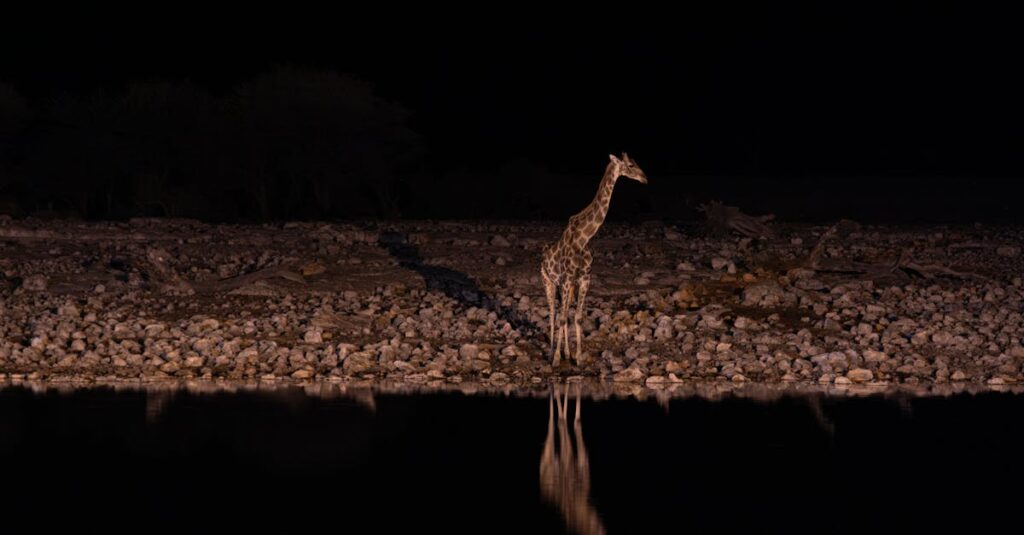
Night safaris offer a fundamentally different perspective on this iconic urban wilderness. In daylight, Nairobi National Park is a landscape of open plains, black rhino sanctuaries, and the famous city skyline backdrop. After dark, it becomes a soundscape of movement, calls, and shadows, where many species that remain hidden during the day begin to dominate the ecosystem. Predators become active, smaller mammals emerge from cover, and the ecological relationships that shape the park become easier to observe in real time.
This is precisely what makes Nairobi National Park night game drives unique. You are not just extending a daytime safari into the evening; you are stepping into a different biological shift of the same landscape. The park transforms from a visually driven experience into one guided by behavior, sound, and subtle movement. For travelers who want to understand how African ecosystems actually function over a 24-hour cycle, a night safari adds depth that a day drive alone cannot provide. It is also one of the rare places in Africa where you can do this so close to a major city, making it a distinctive Nairobi experience rather than a generic safari add-on.
From March 1, 2026, NairobiPark.org is introducing curated night safari experiences designed to balance conservation rules, guest safety, and meaningful wildlife viewing, while keeping the experience accessible to visitors staying in or transiting through Nairobi.
Read about all our safaris at Nairobi National Park.
What to Expect on a Nairobi Night Safari
What to expect on a Nairobi night safari is a carefully paced, observation-focused drive that prioritizes quality sightings and ecological interpretation over speed or distance covered. The experience is typically quieter, more deliberate, and more immersive than a daytime game drive.
You can expect:
- A guided drive in a 4×4 safari vehicle with a trained driver-guide and, when required, a KWS ranger
- Use of filtered spotlights designed to locate animals without causing distress or disorientation
- A slower driving pace focused on scanning, listening, and interpreting animal behavior
- A strong emphasis on nocturnal species, predator activity, and transitional behaviors at dusk and night
- Educational commentary on how the park’s ecosystem changes after dark
- A cooler, more comfortable temperature compared to daytime drives
- A route plan that respects park regulations and sensitive wildlife zones
- A return to the city within a defined time window, making it suitable even for travelers with limited time in Nairobi
The experience is less about ticking off a long species list and more about understanding behavior, movement, and ecological roles. You may spend significant time observing a single scene, such as predators on the move, grazing herbivores under low light, or smaller mammals navigating the edges of the savannah.
How a Night Safari Differs from a Day Safari in Nairobi National Park
A night safari differs from a day safari in Nairobi in both purpose and execution. Day drives are optimized for visibility, broad landscape coverage, and classic postcard sightings. Night drives are optimized for behavior, atmosphere, and species that are rarely seen in daylight.
During the day, the focus is on open-country species such as giraffes, zebras, rhinos, and large herds of herbivores, with predators often resting or hidden in shade. At night, the focus shifts to predators, nocturnal mammals, and transitional behaviors such as hunting, foraging, and territorial movement.
In practical terms, the differences look like this:
| Aspect | Day Game Drives in Nairobi NP | Night Safari in Nairobi NP |
|---|---|---|
| Main focus | Landscapes and diurnal wildlife | Behavior and nocturnal wildlife |
| Visibility | Natural daylight | Filtered spotlights and low light |
| Pace | Moderate, covering more ground | Slower, more observational |
| Species emphasis | Rhinos, giraffes, zebras, buffalo, birds | Predators, nocturnal mammals, shy species |
| Atmosphere | Bright, scenic, open | Quiet, immersive, sensory |
| Educational angle | Species identification and habitats | Behavior, ecology, and activity cycles |
| Temperature | Often warm to hot | Cooler and more comfortable |
Both experiences complement each other. A day safari shows you what lives in the park. A night safari shows you how that life actually functions when the ecosystem is most active.
💰 Nairobi National Park Night Game Drive Pricing
(Private Land Cruiser with Driver-Guide – 2 Hours, 7:00 PM to 9:00 PM)
| Number of Guests | Price per Person (USD) | Total Cost (USD) |
|---|---|---|
| 1 person | $210 | $210 |
| 2 people | $120 | $240 |
| 3 people | $100 | $300 |
| 4 people | $90 | $360 |
| 5 people | $70 | $350 |
💰 Combine Evening/Sunset Drive and Night Game Drive for Extended Park Safari
You can combine an afternoon or evening park drive for 4 hours from 2 PM to 6 PM with a night game drive in the same private 4×4 Land Cruiser for a seamless, extended safari experience—and below are the rates for this combined outing.
| Number of Guests | Price per Person (USD) | Total Cost (USD) |
|---|---|---|
| 1 person | $270.00 | $270.00 |
| 2 people | $150.00 | $300.00 |
| 3 people | $120.00 | $360.00 |
| 4 people | $105.00 | $420.00 |
| 5 people | $90.00 | $450.00 |
What this covers: a daytime tour transitioning into a night game drive in the same private 4×4 Land Cruiser with your driver-guide, giving guests both daylight and after-dark experiences in one outing.
The night safaris cannot accommodate more than 5 people as we have to create room for 2 KWS ranger who will join on night game drive.
Inclusions and Exclusions
✅ Inclusions
- Private 4×4 Toyota Land Cruiser with pop-up roof (equipped for night game viewing)
- Professional English-speaking driver-guide
- Red filtered flashlights
- Vehicle and driver park entry fees
- Drinking water
- Fuel and comprehensive vehicle insurance
- Hotel / residence / airport pick-up and drop-off within Nairobi
- Safari vehicle and standard game-viewing equipment
- 2 accompanying armed rangers (to join)
❌ Exclusions
- Guest park entry tickets (purchased separately via eCitizen – please see our contact page for guidance)
- Meals, drinks, and snacks
- Tips and gratuities
- Souvenirs and personal expenses
- Optional add-ons (if any are offered in combination with the night drive)
- Binoculars (not provided)
🌙 Nairobi National Park Night Game Drive Safari Itinerary
Typical Itinerary (5:00 PM – 9:00 PM)
🕔 5:00 – 5:20 PM | KWS Offices: Ticket Verification & Ranger Briefing
Arrive at the KWS offices by 5:00 PM for ticket verification and to meet the assigned rangers. KWS Offices at the Main gate close by 5:30 PM and they indicate that guests must arrive by 5:20 PM.
Your driver-guide gives a short briefing covering safety, spotlight etiquette, and what to expect as the park transitions from day to night.
🕠 5:30 – 6:15 PM | Main Gate → Open Plains (Athi-Kapiti Plains Side)
Enter the park at 5:30 PM and begin with the open grassland loops on the Athi-Kapiti plains side and central grasslands.
This dusk window is ideal for:
- Black and white rhino moving out of cover to feed
- Buffalo, zebra, and antelope becoming more active as temperatures drop
- Early hyena movement crossing open ground
The wide, unobstructed terrain here allows long sightlines and is the best place to read overall animal movement before darkness sets in.
🕕 6:15 – 7:30 PM | Ivory Burning Site → Hippo Pools → Riverine & Bush Corridors
As light fades, the drive shifts toward mixed habitat zones:
- Ivory Burning Site area (key landmark and transition zone)
- Hippo Pools and riverine sections
- Acacia bush and woodland edges along the main tracks
These areas are stronger for:
- Spotted hyena and jackals patrolling natural movement corridors
- Possible serval, genet, or civet along bush edges
- Night birds such as nightjars, thick-knees, and occasional owls along the tracks
This is where dusk turns into true night, and where behavioral sightings often start to outnumber simple “scenery” sightings.
🕢 7:30 – 8:45 PM | Core Night Drive Loops: Central Tracks & Woodland Edges
Now fully in night conditions, the drive slows into deliberate loops along:
- Central tracks
- Woodland and bush corridors
- Edges between open plains and thicker cover
The focus here is on:
- Scanning for eye-shine and listening for calls or movement
- Tracking hyena activity and possible predator movement
- Watching for smaller nocturnal mammals crossing between habitats
Guides work these loops carefully, using sound, tracks, and fresh movement patterns rather than just driving distance.
🎯 Honest Expectation
In two hours, this is a focused, high-impact night experience built around the open plains, Ivory Burning Site area, and riverine/bush corridors—not about covering the whole park, but about being in the right habitats at the right time.
Wildlife and the Night Safari Experience
Animals seen at night in Nairobi National Park are often those that remain hidden or inactive during the day. Predators such as lions, hyenas, and sometimes leopards become more mobile after dark, increasing the chances of observing hunting or territorial movement. Smaller carnivores and nocturnal mammals, which are rarely encountered in daylight, are also more likely to appear along tracks and open areas.
Nocturnal wildlife in Nairobi National Park includes species that rely on darkness for protection or hunting efficiency. Their behavior at night is more natural and less constrained by heat and human presence. This creates opportunities to observe interactions that are rarely visible during the day.
Rhino sightings at night are possible, particularly in areas where they move between feeding grounds. Birdlife changes as well, with nightjars, owls, and other nocturnal or crepuscular species becoming part of the experience. While no safari can guarantee specific sightings, the diversity of behaviors observed at night is what makes the experience consistently rewarding, even when species lists vary.
🟢 High-Likelihood Sightings (Common or Likely for Night Drives)
These species are either frequently encountered overall in the park or behaviorally active at dusk/night and are strong targets for night spotlighting.
Mammals (Ranger Targets)
- Spotted hyena (Crocuta crocuta) – common nocturnal scavenger with distinctive calls.
- Black rhinoceros (Diceros bicornis) – often moves into feeding areas at cooler periods.
- White rhinoceros (Ceratotherium simum) – large herbivore likely to be visible near plains at night.
- African buffalo (Syncerus caffer) – watch for their movement and wallowing raids after dark.
- Common warthog (Phacochoerus africanus) – active feeding after dusk.
Birds (Ranger Targets)
- Spotted nightjar (Eurostopodus guttatus) – nocturnal or crepuscular ground bird visible at night.
- Eurasian nightjar (Caprimulgus europaeus) – often seen low flying or flushed from roadsides.
- Black-crowned night-heron (Nycticorax nycticorax) – active at dusk around waterholes.
🟡 Medium Sightings (Seen With Some Effort at Night)
These are species that occur in Nairobi NP and have nocturnal or crepuscular habits or are relatively common overall.
Mammals
- Lion (Panthera leo) – often more active near dusk/dawn; spotlighting increases chances.
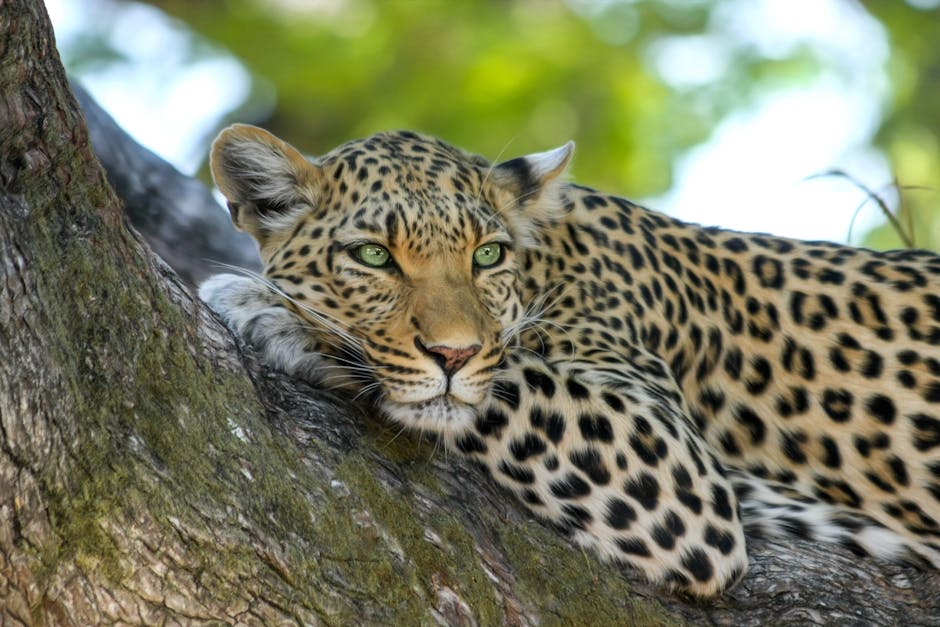
- Leopard (Panthera pardus) – nocturnal but solitary and elusive.
- Black-backed jackal (Canis mesomelas) – opportunistic feeder with night and early morning activity.
- Serval (Leptailurus serval) – night predator hunting small mammals; needs careful scanning.
- Common genet (Genetta genetta) – small carnivore with nocturnal habits.
- Honey badger (Mellivora capensis) – nocturnal forager (rare but possible).
- Crested porcupine (Hystrix cristata) – nocturnal rodent often active after sunset.
Birds
- Pearl-spotted owlet (Glaucidium perlatum) – small owl occasionally heard or seen; mostly nocturnal.
- Spotted thick-knee (Burhinus capensis) – crepuscular/nocturnal wader often encountered near tracks.
🔴 Low (Rare or Special Focus) Sightings
These are nocturnal or elusive species documented for the region but unlikely even on regular night drives; more typical for specialist mammal watching.
Mammals
- Cheetah (Acinonyx jubatus) – primarily diurnal but may relocate in low light; rare.
- African civet (Civettictis civetta) – nocturnal omnivore, low detection likelihood.
- Lesser bushbaby (Galago senegalensis) – small nocturnal primate, challenging to spot without focused effort.
Birds (Occasional)
- Marsh owl (Asio capensis) – nocturnal raptor that may occur in grassier sections.
- African grass owl (Tyto capensis) – strictly nocturnal but scarce.
📌 Ranger-Friendly Spotlight Targets (High Priority for a Night Drive)
These species are among the most realistic and rewarding targets for a Nairobi NP night safari spotlighting effort:
Top Mammal Targets
✔ Spotted hyena (Crocuta crocuta)
✔ Rhinos — black (Diceros bicornis) and white (Ceratotherium simum)
✔ African buffalo (Syncerus caffer)
✔ Common warthog (Phacochoerus africanus)
✔ Possibly serval (Leptailurus serval) and jackal (Canis mesomelas)
Top Bird Targets
✔ Spotted nightjar (Eurostopodus guttatus)
✔ Eurasian nightjar (Caprimulgus europaeus)
✔ Black-crowned night-heron (Nycticorax nycticorax)
✔ Spotted thick-knee (Burhinus capensis)
🧠 Notes for Night Safari Planning
- Species activity often peaks during dusk and before dawn, making the start and end of night drives especially productive.
- Many small mammal or bird species are cryptic and may be heard rather than seen unless tour lighting and guide experience are optimized.
- Nairobi NP has 100+ mammals and 500+ birds overall, but not all are detectable at night; this list emphasizes realistic targets for a night drive setting.
The night safari predators of Nairobi are especially compelling to watch because their activity patterns align with the cooler hours. This is when ecological roles become clear: who hunts, who scavenges, who avoids, and who dominates specific territories.
Below is a checklist for Nairobi National Park Night Game Drive safari animals:
Honest Review of Nairobi National Park Night Safaris
Why it can be genuinely worth doing
1) Night is when Nairobi NP’s “real” ecology shows up
Day drives are dominated by visibility: open plains, rhinos, giraffe, zebra—classic. At night, the park becomes behavior-driven. Even when you don’t get a dramatic predator scene, you’ll often notice the ecosystem feels more “alive”: animals moving with purpose, more active foraging, and a different rhythm to everything.
Hyenas are the headline act for most night drives—highly social, vocal, and far more interesting at night than in daytime, which is why night-drive specialists consistently flag them as a top reward.
2) It’s a rare “after dark” safari that can fit into a normal Nairobi evening
The best thing about Nairobi NP is efficiency—you can do a real safari without flying anywhere. Experts reviewing Nairobi NP repeatedly point out how quickly you can go from airport/city to savannah and serious wildlife.
A night safari extends that advantage into the evening. If you’ve got one free night in Nairobi, it can be the highest-value wildlife experience available in that time window.
3) The atmosphere is the product
You’re not just paying for “more animals.” You’re paying for:
- Cooler temperatures
- A quieter park feel
- Spotlight eye-shine moments
- Night calls and movement you simply don’t get during the day
This is the sort of experience that tends to stay in people’s memory even when the species list is short.
drawbacks of Night Safaris at NNP
1) It’s not a guaranteed big-cat show
Some guests get lions; some don’t—reviews of Nairobi NP tours regularly show that variability (including “no lions” experiences even when the guide is excellent).
At night, visibility is harder, and predators are still predators—they do not follow a schedule.
Our honest take: if your happiness depends on a leopard or lion sighting, don’t book a night safari as a standalone. Pair it with a sunrise or late afternoon drive.
2) Night visibility is inherently limited, and photos are harder than people expect
Low light means:
- Your eyes see less detail than you think you “should”
- Photography is challenging
- Flash is often restricted for ethical reasons (and it ruins the moment anyway)
A night safari is primarily an experience and behavior product, not a “perfect photo” product.
3) Organization matters more (pick-up timing, group logistics, traffic)
The game drive period is from 7 PM to 9 PM and any delay can affect the start of an experience. The delays are common with multipick-up locations but we do not offered shared night safaris in group format.
At night, losing 45–60 minutes to pick-ups matters because your “prime window” is shorter.
Our honest take: if you want maximum quality, choose private or tightly managed small-group departures.
What you can realistically see
Realistic night-drive “deliverables” in Nairobi NP
These are the sightings that are most ranger-friendly and most consistent with what night-drive experts describe as typical after-dark targets:
- Spotted hyena (Crocuta crocuta) — the most consistent nocturnal carnivore experience
- Rhinos (Diceros bicornis; Ceratotherium simum) — often visible, especially in open feeding areas
- Buffalo / plains game — zebra and antelope are often still active or moving
- Night birds — nightjars, thick-knees, sometimes owls (often heard first, then seen)
The “possible but No promises list
- Leopard (Panthera pardus) — possible, but elusive
- Serval / genet / civet / bushbaby — possible, but usually requires luck + careful scanning (and the right habitat at the right time)
Our unfiltered take: any operator promising leopards or a long list of small nocturnals as “likely” is overselling. Night drives are probabilistic.
Who should book this (and who shouldn’t)
Book it if you want:
- A different side of Nairobi NP beyond daytime scenery
- Hyena activity, predator movement, nocturnal atmosphere
- A high-impact wildlife evening without leaving Nairobi
- A second safari experience to complement a sunrise/day drive
Skip it if:
- You’re expecting Mara-style density or guaranteed big cats
- You want bright visibility and easy photography
- You dislike structured rules and controlled pacing (night drives are regulated)
How to get the best night safari (what we’d tell our own friends)
- Pair it with a sunrise drive safari if you can. Night for atmosphere and nocturnals; sunrise for predator movement and clearer viewing.
- Avoid peak congestion where possible (weekends and holidays tend to be busier in Nairobi NP generally).
- Choose private if timing and quality matter—night windows are valuable and pick-up delays hurt.
- Come dressed for cool air: warm layer, closed shoes, neutral colors.
- Treat it like a behavioral safari: listen more, scan more, photograph less.
Logistics, Transport, and Timing
Night safari pick up in Nairobi is designed to be simple and efficient, typically from hotels, residences, or agreed meeting points within the city. The short distance between the city center and the park makes Nairobi one of the easiest places in Africa to experience a night safari without long transfers.
Nairobi night safari transport is provided in suitable 4×4 safari closed-vehicles equipped. The duration of a night safari in Nairobi is 2 hours from 7 PM to 9PM to fit within park regulations.
Routes are carefully selected to balance wildlife viewing opportunities with safety and conservation priorities. Whether coming from the city center or directly from the airport, the logistics are designed to make the experience accessible without compromising the integrity of the park.
Safety, Rules, and Responsible Viewing
A Nairobi night safari is conducted under strict safety and conservation protocols. The presence of trained guides and, when required, KWS rangers ensures that both guests and wildlife are protected. Driving speeds are controlled, off-road driving is not permitted, and spotlight use is regulated to minimize stress on animals.
What to wear on a Nairobi night safari is simple and practical. Neutral, warm layers are recommended, as temperatures drop after sunset. Closed shoes and a light jacket are usually sufficient. Children can join depending on age and operator policies, but the experience is designed to be calm and respectful rather than high-energy or noisy.
Photography rules at night emphasize responsible behavior. Flash photography is restricted or prohibited, and guides will manage lighting to prioritize animal welfare over perfect images. Health and comfort considerations focus mainly on staying warm, staying seated, and following guide instructions at all times.
Photography and Gear at Night
Night safari photography in Nairobi is challenging but rewarding. Low light conditions mean that camera choice, lens selection, and settings matter more than during the day. Larger sensors, faster lenses, and good high-ISO performance are advantages, but even modern smartphones can capture memorable moments when used carefully.
Lenses for night safari photography typically favor wider apertures rather than extreme zoom. Binoculars can still be useful, especially for scanning reflective eye shine at a distance. Torch use is controlled by the guide, and guests are discouraged from using personal lights that could disturb animals.
The goal is not just to take photos, but to observe responsibly and preserve the integrity of the experience for both wildlife and other guests.
Reviews, Value, and First-Time Tips
Nairobi night safari reviews consistently highlight the atmosphere, the sense of discovery, and the opportunity to see a different side of the park. Whether a night safari is worth it in Nairobi depends on what you want from your safari experience. For travelers who value behavior, ecology, and unique perspectives, it adds a layer of depth that daytime drives cannot fully provide.
First-time visitors benefit from understanding that night safaris are not about speed or volume of sightings. Common mistakes include expecting daylight-style visibility or focusing too much on photography instead of observation. The most rewarding approach is to treat the experience as an immersive, interpretive journey rather than a checklist exercise.
Choosing a reputable operator matters, as quality guiding and adherence to rules directly affect both safety and the quality of the experience.
Alternatives and Add-Ons
A day safari and a night safari in Nairobi serve different purposes and work best together. Sunset safaris offer a transitional experience, while full night safaris focus on nocturnal behavior. Some itineraries combine a night safari with dinner or pair it with a city tour, creating a complete Nairobi evening experience.
Short night safari options suit travelers with limited time, while extended drives allow deeper exploration within permitted hours. For many visitors, combining a daytime drive with a night safari provides the most complete understanding of the park’s ecosystem.
Operators, Packages, and the NairobiPark.org Launch
Nairobi National Park night safari tours offered through NairobiPark.org from March 1, 2026, are designed to meet different travel styles, from budget-friendly group experiences to more private, tailored options. Standard inclusions focus on professional guiding, proper vehicles, park compliance, and responsible viewing practices.
Luxury night safari options emphasize comfort and exclusivity, while budget night safaris focus on accessibility without compromising safety or conservation standards. Custom night safari experiences allow travelers, corporate groups, or couples to shape the evening around specific interests, whether that is photography, learning, or a more romantic atmosphere.
The goal of these packages is not just to offer a product, but to introduce a new way of experiencing Nairobi National Park that aligns with conservation priorities, modern travel needs, and the unique position of Nairobi as a city where wilderness truly begins at the edge of town.
💳 Booking & Payment Information
To book your Nairobi National Park Night Game Drive, please email:
Kindly include:
- Preferred date
- Number of guests and nationalities. Please note that kids aged 12 and below are not allowed.
- Pick-up location (hotel, residence, or airport)
Payment Methods
- Secure Pesapal payment link (card or MPesa)
- Card (Visa / Mastercard)
- MPesa
- Bank transfer (on request)
💡 All payments must be completed before the start of the safari.
Once your payment is confirmed, you will receive a booking confirmation email with the details of your assigned vehicle and driver-guide. Please note that, on occasion, the assigned driver or vehicle may change due to operational or availability reasons.
🚗 Pick-ups or drop-offs outside Nairobi may attract a small additional fee.
⚡ Same-Day / Last-Minute Night Safari Bookings
Yes, it’s possible—subject to availability and park regulations. We have to email the Chief Warden to arrange the tour as we need to be assigned rangers. If you send an email early in the day, we may be able to secure same-day booking.
For same-day or last-minute night safari bookings:
- Full payment is required in advance
- Once you confirm the quoted amount, we will immediately share a Pesapal payment link
- You can pay by card or MPesa within minutes
- Last-minute prices are the same as standard prices, unless a promotion or discount is running
As soon as payment is received, we will:
- Assign your safari vehicle
- Share your driver-guide’s contact details
- Confirm your pick-up arrangements
This ensures you don’t lose valuable night game-viewing time and can proceed smoothly with your guided Nairobi National Park night safari.
📌 Additional Booking Information
- Cut-Off Time:
Please book at least 6–12 hours in advance. Same-day requests are subject to availability and park approval.
Email: Bookings@NairobiPark.org - Deposit Required:
A 50% deposit is required to confirm your booking, preferably via Pesapal (card or MPesa).
For same-day bookings (within 24 hours), full payment is required—no deposit option. - Balance Payment:
The remaining balance is payable preferably via Pesapal, but we can also accept MPesa or bank transfer if you strongly prefer. - Booking Modes:
✅ Email and online (instant booking form)
❌ WhatsApp or phone bookings are not supported
❌ Cancellation Policy (Night Game Drives)
Cancellations are subject to the following fees based on the number of days before departure:
| Days Before Departure | Cancellation Fee |
|---|---|
| 120+ days | 5% |
| 119–90 days | 10% |
| 89–60 days | 20% |
| 59–31 days | 30% |
| 30–7 days | 50% |
| 6–0 days | 100% |
⚠️ Important:
- Card processing fees (5%) and wire transfer charges ($25) are non-refundable.
- If your group size reduces, this policy applies to the canceled guests, and the per-person cost for remaining guests may be adjusted accordingly.
🔁 Rescheduling:
Free rescheduling is available for most bookings (conditions vary), subject to park availability and operational constraints for night drives.
🌍 Why Book Your Night Safari with NairobiPark.org?
- Private & Personalized: Each night safari is exclusive to your group — no mixing with other guests.
- Expert Local Guides: Certified, conservation-minded professionals with deep knowledge of Nairobi National Park.
- Premium Vehicles: Clean, well-maintained 4×4 Land Cruisers equipped for night wildlife viewing.
- Park-Compliant & Responsible: All night drives are conducted under strict regulations and ethical wildlife-viewing standards.
- Reliable & Transparent: Fixed rates, no hidden costs, and clear pre-trip guidance.
🏁 Conclusion
A Nairobi National Park Night Game Drive is one of the most unique wildlife experiences you can have in Kenya’s capital. In just a few hours, you get to witness the park’s nocturnal side—predator activity, night sounds, and a completely different atmosphere from daytime safaris.
Whether you’re adding it to a daytime game drive or experiencing Nairobi NP for the first time, this night safari offers a rare, immersive, and unforgettable way to see the park after dark.
👉 Please fill out the booking form below or email us at Bookings@NairobiPark.org to receive a quick quote or make your reservation.
Bottom Line:
A Nairobi National Park night safari is worth doing when you book it for the right reasons: atmosphere, nocturnal behavior, hyena energy, and a rare after-dark safari experience minutes from the city. It is not a guaranteed big-cat spectacle, and it is not designed to be “limitless”—it’s regulated and structured by nature.
If you want a Nairobi experience that feels like you discovered a secret version of the park—cooler, quieter, more alive—this is it.