

Nairobi National Park · Wildlife science
Savannah animal adaptations in Nairobi National Park
How wildlife survives heat, drought, fire, predators and a city edge
A lion resting beneath a tree, a giraffe reaching into an acacia, zebra moving across short grass and hippos lying in a river pool are all showing adaptations to the savannah — and in this park, all of it happens seven kilometres from a capital city.
The short answer
Savannah adaptations are not only body parts. They are physical structure, digestion, water conservation, heat management, social behaviour, feeding choices, seasonal movement and the ability to respond to fire, rainfall, predators and human activity.
Nairobi National Park is an unusually good place to watch those relationships, because the park is small, the habitats change quickly, and the pressures — including the city itself — are visible from the vehicle.
- Park area
- 117 km²
- From the city centre
- ~7 km
- Animal species
- 100+
- Bird species
- 516+
Park figures as published in Kenya Wildlife Service’s Nairobi National Park profile.
The park is not a single uniform grassland. Open plains, wooded grasslands, shrublands, dry forest, riverine corridors, wetlands, dams and rocky gorges each create different opportunities and risks. The Nairobi National Park habitats and ecosystem guide explains this landscape in more detail.
What this guide covers, and what it does not
This guide covers how the park’s wildlife survives: feeding niches and digestion, water conservation and heat management, seasonal movement and migration, fire and grazing, anti-predator behaviour, predator flexibility at the city edge, and the point at which behaviour can no longer compensate for lost habitat. It is written around the published research and says, for every finding, whether the work was done in this park or somewhere else.
It does not catalogue the species themselves. For what lives here — the Big Four, the antelope, the primates, the reptiles and the full mammal list — this is a supporting guide to the main guide to all the animals at Nairobi National Park: Nairobi National Park animals and wildlife. Start there for identification, then come back here for the reasons behind the behaviour.
Also useful alongside this page: habitats and ecosystem · the best time to visit · park gates and access · all Nairobi National Park tours and safaris.
How to read the research on this page
Two kinds of evidence, kept separate
Studies done in this park
Direct evidence from Nairobi National Park itself — black rhino browse, herbivore counts, lion collaring, grassland burns, grassland birds. Where a finding carries this label, it was measured here.
Studies from other savannahs
Work from Gorongosa, Kruger, Hwange, Addo and Mpala. It explains the biological process well, but it should not automatically be treated as evidence about every animal in Nairobi.
On this page
- What is an animal adaptation?
- The main pressures
- Feeding adaptations
- Water and heat
- Drought and migration
- Fire, grazing and fresh grass
- How herbivores avoid predators
- Predators at an urban edge
- Bird adaptations
- Small mammals, reptiles and insects
- The limits of adaptation
- What conservation requires
- How to observe adaptations
- Half-day or full day
- Common questions
- Studies cited
Definitions
What is an animal adaptation?
Evolutionary
An inherited characteristic shaped over many generations — a giraffe’s feeding anatomy, or a black rhino’s prehensile lip.
Physiological
An internal process that helps an animal cope with environmental pressure: concentrated urine, efficient digestion, mechanisms for losing heat.
Behavioural
An action or choice — hunting at night, changing diet during drought, or moving between habitats.
Flexibility is not the same as evolution
Animals can also show behavioural flexibility within a single lifetime. When Nairobi’s lions move more at night or avoid heavily used areas, that demonstrates flexibility. It does not prove they have genetically evolved to live beside a city.
That distinction matters, because wildlife can adjust its behaviour only while sufficient food, water, cover and movement routes remain available.
The forces at work
The main pressures shaping Nairobi’s wildlife
Seven pressures account for most of what you will see an animal doing on any given morning.
| Pressure | Typical adaptation | Nairobi National Park example |
|---|---|---|
| Heat | Shade-seeking, nocturnal activity and water use | Lions, hippos and buffaloes change their activity patterns |
| Seasonal rainfall | Movement and dietary flexibility | Herbivores move between the park and the Athi–Kapiti plains |
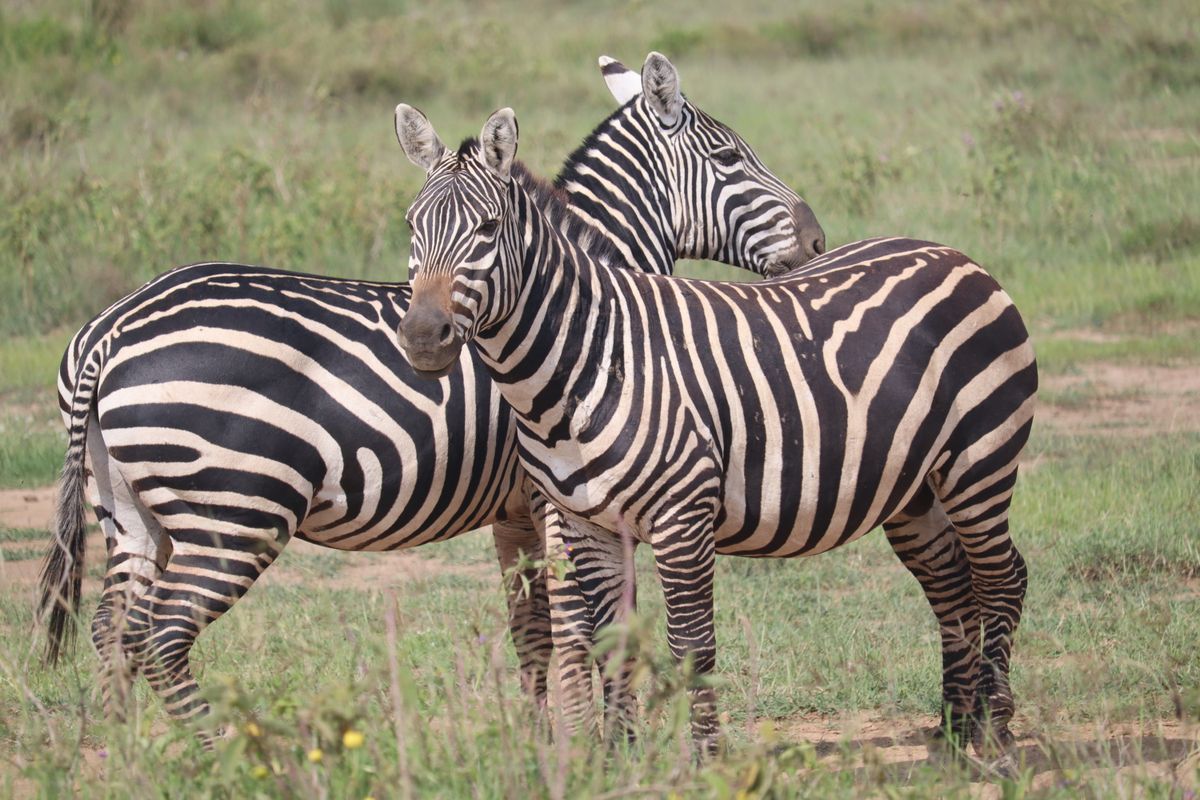
| Uneven forage | Different teeth, digestive systems and feeding heights | Zebra, wildebeest, giraffe and rhino use different food niches |
| Predators | Herding, vigilance, speed and camouflage | Buffalo and zebra reduce individual risk through group living |
| Fire | Selection of fresh regrowth and varied burn patches | Grazers use short, nutritious grass after appropriate burns |
| Urbanisation | Avoidance, nocturnal movement and corridor use | Lions move differently according to human activity and time of day |
| Fragmentation | Longer journeys and increased conflict risk | Fences restrict access to traditional dispersal areas |
Feeding adaptations
Why herbivores do not all eat the same thing
Savannah herbivores are not simply divided into grass eaters and leaf eaters. Grass varies in height, age, moisture, fibre and nutrient content. Trees and shrubs differ in leaf chemistry, thorniness and seasonal availability.
Comparative evidence
In Gorongosa National Park, Mozambique, researchers used DNA metabarcoding and plant-trait data to study how 14 large herbivore species divide food resources. Their 2022 study, “Mechanisms of dietary resource partitioning in large-herbivore assemblages: A plant-trait-based approach,” found that the main division was between grasses and broad-leaved plants, while body size and feeding height created further differences in diet. The same principle helps explain the herbivore community of Nairobi National Park.
Grazers: zebra, wildebeest, buffalo and white rhino
Plains zebra are adapted to process relatively abundant, fibrous grass. Their hindgut fermentation allows them to digest large quantities of forage comparatively quickly. Wildebeest are ruminants and generally select shorter, more nutritious grass. This allows wildebeest and zebra to occupy some of the same areas without being exact competitors.
Comparative evidence
In a GPS-based study of overlapping grazers, Norman Owen-Smith and colleagues found that zebra and wildebeest used different feeding spaces and vegetation characteristics even when their home ranges overlapped. Their research is published as “Spatially nested niche partitioning between syntopic grazers at foraging arena scale within overlapping home ranges.”
Buffalo are also important grass consumers. Their larger bodies and herd structure allow them to exploit substantial quantities of forage. White rhinos are primarily grazers and can crop grass close to the ground.
Nairobi evidence
A Nairobi National Park study by Owino and colleagues examined eight herbivore species using population data collected between 1990 and 2008. In “Patterns of Variation of Herbivore Assemblages at Nairobi National Park, Kenya, 1990–2008,” the researchers recorded overall declines in herbivore abundance, including significant declines in wildebeest, Grant’s gazelle and impala. They also found that more individuals were recorded inside the park during dry seasons than during wet seasons.
Seasonal movement is not an unusual event. It is part of how herbivores respond to changes in grass, water and land conditions.
Giraffes and black rhinos: browsing at different heights
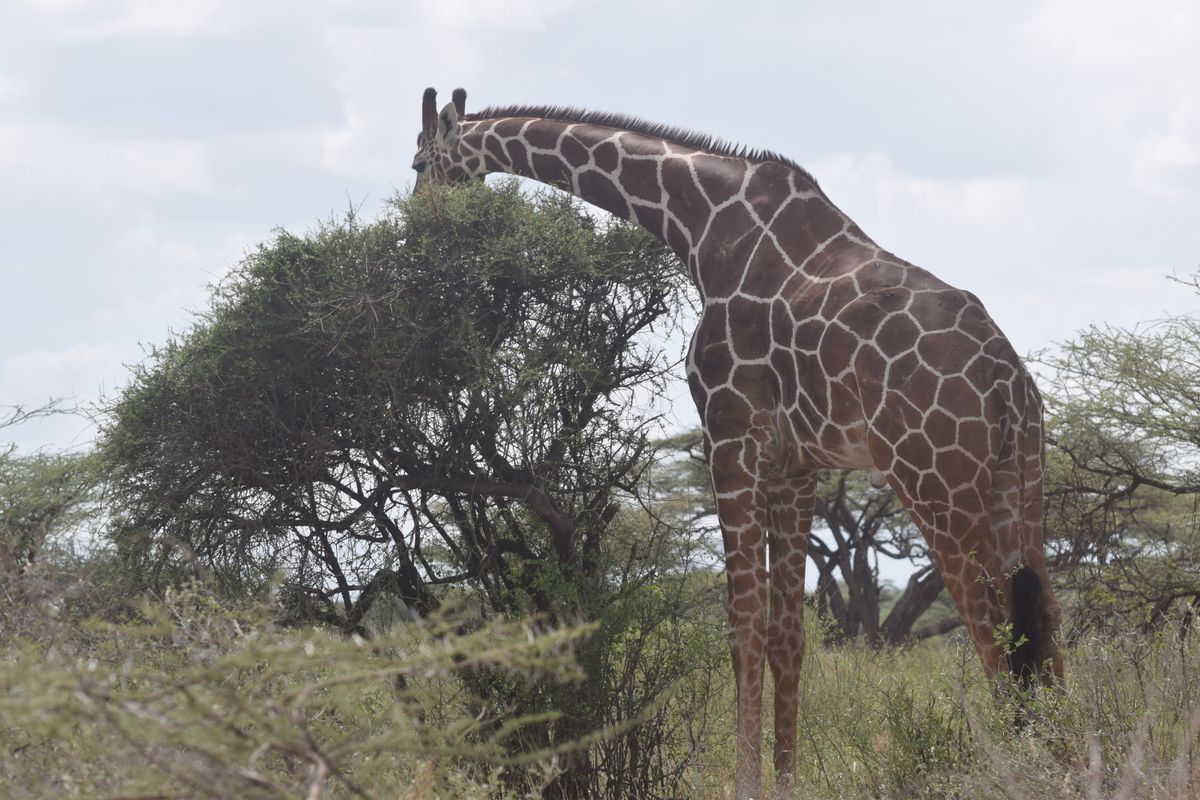
Giraffes occupy a feeding height largely unavailable to shorter browsers. Their long necks, long tongues and flexible lips allow them to reach leaves in the upper canopy of trees such as acacias. That physical difference also reduces competition.
Comparative evidence
In a South African savannah experiment, Cameron and du Toit found that giraffes browsed high in the canopy and avoided competing directly with shorter browsers. Their findings are published in “Winning by a Neck: Tall Giraffes Avoid Competing with Shorter Browsers.”
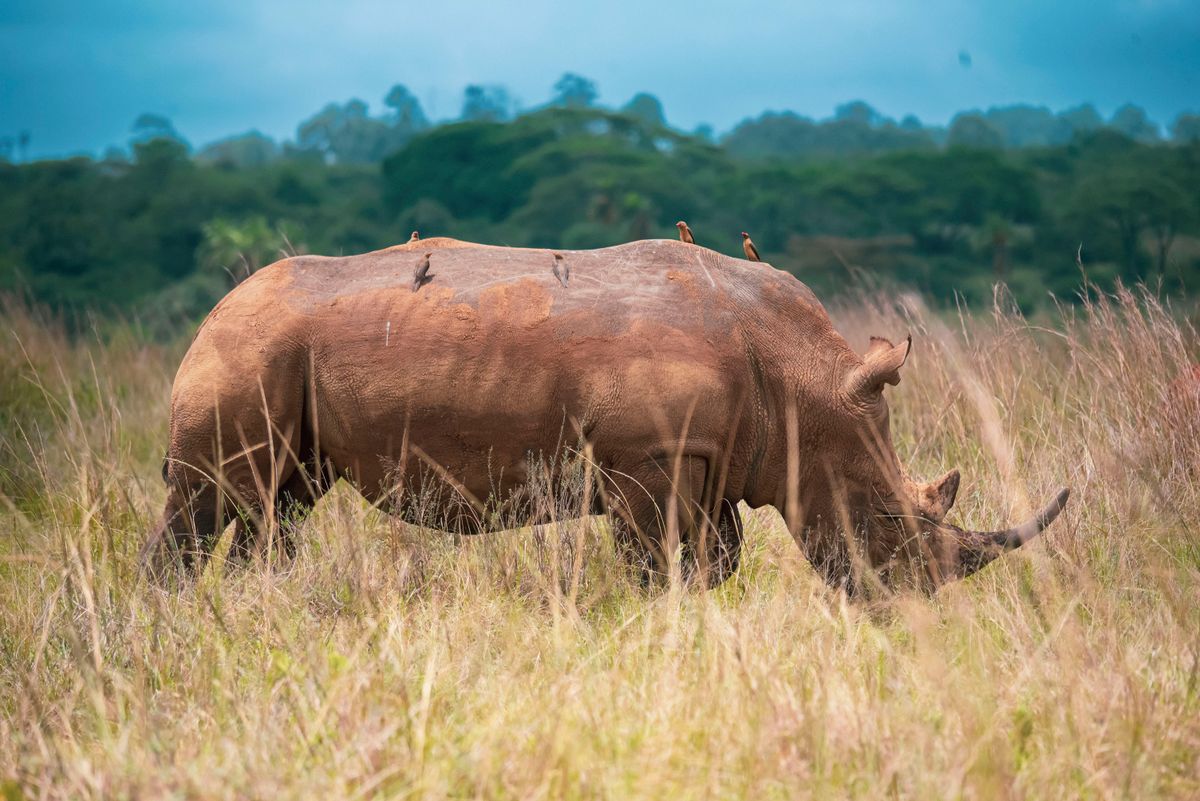
Black rhinos use a different browsing strategy. Their pointed, prehensile upper lip helps them select leaves, shoots and woody plants.
Nairobi evidence
S. M. Muya of the Kenya Wildlife Service and N. O. Oguge of Kenyatta University studied black rhino feeding in Nairobi National Park between September 1994 and February 1995. Their African Journal of Ecology paper, “Effects of browse availability and quality on black rhino diet in Nairobi National Park, Kenya,” identified 34 potential browse species, of which 32 were used by rhinos. The study also found that plant availability, fibre, protein and chemical compounds influenced feeding choices.
Conserving black rhinos therefore requires conserving diverse and nutritious browse habitat — not only protecting individual animals from poaching.
Mixed feeders: impala, eland and gazelles
Mixed feeders can switch between grass and browse as conditions change. This becomes particularly valuable during drought, when grass may dry out before shrubs and trees lose all their leaves.
Comparative evidence
At Kruger National Park in South Africa, Abraham and colleagues studied herbivore responses during a severe drought. Their research, “Drought-response strategies of savanna herbivores,” found that mixed feeders incorporated more browse into their diets, while grazers and larger herbivores were more likely to move towards drought refuges.
This is comparative evidence, not a direct Nairobi study. It does, however, help explain why impala, eland and gazelles may respond differently from specialist grazers when Nairobi’s grasslands dry out.
Three strategies, one grassland. The division is what allows eight or more large herbivore species to share 117 km² without any one of them eating the others out. Species accounts for each animal are on the animals and wildlife guide.
Water and heat
Cooling, shelter and the timing of the day
Water is not only something animals drink. It is also a source of cooling, shelter, feeding opportunities and movement.
Comparative evidence
A study of 48 African ungulate species examined how animals conserve water through dung moisture, urine concentration, kidney structure, digestive traits and evaporation. The study, “Quantifying water requirements of African ungulates through a combination of functional traits,” found that African herbivores use several different physiological pathways to survive in water-limited environments.
Hippos and aquatic cooling
Hippos are closely tied to rivers, pools and permanent water. They spend much of the hottest part of the day submerged and generally leave the water to graze when temperatures are lower.
Comparative evidence
In a laboratory and field study of hippopotamus thermoregulation, P. G. Wright found that hippos normally avoid excessive heat stress on land by spending much of the day in water. The findings are reported in “Thermoregulation in the Hippopotamus on Land.”
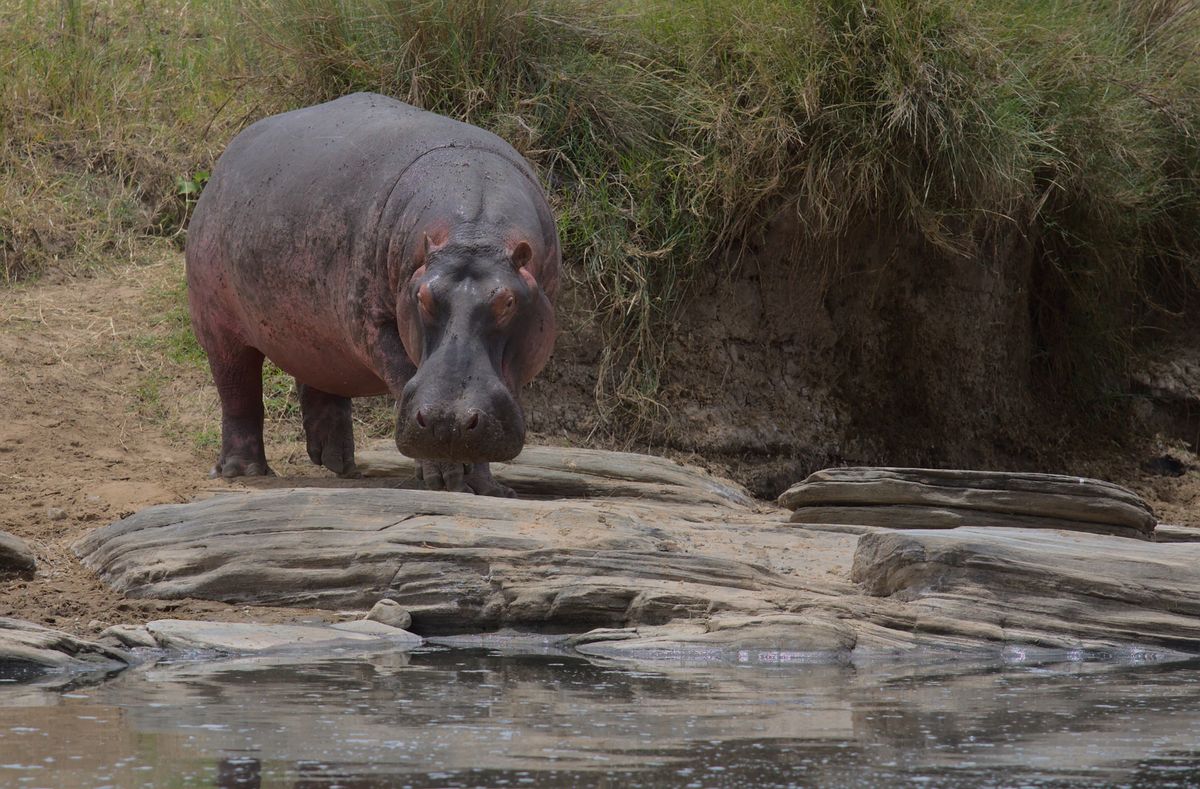
At Nairobi National Park’s Hippo Pool nature trail, the riverine habitat demonstrates why water corridors matter to more than hippos. The same area can support crocodiles, waterbirds, monkeys, fish and shaded vegetation.
Shade and time of day
Many savannah animals avoid the hottest conditions rather than confronting them directly. They rest under trees, use riverine shade, reduce movement during midday or become active at dusk and night.
For predators, changing the time of activity can reduce encounters with people. For herbivores, it can reduce heat stress and allow access to water or fresh forage before the day becomes hot.
This is why the same animal may appear to behave differently in the early morning, at midday and in the late afternoon. Time is part of the habitat.
Drought and migration
Movement is an adaptation at the scale of the landscape
For many Nairobi National Park animals, movement is one of the most important adaptations of all.
The park is connected ecologically to the wider Athi–Kapiti ecosystem, where rainfall creates shifting patterns of grass growth and water availability.
Nairobi evidence
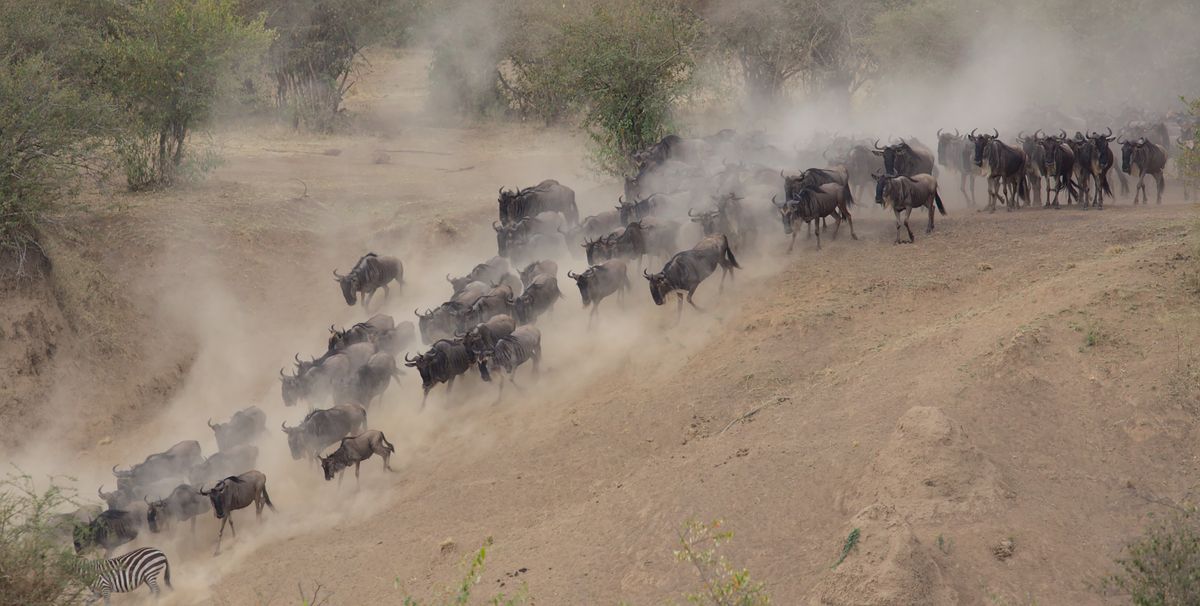
An African Journal of Ecology study by S. S. Imbahale, J. M. Githaiga, R. Chira and Y. S. Mohammed examined wildlife and livestock movement in the ecosystem. The 2008 study, “Resource utilization by large migratory herbivores of the Athi–Kapiti ecosystem,” found that plant biomass differed between Nairobi National Park and the surrounding plains. Wildebeest were more numerous on the plains during the study period, while zebra showed distinct monthly movement patterns. Rainfall influenced both plant growth and herbivore movement.
Nairobi evidence
Ogutu and colleagues examined longer-term population changes in the same landscape. Their research, “Changing wildlife populations in Nairobi National Park and adjoining Athi-Kaputiei Plains: Collapse of the migratory wildebeest,” reported a decline from almost 30,000 wildebeest in 1978 to approximately 5,000 during the period of their analysis.
The problem is not that wildebeest have forgotten how to migrate. Migration requires access to grassland, water and safe routes.
Nairobi evidence
Research by Said and colleagues found that extreme land fragmentation and fencing increasingly obstructed wildlife movement between Nairobi National Park and Kitengela. Their findings are published in “Effects of extreme land fragmentation on wildlife and livestock population.”
Fences, settlements, roads and changing land use can remove the landscape that makes migration useful. Migration is therefore an adaptation at the scale of the entire landscape, not simply an instinct inside an individual animal.
Fire ecology
Fire, grazing and fresh grass
Fire is one of the forces that maintains the contrast between open grassland and woody vegetation — and one of the easiest to get wrong.
Fire can remove old, fibrous material and encourage fresh regrowth. It can also damage soil cover, young trees and wildlife if used at the wrong time or intensity.
Nairobi evidence
Helen Gichohi’s University of Nairobi thesis, “The Effects of Fire and Grazing on Grasslands of Nairobi National Park,” compared burned, lightly grazed and heavily grazed plots. The research found that grass quality was highest in burned plots, followed by heavily grazed areas, and lowest in lightly grazed areas.
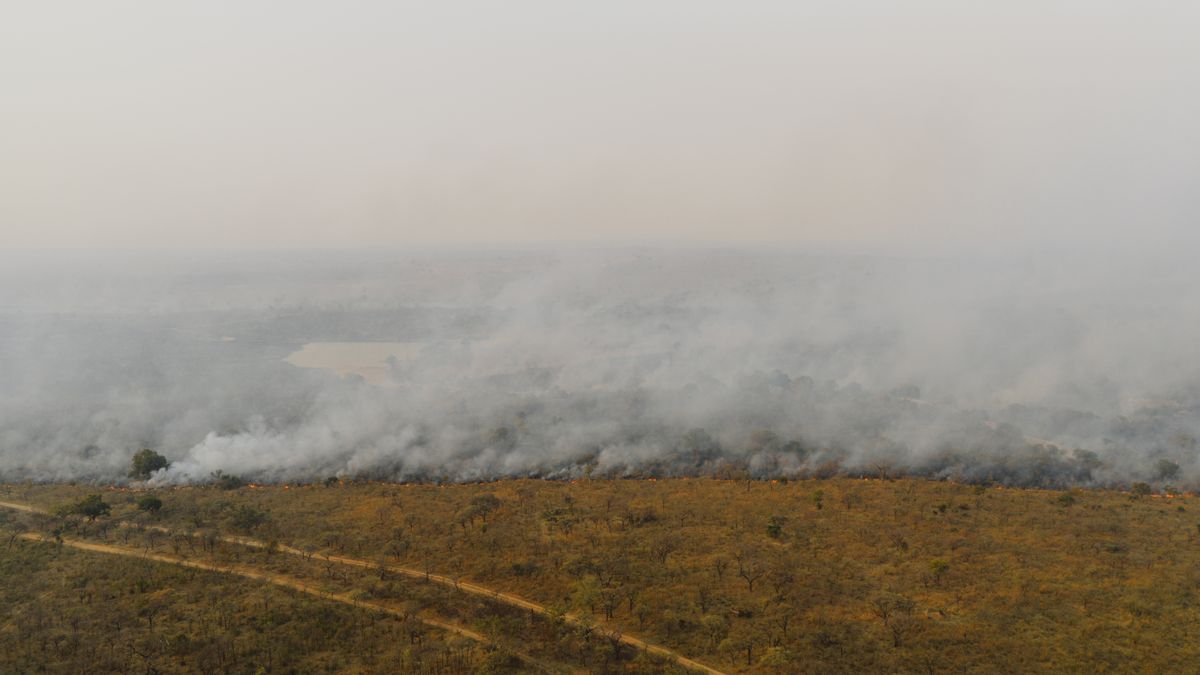
Animals respond to fire differently
- Smaller grazers may seek fresh, nutritious regrowth.
- Larger grazers may prefer larger burned areas with more total biomass.
- Browsers may remain near woody cover.
- Predators may use recently burned areas because visibility improves.
- Ground-nesting birds may benefit from open structure, but can be vulnerable if burns are poorly timed.
Comparative evidence
At Mpala Research Centre in Kenya, Sensenig, Demment and Laca experimentally studied how grazers of different body sizes responded to burned patches. Their research, “Allometric scaling predicts preferences for burned patches in a guild of East African grazers,” found that smaller grazers preferred burns with higher-quality forage, while larger grazers preferred burns with greater quantities of forage.
Comparative evidence
Herbivores also influence fire themselves. A continental study by Karp and colleagues, “Grazing herbivores reduce herbaceous biomass and fire activity across African savannas,” found that grazing reduces both standing grass biomass and fire activity.
The feedback loop
- Rain produces grass.
- Grass provides food and fuel.
- Grazers reduce fuel and create short lawns.
- Fire removes accumulated dry material.
- Fresh regrowth attracts herbivores.
- Herbivore movement influences where future fires can spread.
Comparative evidence
Research from the Kenya Long-term Exclosure Experiment found that fire and herbivory can create a more varied patchwork of burned and unburned areas. The study, “Synergistic effects of long-term herbivory and previous fire on fine-scale heterogeneity of prescribed grassland burns,” also found that small unburned patches helped tree saplings survive.
Comparative evidence
A separate central Kenya experiment found that herbaceous vegetation recovered between 15 and 27 months after prescribed fire, although recovery differed according to whether plots were accessible to wildlife and cattle. These findings are reported in “Wild herbivores and cattle have differing effects on postfire herbaceous vegetation recovery in an African savanna.”
The management lesson
For Nairobi National Park, the lesson is not to burn everywhere or never to burn. Fire is best managed as a monitored mosaic influenced by rainfall, fuel load, grazing, soil, wildlife movement and recovery time. The Nairobi National Park grassland and fire guide provides more context.
Landscapes of fear
How herbivores avoid predators
Savannah herbivores face a constant trade-off between food and safety.
The best grass may be in an exposed area. Dense vegetation may offer concealment from one predator but provide ambush cover for another.
Comparative evidence
In a South African savannah, Davies and colleagues studied how 11 herbivore species responded to predator risk, forage and vegetation structure. Their research, “Environmental controls on African herbivore responses to landscapes of fear,” found that herbivores did not respond to danger in one uniform way. Some accepted greater predator risk when preferred food was available, while large buffalo groups were more likely to use open areas.
Common anti-predator adaptations
- Group living.
- Collective vigilance.
- Rapid acceleration and speed.
- Selecting open habitat where predators can be detected.
- Using cover where ambush risk is low.
- Timing movement according to predator activity.
- Placing young animals towards the centre of the herd.
Comparative evidence
In Addo Elephant National Park, South Africa, Tambling and colleagues studied how buffalo responded after lions were reintroduced. Their study, “Spatial and temporal changes in group dynamics and range use enable anti-predator responses in African buffalo,” found that buffalo herds became larger and more defensible, while breeding herds preferred open habitats during periods when lions were active.
This does not mean Nairobi buffalo behave identically. It shows how social structure and habitat choice can help large herbivores reduce predation risk.
Comparative evidence
Zebra may also move according to the daily activity of lions. In Hwange National Park, Zimbabwe, Courbin and colleagues found that zebras fed near water during the day but moved away at sunset when lions became more active. Their findings are published in “Zebra diel migrations reduce encounter risk with lions at night.”
Predator adaptations
Hunting at an urban edge
Lions
Nairobi National Park provides one of the clearest examples of behavioural flexibility in a large carnivore anywhere in Africa.
Nairobi evidence
Lesilau and colleagues fitted GPS collars to 12 lions and monitored them between 2014 and 2018. Their study, “Spatial ecology of lions in a small, semi-fenced park surrounded by dense human populations: the case study of Nairobi National Park, Kenya,” found that lions used riverine woodland, bushland, scattered-tree grassland and open grassland, with an average annual home range of approximately 49 km².
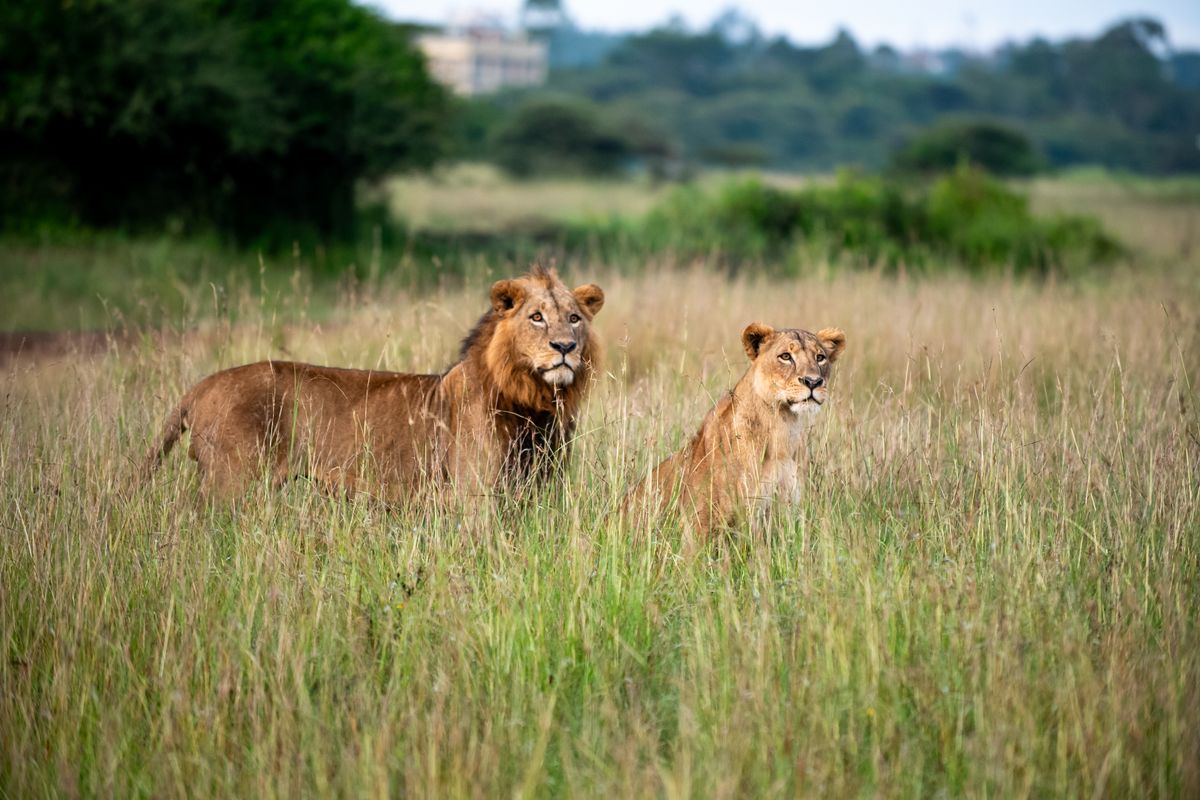
The study also found that lions used periods of low human activity, especially night-time, to extend their movements. Wet-season excursions beyond the park were more frequent and longer, increasing the risk of livestock conflict.
- Lions adjust activity according to human disturbance.
- They use cover and river corridors.
- They follow prey beyond the park when conditions change.
- They use darkness to reduce the likelihood of encountering people.
What that study does not say
It covered a defined period and a small sample of collared lions. It should not be treated as a current population census. Its value is in showing how space, time, prey and human disturbance interact.
Leopards
Leopards are adapted to a more secretive form of survival. Their spotted coats provide camouflage, while their flexible diets and use of dense cover allow them to persist where larger predators are also present.
In Nairobi National Park, riverine woodland, rocky gorges and thick bush provide shade, concealment and ambush opportunities. The Nairobi National Park leopard guide places leopard sightings within the park’s wider habitat structure.
Cheetahs
Cheetahs represent a different predator strategy. Their bodies are built for acceleration and high-speed pursuit, so open sightlines are valuable. Some woody cover is also useful for stalking prey.
Comparative evidence
In Kruger National Park, South Africa, Mills, Broomhall and du Toit studied radio-collared cheetahs and compared their habitat use across African savannahs. Their research, “Cheetah Acinonyx jubatus feeding ecology in the Kruger National Park and a comparison across African savanna habitats: is the cheetah only a successful hunter on open grassland plains?” found that woody vegetation can obstruct high-speed hunting, but that cover near open areas can help cheetahs stalk prey and reduce interference from competing predators.
Grassland management affects predators as well as grazers. If open habitat becomes too dense, cheetahs may lose hunting space. If it becomes completely open, some stalking opportunities disappear too.
Hyenas and scavengers
Spotted hyenas combine powerful jaws, endurance, social cooperation and a broad feeding strategy. They can hunt, scavenge and make use of carcasses that other predators cannot fully process.
Vultures and other scavengers search large areas efficiently from the air. Their role connects them to predator kills, drought mortality, disease regulation and nutrient recycling. The Nairobi National Park animals guide provides a broader overview of the park’s predators and scavengers.
Four predators, four different answers to the same landscape. Sighting notes and current status for each are on the animals and wildlife guide; the leopard has its own page at leopards in Nairobi National Park.
Birds
Bird adaptations across the park
Birds make the park’s habitat differences especially visible.
Open grassland
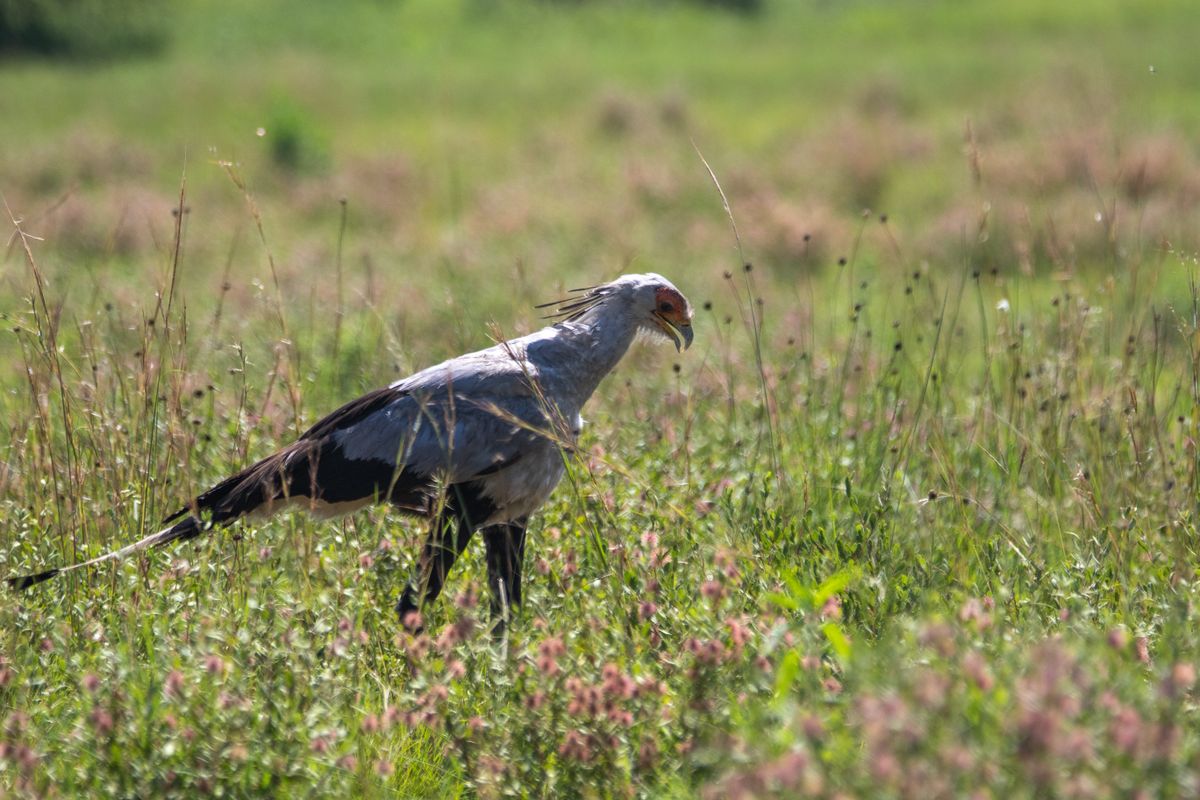
Larks, pipits, bustards, widowbirds, sandgrouse and secretarybirds. The adaptations here are for a habitat with almost no cover: ground camouflage in the nesting species, long-distance vision, fast running rather than flushing, and aerial display as the only reliable way to be seen above the sward. Feeding is mostly insects and seeds taken off the ground.
These are the species most exposed to how the grassland is managed — a burn, a grazing shift or woody encroachment changes their habitat within a single season.
Woodland and riverine
Flycatchers, hornbills, barbets, woodpeckers, robin-chats and sunbirds. Bills, feet and feeding behaviour here are adapted to structure rather than open ground: branches, bark, flowers, fruit, and the insects that live in all three.
The riverine strip along the Mbagathi concentrates this group into a narrow band, which is why the condition of the river corridor matters to far more than the hippos and crocodiles that make it famous.
Wetlands and dams
Herons, storks, ibises, stilts, ducks, geese and cormorants. Long legs, specialised bills and patient wading let these species feed in shallow water and mud that nothing else in the park can exploit.
Because the dams and seasonal pools shrink and refill with the rains, this is the group whose numbers swing hardest between seasons.
Three habitats, three sets of adaptations, one 117 km² park — which is how it holds 516 or more bird species. Where to find each group is in the birdwatching guide, and the park’s standing as an Important Bird Area explains why the mix is worth protecting.
Nairobi evidence
Ong’ondo and colleagues used Sentinel-2B satellite imagery and Kenya Bird Map records to examine grassland birds in Nairobi National Park. Their 2025 study, “Using geographic information systems and remote sensing technique to classify land cover types and predict grassland bird abundance and distribution in Nairobi National Park, Kenya,” found that grassland birds responded positively to grassland and shrubland while tending to avoid woodland and bare soil.
Protecting birds requires protecting habitat structure. A park with only open grassland would lose its woodland and wetland specialists; a park with excessive woody growth would lose many open-country species.
The Nairobi National Park birdwatching guide explains where these habitat groups meet, while the Important Bird Area guide places the park’s birdlife in a wider conservation context.
The species you drive past
Smaller mammals, reptiles, amphibians and insects
The larger animals are the most visible, but many of the park’s most effective adaptations belong to smaller species.
Small mammals avoid heat and predators by using burrows, rock crevices, dense grass and nocturnal activity. Rodents and shrews can exploit seeds, insects and underground food that larger animals cannot reach.
Reptiles often use behavioural thermoregulation rather than maintaining a constant body temperature internally. They bask when temperatures are low, retreat into shade or burrows during extreme heat, and use rocks, water edges and grass cover according to conditions. Crocodiles combine aquatic concealment with basking; tortoises and many snakes reduce water loss through shelter and activity timing.
Insects and termites exploit short periods of moisture and warmth. Their underground colonies, winged dispersal flights and decomposition activity help move nutrients through the savannah.
These smaller animals are not peripheral to the ecosystem. They pollinate plants, recycle nutrients, provide food for birds and reptiles, aerate soil and influence where larger animals feed.
The honest limit
Animals can change their behaviour. They cannot replace lost habitat.
A lion may become more nocturnal. A giraffe may use a smaller browse patch. A zebra may alter its route. A leopard may remain hidden during busy periods. None of these responses recreates a blocked corridor or restores a polluted wetland.
The KWS Nairobi National Park Management Plan 2020–2030 treats the park as a landscape whose ecological value depends on habitats, wildlife movement, water systems, large carnivores, rhinos and migratory species. The reader-friendly management plan page provides additional context.
Nairobi evidence
The lion research illustrates these limits. Nocturnal movement can reduce human contact, but it can also increase the risk of livestock conflict. A Nairobi-area study found that flashing LED lights around livestock enclosures reduced nocturnal lion attacks at lit bomas — although attacks shifted towards unlit bomas and, in some cases, into daytime. The findings are reported in “BioLite: A simple, inexpensive lighting system reduces livestock depredation by lions.”
This is why conservation needs both protected habitat and coexistence measures beyond the park boundary.
What it takes
Conserving adaptations means conserving the conditions that make them useful
Protect the habitat mosaic
Open grassland, acacia woodland, riverine forest, wetlands, dry forest and rocky areas support different survival strategies. Replacing one with another reduces the range of available adaptations.
Keep dispersal areas connected
Wildebeest, zebra, eland and other herbivores need seasonal forage outside the park. Protecting the Athi–Kapiti landscape and the southern dispersal routes is essential.
Manage fire as a mosaic
Fire should be timed and monitored according to fuel, rainfall, soil, wildlife use and recovery. Small unburned patches and varied burn ages matter as much as fresh regrowth.
Protect water and river corridors
The Mbagathi River, dams, wetlands and seasonal pools provide drinking water, cooling, feeding areas, breeding sites and movement routes.
Support coexistence
Better livestock husbandry, rapid reporting, predator monitoring, compensation, corridor protection and tested deterrents reduce conflict without removing carnivores’ ecological role.
Keep research tied to management
The strongest decisions combine long-term counts, GPS movement data, vegetation monitoring, fire records, bird surveys, rainfall data and community knowledge.
This is why conservation is central to NairobiPark.org’s work. A safari should not only identify an animal; it should help visitors understand what that animal needs in order to keep surviving. The Nairobi National Park conservation guide and the guide to threats facing the park explore those pressures in greater depth.
On the game drive
How to observe adaptations during a Nairobi safari
Each habitat makes a different adaptation legible. Knowing what to look for turns a sighting into an explanation.
| Where to look | What to observe | What it reveals |
|---|---|---|
| Open plains in the morning | Zebra, wildebeest, gazelles and raptors | Grazing niches, vigilance and visibility |
| Acacia woodland | Giraffe, black rhino, birds and possible leopard signs | Browsing height, cover and habitat complexity |
| Riverine areas | Hippos, crocodiles, birds and shaded wildlife | Water, cooling and river-corridor dependence |
| Dams and wetlands | Waterbirds, buffaloes and antelopes | Seasonal concentration around water |
| Recently green grassland | Grazers and ground birds | Rainfall, regrowth and food quality |
| Southern park edge | Moving herbivores and changing vegetation | Dispersal, migration and corridor conservation |
| Rocky viewpoints | Raptors, hyraxes and wide-ranging wildlife | Thermals, lookout points and refuge habitat |
Remain in the vehicle except at designated locations, follow KWS and ranger instructions, and treat Hippo Pool as a controlled nature experience rather than a free-roaming walk.
Choosing your drive
Half-day or full day, if adaptations are what you came for
Both formats see the same wildlife. They differ in which behaviours you are present for — and on this page, timing is the whole argument.
Half-day — the productive window
A morning drive puts you in the park for the hours when the most is happening: predators still active before the heat, grazers on open ground, raptors working the first thermals, and the light low enough to photograph in.
- Grazing niches on the open plains — zebra, wildebeest and gazelle on different lengths of grass.
- Vigilance behaviour, which is at its most visible while herds are out in the open.
- Browsing height in the acacia woodland — giraffe above, black rhino below.
What a morning cannot show you is the heat-avoidance half of the story: shade-seeking, submerged hippos and the midday shutdown all happen after you have left.
Choose it if your day is otherwise committed, you are visiting between other Nairobi plans, or this is a first look at the park. Half-day Nairobi National Park safari →
Full day — the contrast, which is the actual lesson
Adaptation to heat is only legible if you are there when it gets hot. A full day lets you watch the same species at 07:00 and again at 13:00, which is the difference between being told that time is part of the habitat and seeing it.
- The midday shift — animals moving into shade, activity dropping, hippos going under.
- Riverine and wetland habitats, which reward the patience a short drive cannot spare.
- The southern edge, where the dispersal and corridor problem is visible in the landscape itself.
- Time to stay with one sighting long enough for behaviour, not just identification.
Choose it if wildlife is the point of the day, or if you are birding or photographing. For readers of this page, this is the one we would recommend. Full-day Nairobi National Park safari →
A private vehicle buys interpretation time rather than extra animals — see private versus shared tours; group tours are the lower-cost way in. Every format, including layover and combo options, is compared on the Nairobi National Park tours and safaris hub. Seasonal timing is covered in the best time to visit.
Common questions
Questions about savannah adaptations
What is an animal adaptation?
An evolutionary adaptation is an inherited characteristic shaped over many generations, such as a giraffe’s feeding anatomy or a black rhino’s prehensile lip. A physiological adaptation is an internal process, such as concentrated urine or efficient digestion. A behavioural adaptation is an action or choice, such as hunting at night or moving between habitats when the rains fail.
What adaptations do savannah animals have?
Physical structure, digestion, water conservation, heat management, social behaviour, feeding choices, seasonal movement, and the ability to respond to fire, rainfall, predators and human activity. Most animals rely on several at once: a zebra’s hindgut fermentation is useless without the grass, and the grass depends on rain, grazing and fire.
How do animals in Nairobi National Park cope with the heat?
Mostly by avoiding it rather than confronting it. They rest in tree and riverine shade, reduce movement around midday, shift activity to dawn, dusk and night, and use water for cooling — hippos spend the hottest hours submerged and graze once temperatures drop. This is why the same animal appears to behave differently at 07:00 and at 13:00. Time is part of the habitat.
Why do zebra and wildebeest graze in the same places without competing?
They take different parts of the same resource. Zebra are hindgut fermenters able to process large volumes of taller, more fibrous grass; wildebeest are ruminants that generally select shorter, more nutritious growth. GPS work on overlapping grazers found the two using different feeding spaces and vegetation even where their home ranges coincided.
Do lions in Nairobi National Park behave differently because of the city?
They show behavioural flexibility — which is not the same as having evolved for city life. GPS collaring of 12 lions between 2014 and 2018 found them using periods of low human activity, especially night, to extend their movements, and making longer wet-season excursions beyond the park. That is an adjustment within a lifetime, and it only works while food, water, cover and routes remain available.
What happened to the wildebeest migration beside Nairobi National Park?
It collapsed. Research on the adjoining Athi–Kaputiei plains recorded a fall from almost 30,000 wildebeest in 1978 to around 5,000. The cause is not lost instinct but lost landscape: fencing, settlement, roads and land fragmentation increasingly obstruct movement between the park and Kitengela. Migration is an adaptation at the scale of the whole landscape.
Is fire good or bad for the savannah?
Both, depending on timing and intensity. Burned plots in Nairobi National Park produced the highest grass quality in the Gichohi study, and fresh regrowth draws grazers back. Poorly timed or too-intense burns damage soil cover, saplings and ground-nesting birds. The workable answer is a monitored mosaic — varied burn ages, small unburned patches, and decisions made against rainfall, fuel load and grazing pressure.
Where can I see these adaptations on a game drive?
Open plains in the early morning show grazing niches and vigilance; acacia woodland shows browsing height; riverine areas show the dependence on water and shade; the southern edge shows dispersal and the corridor problem. A half-day safari covers several habitats, and a full day allows for the patient watching that behaviour actually requires.
Final perspective
Savannah animals survive through relationships
Grass with rain, predators with prey, fire with herbivory, rivers with wildlife movement, and protected areas with the communities around them.
Nairobi National Park is valuable because those relationships remain visible beside one of Africa’s largest cities. Its animals are adapted to a changing savannah — but their future depends on whether the habitat processes behind those adaptations remain intact.
If you are deciding how to see it, the tours and safaris hub compares every format side by side. For what these adaptations are attached to — the animals themselves — start at the Nairobi National Park animals and wildlife guide.
References
Studies cited
Every source is linked in the text where it is used. They are collected here in the two tiers used throughout the page.
Nairobi evidence Studies carried out in this park and its dispersal area
- Muya & Oguge — Effects of browse availability and quality on black rhino diet in Nairobi National Park, Kenya (African Journal of Ecology).
- Owino et al. — Patterns of Variation of Herbivore Assemblages at Nairobi National Park, Kenya, 1990–2008.
- Imbahale, Githaiga, Chira & Mohammed — Resource utilization by large migratory herbivores of the Athi–Kapiti ecosystem.
- Ogutu et al. — Changing wildlife populations in Nairobi National Park and adjoining Athi-Kaputiei Plains: Collapse of the migratory wildebeest.
- Said et al. — Effects of extreme land fragmentation on wildlife and livestock population.
- Gichohi — The Effects of Fire and Grazing on Grasslands of Nairobi National Park (University of Nairobi).
- Lesilau et al. — Spatial ecology of lions in a small, semi-fenced park surrounded by dense human populations.
- Ong’ondo et al. — Using GIS and remote sensing to classify land cover types and predict grassland bird abundance and distribution in Nairobi National Park, Kenya.
- Lesilau et al. — BioLite: A simple, inexpensive lighting system reduces livestock depredation by lions.
- Kenya Wildlife Service — Nairobi National Park profile and the Management Plan 2020–2030.
Comparative Studies from other African savannahs
- Gorongosa, Mozambique — Mechanisms of dietary resource partitioning in large-herbivore assemblages: A plant-trait-based approach.
- Owen-Smith et al. — Spatially nested niche partitioning between syntopic grazers at foraging arena scale within overlapping home ranges.
- Cameron & du Toit — Winning by a Neck: Tall Giraffes Avoid Competing with Shorter Browsers.
- Abraham et al., Kruger — Drought-response strategies of savanna herbivores.
- Quantifying water requirements of African ungulates through a combination of functional traits.
- Wright — Thermoregulation in the Hippopotamus on Land.
- Sensenig, Demment & Laca, Mpala — Allometric scaling predicts preferences for burned patches in a guild of East African grazers.
- Karp et al. — Grazing herbivores reduce herbaceous biomass and fire activity across African savannas.
- Kenya Long-term Exclosure Experiment — Synergistic effects of long-term herbivory and previous fire on fine-scale heterogeneity of prescribed grassland burns.
- Wild herbivores and cattle have differing effects on postfire herbaceous vegetation recovery in an African savanna.
- Davies et al. — Environmental controls on African herbivore responses to landscapes of fear.
- Tambling et al., Addo — Spatial and temporal changes in group dynamics and range use enable anti-predator responses in African buffalo.
- Courbin et al., Hwange — Zebra diel migrations reduce encounter risk with lions at night.
- Mills, Broomhall & du Toit, Kruger — Cheetah Acinonyx jubatus feeding ecology in the Kruger National Park and a comparison across African savanna habitats.
Comparative studies describe biological processes observed elsewhere in Africa and are not evidence about individual animals in Nairobi National Park. Park figures follow the Kenya Wildlife Service profile. Photographs are credited individually and sourced via Pexels; each caption states where the photograph was taken. Page last reviewed 25 August 2026.