
Nairobi National Park has several named gates, but for most visitors the two that matter most are Main Gate and East Gate. The right gate depends on where you are coming from. If your journey starts from central Nairobi, Langata, Karen, Westlands, or nearby city-side areas, Main Gate is usually the more natural choice. If you are approaching from JKIA, Mombasa Road, or the eastern side of Nairobi, East Gate is often more practical. The purpose of this guide is to help you choose the right entrance, understand how the gates differ, and avoid common route-planning mistakes before your safari begins.
What this Nairobi National Park gates guide covers
This is a supporting access guide within the wider Nairobi National Park topic. Its job is to explain:
- which gates matter most for ordinary visitors
- how Main Gate and East Gate differ
- when Mbagathi Gate may also be relevant
- how gate choice affects route efficiency, safari timing, and entry planning
It does not try to replace a full guide on:
- Where is Nairobi National Park
- how to get to the park from every part of Nairobi
- entry fees and ticket purchase
- Park opening-hours details
- safari itineraries or tour products
That narrower scope keeps the page on one dominant intent: helping visitors choose the right entrance.
What are the gates of Nairobi National Park?
The gates of Nairobi National Park are the park’s access points, but for visitors they are really route decisions. Most people searching for Nairobi National Park gates are trying to answer four practical questions:
- Where is the gate
- Which gate should I use
- How do I get there
- What happens at entry
That is why this guide goes beyond just listing game names as we explain which gates matter most, who each one suits, and how they fit different approach routes across Nairobi.
Which Nairobi National Park gates matter most?
For most visitors, Main Gate and East Gate but Mbagathi is also functional as of April 2026:
- Main Gate is the main city-side entrance
- East Gate is the main airport-side entrance
- Mbagathi Gate can matter for some southern approaches
- Banda Gate and Cheetah Gate should usually be treated as supporting or reference gates, not the first answer for ordinary visitors
How many gates does Nairobi National Park have?
Nairobi National Park can appear to have up to 12 named gates or access points across maps, plans, and older references, but only 3 are normal public entry gates: Main Gate, East Gate, and Mbagathi Gate. The gates used mainly by KWS for operations or staff movement are Banda Gate, Langata Gate, and Maasai Gate.
Cheetah Gate is the notable closed gate, while names such as JKIA Emergency Gate, SGR Gate, Old East Gate, and Wilson Airport Emergency Gate still appear in some references even though they are not normal public gates and are either restricted, inactive, or only occasional-use access points. So the practical answer is: Nairobi National Park has many named gate references, but only 3 public gates, 3 main KWS service gates, 1 closed gate, and several historical or emergency access points that do not function as regular visitor entrances.
Main public-use gates
These are the entrances most visitors are most likely to use.
- Main Gate
- East Gate
- Mbagathi Gate

Secondary or situational gates
These matter when the route makes them relevant.
- Banda Gate used by KWS Senior Management – near the KWS Residences.
- Langata Gate
- Maasai Gate
- Cheetah Gate (Closed)
Historical, administrative, or lesser-used references
Below 4 gates are still appearing in maps but are not used either by public or by KWS staff:
- JKIA Emergency Gate
- SGR Gate
- Old East Gate
- Wilson Airport Emergency Gate
Nairobi National Park Main Gate
Main Gate is usually the most practical and straightforward Nairobi National Park entrance for city-side visitors. It sits along Langata Road near Nairobi Safari Walk and the Animal Orphanage, and it is the gate most visitors use for standard park entry. It also has the strongest visitor infrastructure, making it the clearest option for many self-drive and guided safari trips.
Where Main Gate is located
Nairobi National Park Main Gate is located off Langata Road on the northwestern, city-facing side of the park next to KWS Headquarters. It is the standard public entrance for most visitors and is usually the clearest gate to use if you are coming from central Nairobi, Langata, Karen, or the southwest side of the city.
Pin Location: https://maps.app.goo.gl/eNQhwoM171bABr4Y9

Who should use Main Gate
Main Gate is usually best for:
- visitors staying in central Nairobi
- Use Main Gate in most cases if you are coming from:
- Central Nairobi or CBD
- Westlands
- Langata
- Wilson Airport departures
- Most city-side hotels
- First-time visitors who want the clearest standard entrance
- Many Karen-side departures
- Travelers combining the park with nearby attractions on the Langata side
Main Gate is best for most Nairobi hotels and city stays, especially guests staying in CBD and Upper Hill, Westlands and Parklands, Kilimani and Hurlingham, Karen and Langata, Gigiri and the UN area. This usually includes hotels such as Sarova Panafric, Nairobi Serena Hotel, Radisson Blu Nairobi Upper Hill, Pullman Nairobi Upper Hill, Hyatt Place Nairobi Westlands, Hyatt House Nairobi Westlands, Villa Rosa Kempinski, JW Marriott Hotel Nairobi, Tribe Hotel, and Trademark Hotel.
Main Gate is usually not the strongest first choice when the journey clearly begins from JKIA, Mombasa Road, or the eastern side of Nairobi.
Why Main Gate is often the best choice
- It is the park’s most established public entrance
- It fits the city-facing side of Nairobi National Park
- It works well for many standard hotel pickups and safari departures
- It is usually the default gate for NairobiPark.org tours unless pickup is from the airport
Main Gate should be chosen because it fits your route, not because it sounds official. For many city-side departures, that route fit makes it the strongest choice.
Review of Nairobi National Park Main Gate
Pros of Main Gate
- Best gate for central Nairobi in many cases because it is the park’s main city-facing entrance on the Langata side.
- Most familiar and straightforward entrance for first-time visitors using the standard public access route.
- Best-developed visitor facilities compared with other gates, making entry more convenient for many travelers.
- Strong option for self-drive and guided safaris because it is the park’s most established public gate.
- Convenient for visitors staying in CBD, Westlands, Langata, and many Karen-side locations.
- Usually the default gate for many Nairobi hotel pickups and standard safari departures.
- Good for combining the park with nearby attractions such as Nairobi Safari Walk and the Animal Orphanage.
- Often easier to understand for first-time visitors because it is the most widely recognized entrance.
- Better fit for Wilson Airport departures in many cases than East Gate.
- Practical for visitors who want the clearest standard entrance rather than a more route-specific gate.
Cons of Main Gate
- Not usually the best gate for JKIA arrivals because it can require unnecessary cross-city driving.
- Less practical from Mombasa Road and eastern Nairobi than East Gate.
- Can be busier than quieter alternatives such as East Gate or, in some cases, Mbagathi Gate.
- May feel less exclusive or less calm at entry because it is the most heavily used public gate.
- Can lose time in city traffic before entry, especially if chosen for the wrong route.
- Not the strongest option for layover or airport-linked visits where route efficiency matters most.
- Easy to choose by habit rather than logic, even when another gate would fit the route better.
- Can tempt visitors to overpack the day because it sits near other attractions on the Langata side.
- Less useful for visitors coming from eastern or southeastern parts of Nairobi.
- Not always the fastest gate overall since speed depends on where the trip begins.
Bottom line
Main Gate is best for most city-side visitors, especially those coming from central Nairobi, Langata, Westlands, Wilson Airport, and many Karen-side routes. Its main strengths are familiarity, better facilities, and straightforward access. Its main weaknesses are heavier use and weaker suitability for airport-side or Mombasa Road starts, where East Gate is often the better choice.
Nairobi National Park East Gate
East Gate is the main airport-side entrance in Nairobi National Park visitor planning and is usually the most practical choice for travelers approaching from JKIA, Mombasa Road, or the eastern side of Nairobi. Its importance comes from how naturally it fits airport and eastern access patterns.
For many visitors, East Gate answers a very specific planning question: Which Nairobi National Park gate should I use if I am starting from the airport side rather than the Langata side?
Where East Gate Is Located
Nairobi National Park East Gate is located near Mombasa Road, along the adjoining road called National Park East Gate Road, on the park’s eastern side. It is the main access point for visitors entering Nairobi National Park from JKIA, Mombasa Road, and the southern or eastern sides of Nairobi. In practical terms, East Gate is the park’s main airport-side and eastern approach entrance, making it the most efficient choice for many airport-linked and eastern-side visits.

Pin Location: Location Pin
How to Reach East Gate from JKIA, Mombasa Road, and Nearby Areas
To reach Nairobi National Park East Gate from JKIA, Mombasa Road, or nearby areas such as Syokimau, follow Mombasa Road and then keep left onto National Park East Gate Road, which leads directly to the gate. This is usually the most efficient entrance for visitors approaching from Nairobi’s airport side, including JKIA, Syokimau, and the southern or eastern parts of the city, because it avoids the longer city-side approach to Main Gate.
Use East Gate in most cases if you are coming from:
- JKIA
- Mombasa Road
- Eastern Nairobi
- Airport-linked pickups
- Many short-stay or layover visits
When East Gate is the best Entry choice
- It fits airport-side access logic better than Main Gate
- It can shorten the approach from JKIA and Mombasa Road
- It is often more efficient for time-sensitive trips
- It gives quicker access to eastern sections of the park
East Gate is not better than Main Gate in general. It is better when the journey begins from the airport side.
Pros and Cons of Nairobi National Park East Gate
Pros of East Gate
- Best gate for JKIA access in many cases because it fits the airport-side approach better than Main Gate.
- More practical from Mombasa Road and eastern Nairobi since it reduces unnecessary routing across the city.
- Good for layover and short-stay safaris where pre-entry time matters a lot.
- Often quieter than Main Gate for visitors who prefer a less busy entrance experience.
- Useful for reaching the eastern and southeastern parts of the park faster, including quieter game-drive areas.
- Strong option for airport pickups and transfer-based visits because it matches the route naturally.
- Can shorten the approach to the park when your journey already begins on the eastern side.
- Better fit for time-sensitive visitors who want to avoid the longer city-facing approach.
Cons of East Gate
- Not usually the best gate for central Nairobi visitors, since it can create unnecessary cross-city driving.
- Less developed than Main Gate in terms of visitor-facing facilities.
- Can be confusing because of old and new East Gate references, especially for first-time self-drivers.
- Not automatically the best gate for every airport-related trip, since Wilson Airport visitors often still use Main Gate.
- Weaker option for most city-side hotel departures where Main Gate is more straightforward.
- Easy to choose for the wrong reason if a visitor assumes airport-side always means faster without checking the actual route.
- Public review coverage appears thinner than Main Gate, so visitor feedback is less abundant and less standardized.
- Less useful if your safari begins on the Langata, CBD, Westlands, or Karen city-facing side.
Bottom line
East Gate is best when your trip begins from JKIA, Mombasa Road, or the eastern side of Nairobi. Its main strengths are route efficiency, quieter entry, and suitability for short airport-linked visits. Its main weaknesses are more basic facilities, lower relevance for city-side visitors, and the risk of choosing it when Main Gate would actually fit the route better.
When East Gate Is Better Than Main Gate
East Gate is better than Main Gate when the visitor’s route begins from the airport side or eastern side of Nairobi. It is not automatically better overall, but it is often the stronger choice when route efficiency matters more than using the park’s conventional city-side entrance.
East Gate is usually better than Main Gate when:
- you are coming directly from JKIA
- you are already on the Mombasa Road side
- you want to reduce unnecessary crossing through Nairobi before entry
- you are planning a layover safari or short, tightly timed visit
- your starting point makes the eastern approach more natural than the Langata-side approach
Mbagathi Gate
Mbagathi Gate is the main secondary gate worth knowing if your route begins from the southwestern side of the park. It lies on the Magadi Road side and is especially relevant for visitors coming from Ongata Rongai, Magadi Road, and some parts of Karen, Langata, and Hardy. It was originally a KWS operational gate and later opened to the public, which is why it still feels more situational than Main Gate or East Gate.
- Name: The gate is most commonly referred to as Mbagathi Gate, but newer public-facing references sometimes also call it Cheetah Gate.
- Status: Mbagathi Gate is the former KWS Workshop Gate, which explains why it was not historically treated as a mainstream tourist entrance.
- Location: It is located on the Magadi Road side of Nairobi National Park and serves the park’s southwestern edge.
- Approach side: In visitor-planning terms, Mbagathi Gate is the park’s main southwestern access gate.
- Best for: It is especially relevant for visitors coming from Karen, Lang’ata, Ongata Rongai, Hardy, and the wider Magadi Road corridor.
- Historic role: Historically, Mbagathi Gate functioned as an operational KWS gate rather than a standard public entrance, which is why older references often treated it as restricted or non-public.
- Infrastructure link: It is still described in some references as the KWS Workshop Gate, which reflects its connection to KWS service infrastructure rather than mainstream tourism use.
- Public opening: KWS opened Mbagathi Gate to the public on 23 November 2021, which changed it from a mostly operational access point into a usable secondary visitor entrance.
- Restricted history: The strongest reason it was previously seen as private or restricted is that it served a workshop and service function linked to the KWS Central Workshop, not ordinary visitor access.
- Alternative naming: Some recent KWS-facing usage, map listings, and Google Maps references now call Mbagathi Gate Cheetah Gate, but that naming should be handled carefully.
- Naming caution: In formal KWS planning and older historical context, Mbagathi Gate and the old Cheetah Gate were treated as separate, so the names should not be treated as fully identical in older or technical discussion.
- Tourist use: It is still one of the least used gates by tourists, which is part of why it can feel quieter than Main Gate.
- Convenience: It can be especially convenient for visitors already staying on the southern side of the park, because it reduces the need to route around to the city-facing Main Gate.
- Karen access: From Karen, the gate is roughly 8 to 10 km away, with an estimated travel time of about 20 to 30 minutes depending on route and conditions.
- Rongai access: From Ongata Rongai, it is roughly 5 to 7 km away, which is one reason it is often the more practical gate for that side of Nairobi.
- Key advantage: One of its main strengths is lighter congestion compared with Main Gate.
- Entry experience: It is often described as a quieter entrance, which can appeal to visitors who want a less busy park start.
- Southern-side benefit: It offers easier access for people staying on the southern side of the park, especially those not wanting to approach through the Langata-side public entrance.
- Trip-combination benefit: It can work well for visitors planning a game drive after visiting Sheldrick Orphanage, depending on where the rest of the day’s route begins and ends.
- Wildlife positioning: It is sometimes recommended for visitors wanting to explore the less crowded southern areas of the park, which are often associated with a quieter game-drive experience.
- Cheetah association: Public references sometimes connect this gate with better access to southern zones associated with cheetah sightings, which is part of why the Cheetah Gate label persists.
- Facilities: Facilities at Mbagathi Gate are more limited than at Main Gate, so visitors should not expect the same level of developed public infrastructure.
- Road conditions: The approach on the Magadi Road side can be rougher, especially during the rainy season.
- Vehicle advice: Because of that southwestern approach context, a 4×4 can be the safer choice, especially in wet conditions.
- Tour-operator use: Safari vehicles coming from the city center rarely use Mbagathi Gate because it often requires driving around the park boundary rather than taking the more direct city-facing access.
- Visitor type: Mbagathi Gate is usually best treated as a secondary or situational gate, not the default answer for most first-time Nairobi National Park visitors.
- Planning summary: The clearest way to explain it is that Mbagathi Gate is Nairobi National Park’s southwestern secondary public-access gate on Magadi Road, opened to visitors in 2021, quieter than Main Gate in many cases, but more limited in facilities and best only when the route genuinely supports it.
When Mbagathi Gate may be useful
- Your trip starts from Ongata Rongai or the Magadi Road side
- You are on the southern side of the park
- You want a quieter and often less congested entrance
- You are comfortable using a less common gate than Main Gate
What visitors should know about Mbagathi Gate
- It is sometimes referred to in public references as Cheetah Gate
- Historically, Mbagathi Gate and the old Cheetah Gate were not treated as identical
- It is often quieter than Main Gate
- It can be convenient after visiting Sheldrick depending on your route
- It is less commonly used by city-center safari vehicles because it requires a wider approach around the park boundary
- The Magadi Road side may be rougher, especially in wet conditions, so route judgment matters more for self-drivers
Mbagathi Gate is a real option, but it is usually the third gate to consider, not the first.
Review of Nairobi National Park Mbagathi Gate
Pros of Mbagathi Gate
- Best secondary gate for some southwestern approaches such as Ongata Rongai, Magadi Road side, parts of Karen, Hardy, and southern Langata.
- Often quieter and less congested than Main Gate, which can make entry feel calmer and faster for the right route.
- Useful for visitors staying on the southern side of the park because it avoids some of the wider city-side approach.
- Can be more convenient than Main Gate for Ongata Rongai and Magadi Road visitors because it is better positioned for that side of the park.
- Good option for travelers who want a less busy entrance experience than the main city-facing gate.
- Can work well for some visitors after nearby southern-side activities, depending on the day’s route.
- Gives access to the park’s southern side, which some visitors prefer for a quieter game-drive start.
- Relevant for residents and repeat visitors who already know the southwestern side of Nairobi and want a more route-specific gate.
Cons of Mbagathi Gate
- Not the best default gate for most first-time visitors because it is more situational than Main Gate or East Gate.
- Less commonly used by tour vehicles from the city center, since it often requires driving around the park boundary.
- Facilities are more limited than at Main Gate, so it is less ideal for visitors who want the most established public entrance.
- Can be confusing because it is sometimes also referred to as Cheetah Gate, even though the two names are not historically identical.
- Road conditions on the Magadi Road side can be rougher, especially in rainy weather, which matters more for self-drivers.
- Less practical for central Nairobi, JKIA, and Mombasa Road departures than Main Gate or East Gate.
- Not the strongest choice for standard hotel pickups unless the hotel is already on the southwestern side.
- Can be harder to interpret on maps and in public references because of mixed naming and lower general familiarity.
- Not usually the most efficient choice for ordinary public entry unless your exact starting point makes it so.
- More route-dependent than the other main gates, so it should be chosen carefully rather than by name alone.
Bottom line
Mbagathi Gate is best for some southwestern Nairobi routes, especially from Ongata Rongai, Magadi Road side, and parts of Karen or Langata. Its main strengths are quieter entry, lighter congestion, and better fit for the park’s southern side. Its main weaknesses are more limited facilities, rougher approach context, and lower usefulness for most first-time, city-side, or airport-side visitors.
Nairobi National Park Gates Comparison Table
| Gate | Best for | Main approach side | Key strengths | Main drawbacks | Facilities and visitor experience | Best visitor types | When it is usually the best choice | When it is usually the wrong choice |
|---|---|---|---|---|---|---|---|---|
| Main Gate | Standard public entry for most city-side visits | Langata Road / northwestern city-facing side | Most familiar and straightforward entrance; best-developed visitor facilities; strongest fit for CBD, Westlands, Langata, Wilson Airport, and many Karen-side routes; good for standard hotel pickups; useful if combining the park with nearby attractions such as Safari Walk and the Animal Orphanage | Can be busier and less calm than quieter alternatives; not usually the best gate for JKIA or Mombasa Road starts; can lose time in city traffic if chosen for the wrong route | Strongest public-facing infrastructure and the clearest conventional visitor entrance | First-time visitors, self-drivers, standard guided safaris, city-side hotel guests, Wilson Airport visitors | When the trip begins from central Nairobi, Langata, Westlands, Wilson-side routes, or many Karen-side city-facing approaches | When the trip begins from JKIA, Mombasa Road, or clearly eastern airport-side routes |
| East Gate | Airport-side and eastern-side entry | Near Mombasa Road / eastern side via National Park East Gate Road | Best fit for JKIA, Mombasa Road, and eastern Nairobi; often more efficient for airport pickups, short visits, and layovers; can reduce unnecessary city-side traffic; usually quieter than Main Gate; gives faster access to eastern and southeastern park sections | Less developed than Main Gate; weaker choice for central Nairobi and many city-side hotels; can be confusing because of old and new East Gate references; not automatically best for Wilson Airport; easy to overchoose just because it sounds faster | More basic facilities than Main Gate, but often calmer for the right route | Airport arrivals, transfer-based visitors, layover travelers, eastern Nairobi visitors, time-sensitive trips | When the trip begins from JKIA, Mombasa Road, or the eastern side of Nairobi | When the trip begins from CBD, Langata, Westlands, or many city-facing departures |
| Mbagathi Gate | Secondary southwestern access | Magadi Road / southwestern edge of the park | Useful for Ongata Rongai, Magadi Road side, and some southern Karen or Langata routes; often quieter and less congested; can feel less crowded than Main Gate; good for some southern-side access patterns; practical for visitors already on the southwestern side | Not the best default gate for most first-time visitors; more limited facilities; less commonly used by city-center safari vehicles; route can be less convenient from most Nairobi hotels; mixed public naming because it is sometimes labeled Cheetah Gate; Magadi Road-side conditions can be rougher, especially in wet weather | More limited and more situational than Main Gate; best used when the route genuinely supports it | Southwestern-side residents, repeat visitors, self-drivers comfortable with route judgment, Ongata Rongai and Magadi Road visitors | When the trip begins from Ongata Rongai, Magadi Road side, or some southwestern Karen / Langata approaches | When the trip begins from central Nairobi, JKIA, Mombasa Road, or for most standard first-time visitor plans |
Quick decision summary
| If you are coming from | Gate to compare first |
|---|---|
| CBD / central Nairobi | Main Gate |
| Westlands | Main Gate |
| Langata | Main Gate |
| Wilson Airport | Main Gate |
| Karen | Main Gate in many cases, sometimes Mbagathi Gate depending on exact route |
| JKIA | East Gate |
| Mombasa Road | East Gate |
| Eastern Nairobi | East Gate |
| Ongata Rongai / Magadi Road side | Mbagathi Gate |
Bottom line
- Main Gate is the best all-round gate for most city-side visitors
- East Gate is the best all-round gate for most airport-side visitors
- Mbagathi Gate is the main secondary option for some southwestern routes
Which Gate Should You Use for Nairobi National Park?
The best gate depends mainly on where you are staying or being picked up from. For a half-day safari, the goal is simple: use the gate that reduces city transfer time and protects more of your game-drive window inside the park. In general, Main Gate is best for the city-facing side of Nairobi, while East Gate is usually best for JKIA and the airport corridor.
Main Gate is usually best for:
- CBD and Upper Hill
- Westlands and Parklands
- Kilimani and Hurlingham
- Karen and Langata
- Gigiri and the UN area
- Hotels such as Sarova Panafric, Nairobi Serena Hotel, Radisson Blu Nairobi Upper Hill, Pullman Nairobi Upper Hill, Hyatt Place Nairobi Westlands, Hyatt House Nairobi Westlands, Villa Rosa Kempinski, JW Marriott Hotel Nairobi, Tribe Hotel, and Trademark Hotel
Why: Main Gate sits on the Langata Road / city-facing side of the park and is generally the clearest choice for central, western, and southwestern Nairobi.
East Gate is usually best for:
- JKIA
- Mombasa Road / Airport South Road corridor
- Embakasi and the airport side of Nairobi
- Airport hotels such as Four Points by Sheraton Nairobi Airport, Crowne Plaza Nairobi Airport, and Argyle Grand Hotel Nairobi Airport
Why: East Gate is on the Mombasa Road / SGR side of the park and is usually the most efficient entry for airport pickups and the eastern side of Nairobi.
Mbagathi Gate can make sense for:
- Some pickups from the Magadi Road / Rongai-facing side
- Specific southern or southwestern routing needs where avoiding Langata Road makes operational sense
Why: Mbagathi Gate is a public-access gate on the Magadi Road side, but for most safari visitors staying in the main hotel zones of Nairobi, Main Gate or East Gate is usually the more practical choice.
Quick rule of thumb
- Staying in central, west, north, or southwest Nairobi? Use Main Gate
- Starting from JKIA, airport hotels, or the Mombasa Road side? Use East Gate
- Starting from the Magadi Road side? Mbagathi Gate may be worth considering
Other Nairobi National Park Gates and Lesser-Known Access Points
Nairobi National Park has other named gates and access references beyond Main Gate, Mbagathi Gate and East Gate, but most of them matter far less in routine visitor planning. We have included them because they appear in maps, older references, and route-specific situations. But we also keep them in proportion. A helpful guide should acknowledge them without allowing them to distract from the two entrances that matter most for ordinary visitors.
Banda Gate
- but it is not one of the main gates most ordinary visitors use first.
- Status in the 2005 plan: The Nairobi National Park Management Plan (2005) explicitly classifies Banda and Mbagathi as service gates, which is the clearest indication that Banda Gate historically served a support or operational function rather than mainstream tourist entry.
- Operational role: In practical terms, Banda Gate is best understood as a service and support gate within the wider park system, not as the default entrance for routine game drives.
- Planning continuity: The Nairobi National Park Management Plan 2020–2030 still includes Banda Gate in the park’s formal gate and communications system, which confirms it remains a real operational point in park planning.
- Development context: In the 2020–2030 plan, Banda Gate sits more naturally within the park’s administrative and development-support geography than within its main visitor-entry hierarchy.
- Staff and HQ linkage: The newer management plan links Banda Gate to the broader KWS headquarters and staff housing area, which reinforces its administrative significance inside the park system.
- Visitor meaning: For readers and trip planners, Banda Gate matters mainly because it shows that Nairobi National Park has a broader gate network than just Main Gate and East Gate, but it is not usually one of the first gates visitors need to compare.
- Practical takeaway: The clearest expert way to explain it is that Banda Gate is a real Nairobi National Park service gate with operational and administrative importance in KWS planning, but low relevance for ordinary visitor entry compared with Main Gate, East Gate, or even Mbagathi Gate.
Maasai Gate
Maasai Gate is a formally recognized gate with real access significance, especially in older and current KWS planning. The 2005 plan places it on the Langata Road–Magadi Road access side, and the 2020–2030 plan still includes it in the park’s active gate system. More importantly, the newer plan specifically highlights East Gate, Langata Gate, and Maasai Gate when discussing improved visitor comfort and customer-service facilities, which suggests Maasai Gate has more visitor-facing relevance than gates that are mainly operational. Still, for most ordinary readers, Maasai Gate is better understood as a recognized secondary access point rather than one of the first two gates to compare.
Langata Gate
Langata Gate appears in the 2005 plan as a formal access route from the city via Langata Road and Magadi Road, and the 2020–2030 plan also treats it as part of the park’s active gate network. Like Maasai Gate, it is singled out in the newer plan for improved visitor comfort and service infrastructure. For readers, the key thing to understand is that Langata Gate belongs to the park’s western and southwestern access, but in simple public-facing trip planning, many people mentally collapse Langata-side access into the broader idea of Main Gate. So Langata Gate matters in the formal gate system, but in basic visitor decision-making it is usually less prominent than Main Gate itself.
JKIA Emergency Gate
JKIA Emergency Gate is not clearly formalized as a named gate in the KWS management plans in the same way as East Gate, Langata Gate, or Maasai Gate. It is presented as an airport-side emergency or tightly timed access point near JKIA, mainly relevant for special or layover-style situations. The more reliable planning takeaway, however, is that the park’s clearly established public airport-side entrance remains East Gate. Readers should therefore treat JKIA Emergency Gate as a secondary or informal airport-side reference, not as the default airport gate for ordinary visits.
Wilson Airport Gate / Wilson Emergency Gate
The attached KWS Plan mentions a Wilson Airport Gate, but this name is not clearly formalized in the management plans in the same way as the main named gates. The stronger planning conclusion in the attached material is that Wilson-based visitors generally use Main Gate, even if a western-side access point exists in some operational or public-facing references. For readers, that means Wilson-side access should usually be treated as part of the Main Gate planning logic, unless a very specific operational route is being used.
SGR Gate and Old East Gate / New East Gate references
The management plans do not clearly formalize SGR Gate as a separate core gate name, but the KWS Plan links Old East Gate and New East Gate to the SGR side of the park. In practice, this means that what some readers call SGR Gate is usually better understood as part of the park’s East Gate / New East Gate airport-side access cluster, not as a separate major gate category. For ordinary visitors, the useful takeaway is simple: if your trip begins from JKIA, Mombasa Road, or the eastern side, you should usually think in terms of East Gate, even if map labels or local references mention SGR-side access.
Cheetah Gate:
- Identity: Cheetah Gate is as an older Nairobi National Park gate reference rather than one of the main entrances most visitors use today. In the 2005 management plan, it appears as a formal access route from Nairobi City Centre via Mombasa Road and Namanga Road, confirming that it once had a recognized place in the park’s gate system.
- Location: In visitor terms, the old Cheetah Gate is best placed toward the southern to southeastern tip of the park, within the airport-side and Namanga Road access logic rather than the Langata-side public entrance system.
- Closure: The old Cheetah Gate is described in your gate KWS Plan as having been closed in 2009, with pollution concerns cited as the reason it fell out of regular use. That is why it survives more as a historical gate name than as a standard current visitor entrance.
- Current planning relevance: The 2020–2030 Nairobi National Park Management Plan is significant here because it says KWS could re-open old Cheetah Gate or establish a new gate near Mlolongo to improve access for visitors coming from the Namanga Road side. That confirms the old gate still matters in formal planning, even if it is not a mainstream active visitor gate today.
- Visitor takeaway: Cheetah Gate was an older southern or southeastern access gate that later closed, is still remembered in public searches, and remains relevant mainly as a historical reference and possible future access concept rather than as one of the main gates ordinary visitors should use first.
Nairobi National Park Gates Map: Where Each Entrance Sits
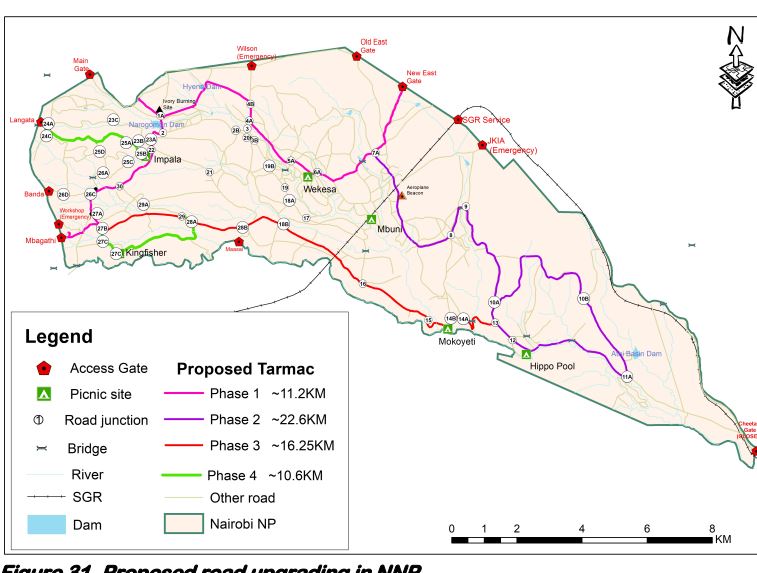
A Nairobi National Park gates map is most useful when it helps you understand how each entrance relates to Nairobi’s road structure, airport side, and approach corridors, not when it simply shows isolated pins. At NairobiPark.org, we treat gate mapping as a planning tool. The real value of a gate map is that it helps visitors choose the entrance that matches their starting point and avoid unnecessary cross-city driving before the safari even begins.
For most visitors, the map question is really one of orientation:
- Which gate is on the city-facing side
- Which gate is on the airport-facing side
- Which entrance fits my hotel, airport, or road corridor best
- Which map result is likely to send me to the wrong side of the park if I do not check carefully
Best Gate for a Morning Safari
For a morning safari, the best gate is usually the one that minimizes pre-entry driving complexity from your starting point. Early departures reward route efficiency, so the strongest gate is usually the one that gets you into the park with the least unnecessary repositioning.
In practice:
- choose Main Gate for many city-side and Langata-side morning departures
- choose East Gate for many JKIA, Mombasa Road, and airport-side morning departures
- leave extra time for traffic and route uncertainty
- avoid choosing a gate just because of name familiarity
For morning game drives, gate choice matters because time lost before entry is time lost during the best wildlife hours.
Best Gate for an Afternoon Safari
For an afternoon safari, the same route logic still applies. The best gate is usually the one that fits your daytime location and reduces unnecessary city movement before arrival.
In practice:
- Main Gate often works best for city-side afternoon departures
- East Gate often works best for airport-side and eastern-side afternoon departures
- afternoon traffic patterns can make wrong-gate choices more costly
- route fit matters more than which gate sounds most official
An afternoon safari should start with the right side of the park, not with an avoidable detour.
Best Gate for a Layover Safari
For a layover safari, East Gate is often the strongest first comparison point because layover trips usually begin from the airport side and depend heavily on efficient entry and exit planning.
East Gate is often best for layover travelers because:
- it fits airport-side entry logic
- it helps reduce unnecessary city crossover
- it suits tighter schedules better than a default city-side assumption
- it aligns more naturally with the short-stay structure of many layover visits
That said, the core principle remains the same: choose the gate that best matches the route you are actually taking. For most layover visitors, that route logic usually points first toward East Gate.
Main Gate vs East Gate: What Is the Real Difference?
The real difference between Main Gate and East Gate is not status, but approach logic. Main Gate is usually the stronger choice when your journey begins from central Nairobi, Langata, Karen, or the broader city-facing side of the park. East Gate is usually the stronger choice when your journey begins from JKIA, Mombasa Road, or the broader airport-facing and eastern side of Nairobi. At NairobiPark.org, this is the distinction we consider most useful for visitors, because it turns the gate question into a practical route decision instead of a vague comparison between names.
For most travelers, the comparison becomes much clearer when broken down by attribute.
Location Difference
Main Gate and East Gate sit in different relational positions within the wider Nairobi approach system. Main Gate is the more city-facing entrance and is tied more closely to Langata-side and central-Nairobi routing logic. East Gate is the more eastern and airport-facing entrance and is more relevant to visitors coming from JKIA, Mombasa Road, and some eastern-side corridors.
That means the location difference is best understood like this:
- Main Gate fits the city-side and southwestern access pattern
- East Gate fits the airport-side and eastern access pattern
- the better gate is usually the one that matches your starting side of Nairobi
- a gate’s value comes from how it fits your route, not from its name alone
Airport Access Difference
The airport access difference is one of the clearest contrasts between the two gates. If your safari begins from JKIA, East Gate is usually the gate to compare first because it aligns more naturally with the airport-side approach. Main Gate can still matter in some cases, but it is not usually the strongest first assumption for airport-origin travel.
In practical terms:
- East Gate is usually better for JKIA arrivals
- East Gate is often more efficient for layover and transfer-based planning
- Main Gate is usually less natural when the journey clearly begins on the airport side
- airport access decisions should be made by route efficiency, not by familiarity with the word main
For many airport travelers, this is the single most important gate comparison on the page.
Central Nairobi Access Difference
For central Nairobi access, the comparison usually reverses. Main Gate becomes the more natural option because it aligns better with the park’s city-facing public-entry logic. East Gate is not automatically wrong, but it is often less intuitive for CBD and many city-side departures.
For central Nairobi visitors:
- Main Gate is usually the stronger first comparison
- Main Gate fits the conventional city-side route pattern
- East Gate often requires a weaker directional logic unless the route specifically supports it
- CBD and many city-side hotel departures usually resolve more naturally through Main Gate
This is why the main comparison should always begin with where the trip starts, not with which gate name seems more important.
Traffic and Travel-Time Difference
Traffic and travel time are not fixed gate attributes in the abstract. They change depending on where you start, what time you leave, and how much cross-city movement your gate choice requires. The most important travel-time principle is therefore simple: the wrong gate can create unnecessary repositioning before entry.
That usually means:
- Main Gate saves time when your journey is already on the city-facing side
- East Gate saves time when your journey is already on the airport-facing side
- the farther your route must swing across Nairobi before entry, the weaker the gate choice usually becomes
- timing matters even more for morning safaris, afternoon traffic windows, and layover trips
In other words, the faster gate is usually the one that reduces avoidable repositioning, not the one with the more prominent name.
Convenience Difference by Visitor Type
Convenience changes by visitor type. First-time city-based visitors often find Main Gate more intuitive because it matches the standard public-entry idea of the park. Airport and layover travelers often find East Gate more convenient because it reduces route complexity from the airport side.
A useful convenience breakdown looks like this:
- Main Gate is often more convenient for central Nairobi, Langata, Karen, and many city hotels
- East Gate is often more convenient for JKIA arrivals, Mombasa Road travelers, and layover visitors
- Main Gate often feels more familiar for traditional city-based safari starts
- East Gate often feels more efficient for transfer-based or time-sensitive trips
- convenience should be judged by real route fit, not by which gate sounds easier in theory
This is why different visitors can reach different correct answers and still both be right.
Which One Is Easier for First-Time Visitors
For first-time visitors, the easier gate is usually the one that matches the route they are already taking. That said, many first-time travelers staying in central Nairobi or near the Langata side will often find Main Gate easier simply because it aligns with the standard city-facing entry pattern. First-time travelers coming directly from JKIA or building a shorter airport-linked visit may find East Gate easier for the same reason.
The clearest way to think about it is this:
- Main Gate is often easier for first-time city-side visitors
- East Gate is often easier for first-time airport-side visitors
- neither gate is universally easier
- the simplest gate is usually the one that best matches your starting point and trip structure
That is the real difference between Main Gate and East Gate. One is not globally better than the other. Each is better when it fits the right approach side.
How to Get to Nairobi National Park Gates
Directions to Main Gate
Main Gate is usually approached most naturally from central Nairobi, Langata, Karen, and other city-facing or southwestern parts of the city. If your journey begins on that side, Main Gate is often the best entrance to target first.
The most useful way to describe directions to Main Gate is through route logic:
- start with the assumption that Main Gate is the correct entrance for city-side departures
- treat it as the default comparison point for CBD, Langata, and many southwestern routes
- avoid shifting to East Gate unless your actual route clearly supports that choice
- use Main Gate when you want the more conventional city-facing public entry
Main Gate directions matter most when the visitor is already approaching from the side of Nairobi that naturally feeds into the park’s standard entrance.
Directions to East Gate
East Gate is usually approached most naturally from JKIA, Mombasa Road, and the eastern side of Nairobi. If your journey begins from the airport side, East Gate is often the gate that fits your route more directly.
The most useful way to describe directions to East Gate is also through route logic:
- treat East Gate as the first comparison point for airport-side travel
- use it when your journey begins on the Mombasa Road corridor
- compare it first for layover, transfer-based, and short-stay park visits
- avoid forcing an eastern-side trip into Main Gate unless there is a clear reason
East Gate directions matter most when the route already places the visitor on the side of Nairobi where East Gate makes entry more efficient.
How to Reach the Park Gates from Nairobi Hotels
From Nairobi hotels, the right gate depends on which side of the city the hotel is on. This is why hotel-based visitors should not search for a gate in isolation. They should first identify whether their hotel sits more naturally within the city-facing or airport-facing approach pattern.
A practical hotel-based approach looks like this:
- use Main Gate for many hotels in central Nairobi, Langata, Karen, and nearby city-side zones
- compare East Gate more carefully if the hotel or route sits closer to the airport side or Mombasa Road side
- avoid choosing a gate only because it appears first in a map result
- match the gate to the hotel’s real position within Nairobi’s route structure
For many hotel-based safari departures, choosing the right side of the park is more important than memorizing a gate name.
How to Reach the Park Gates from JKIA
From JKIA, East Gate is usually the strongest gate to compare first because it fits the airport-side approach more naturally than Main Gate. This is one of the clearest route-intent answers in the entire Nairobi National Park gates topic.
A practical JKIA approach should usually do the following:
- start by evaluating East Gate
- choose East Gate when minimizing cross-city movement is the priority
- use Main Gate only if a specific routing reason clearly makes it stronger
- treat the airport-side approach as a distinct planning situation, not as a standard city-side departure
For most airport-origin trips, the route naturally points toward East Gate.
How to Reach the Park Gates from Wilson Airport
Wilson Airport requires a more careful comparison. Although it is an airport, it does not automatically create the same gate logic as JKIA. In many cases, the correct gate from Wilson still depends on whether the trip resolves through the city-facing side or the eastern side.
A practical Wilson Airport approach should:
- compare Main Gate first when the route aligns with the city-facing side
- compare East Gate when the approach pattern clearly shifts eastward
- avoid assuming that every airport-linked journey automatically belongs to East Gate
- treat Wilson as a route-based decision, not just an airport category
This is why Wilson-based gate planning requires more judgment than a simple airport equals East Gate rule.
How to Plan Your Gate Route Using Google Maps Without Confusion
Google Maps can help, but only after you decide which side of the park actually matches your journey. Many visitors make mistakes because they search for a gate label before deciding whether they need the city-facing entrance or the airport-facing entrance.
Use Google Maps more effectively by following these principles:
- decide first whether your journey is city-side or airport-side
- compare Main Gate for city-side trips and East Gate for airport-side trips
- verify that the gate you choose is a main public-use entrance, not just a lesser-known named reference
- do not assume the closest-looking pin is automatically the best gate
- use the map to confirm the route you already selected, not to replace the gate-choice decision itself
That is the most reliable way to get to Nairobi National Park gates without confusion. The map should support your gate decision, not make it for you blindly.
Nairobi National Park Gate Opening Hours and Entry Timing
Nairobi National Park gate opening hours matter because gate choice is not only about location. It is also about when you can enter, how early you need to leave, and how much timing risk your route creates before the safari starts. At NairobiPark.org, we treat gate timing as a supporting part of access planning rather than as a separate topic. This page should help visitors understand the timing logic around the gates, while a dedicated opening-hours or ticketing page can carry the full operational detail.
The key point is simple: even if you choose the correct gate, poor timing can still weaken the plan. A gate that fits your route but is approached too late, too tightly, or with too little buffer can still create unnecessary stress before entry.
What Time Nairobi National Park Gates Open
Visitors searching this question are usually trying to solve a practical safari-planning problem rather than just confirm a fact. They want to know how early they can begin a morning game drive and whether they can rely on the gate for an early start.
The most helpful way to handle opening time in this gates guide is to explain:
- gate opening time affects when a morning safari can realistically begin
- early departures work best when the gate choice already matches the route
- visitors should always verify current hours before travel
- gate opening matters more when the safari depends on catching the park at its best early window
This section should remain concise. It should help visitors understand why opening time matters, while pointing them toward the appropriate dedicated operations page or official confirmation channel for the latest exact hours.
What Time Nairobi National Park Gates Close
Closing time matters because safari timing is not only about getting into the park. It is also about managing exit expectations and avoiding assumptions that the gate can solve a late or poorly timed arrival. Visitors often search this question because they want to know how late they can safely plan an entry or how long an afternoon outing can run.
A helpful explanation here should cover:
- gate closing time affects late arrivals and end-of-day planning
- afternoon visitors should avoid assuming that a delayed start still leaves the same flexibility
- wrong-gate choices can make closing-time pressure worse by adding unnecessary pre-entry travel
- visitors should verify the latest live timing before travel if the visit is time-sensitive
For most readers, the key idea is that closing time is part of access planning, not just a footnote.
Why Gate Hours Matter for Early Morning Safaris
Gate hours matter most for early morning safaris because the best wildlife-viewing window is often strongest at the start of the day. If a visitor wants a true early game drive, they need more than the correct departure time. They also need the correct gate and enough route buffer to reach it cleanly.
That means:
- Main Gate often suits city-side early departures best
- East Gate often suits airport-side early departures best
- a poor gate choice can reduce the value of an early safari even before entry
- timing discipline matters most when wildlife-viewing priorities are strongest
Morning safaris reward clean route logic. The more direct the approach to the right gate, the more effectively the day begins.
Why Entry Timing Matters Even if You Already Have a Ticket
Some visitors assume that once they have their ticket sorted, gate timing becomes less important. In reality, ticket readiness does not remove the need for route discipline, arrival buffer, and correct gate choice. A visitor can still lose time by choosing the wrong side of the park, arriving too tightly, or underestimating pre-entry travel conditions.
This is why entry timing still matters:
- a ticket does not eliminate route inefficiency
- a ticket does not solve wrong-gate planning
- a ticket does not remove the need for arrival buffer
- a ticketed visitor can still arrive late enough to weaken a morning or afternoon safari plan
The correct gate and the correct timing work together. One does not replace the other.
Last-Entry and Late-Arrival Considerations
Late-arrival risk is highest when visitors treat the gate as a final destination rather than as part of the broader journey. If your route to the gate is longer, more uncertain, or more exposed to city movement than expected, your margin narrows quickly.
A practical gates guide should help visitors think about late-arrival risk in this way:
- the later you leave, the more important it becomes to have chosen the right gate
- airport transfers and short-stay visits need more timing discipline, not less
- city-side visitors should still leave a buffer even when using Main Gate
- airport-side visitors should still leave a buffer even when using East Gate
- the strongest plan is one that reduces timing risk before you are forced to think about last-entry pressure
For most potential visitors, the safest rule is simple: choose the gate that best fits your route, then still leave extra time.
What Happens at the Gate? Nairobi National Park Entry Process Explained
For most visitors, the gate is where route planning turns into actual park access. It is the point where your trip shifts from Nairobi travel to protected-area entry. At NairobiPark.org, we think this section is important because many gate-related searches are really entry-process questions in disguise. People search for gates not only to find the entrance, but also to understand what they need before arriving, what will be checked, and how to avoid delays at entry.
This section should stay focused on gate access intent. It should explain the entry process clearly, but it should not expand into a full pricing or ticket-policy article.
What Visitors Need Before Reaching the Gate
The most helpful way to prepare for Nairobi National Park entry is to arrive with the right gate decision already made and with your access requirements ready. Many avoidable delays begin before the visitor reaches the checkpoint itself.
Visitors should normally have the following sorted before arrival:
- the correct gate for their actual starting point
- their entry payment or ticket setup
- enough time buffer to absorb ordinary pre-entry delays
- a clear understanding of whether their route is better suited to Main Gate or East Gate
- any practical trip details needed for their party, driver, or booking format
The main point is that the gate works best when preparation happens before the car stops at the entrance.
How Ticket Verification Works at Entry
Visitors searching this topic are usually asking a simple question: what happens once I get to the gate and already have my ticket or payment confirmation sorted? The helpful answer is that the gate functions as the point where park access is checked and validated before the visit begins.
A concise explanation should make clear that:
- the gate is where your park access is verified
- entry readiness still matters even if payment was handled earlier
- arrival confusion often comes from planning gaps, not from the concept of verification itself
- the process works more smoothly when the visitor has already chosen the correct gate and correct timing
This is enough for a gates guide. The page should clarify the role of the gate in the process without turning into a technical ticketing manual.
What Gate Staff Usually Check
From a visitor perspective, gate staff are generally checking whether the arriving party is properly ready for entry. That includes whether access arrangements have been completed and whether the arrival process is moving through the correct entrance.
A useful explanation here should emphasize that staff are not the problem to solve. The real issue is usually whether the visitor has prepared properly. In practical terms, that means staff involvement usually relates to:
- confirming the visitor’s entry readiness
- checking the practical basis for access
- ensuring the party is using the entry process correctly
- managing access flow through the gate
What matters most for visitors is not memorizing an internal checklist, but understanding that preparation before arrival is what makes gate interaction smoother.
Can You Buy Tickets at the Gate or Should You Prepare Before Arrival
This is one of the most common gate-related search questions because many visitors treat the gate as the place where everything happens. In practice, the more helpful mindset is to treat the gate as the place where prepared entry is processed, not as the place where planning begins.
The clearest guidance for a visitor-facing gates page is:
- prepare before arrival whenever possible
- do not assume the gate is the best place to solve last-minute ticketing questions
- treat gate arrival as the final step in access, not the first
- if your visit is time-sensitive, avoid building the plan around uncertainty at the gate
That framing helps the page support access intent without taking over the full role of a separate ticketing guide.
What Visitors Mean When They Search for Gate Pass or Gate QR Code
Searches about gate passes or QR codes are usually not asking about special gate products. They are asking how entry proof connects to the actual gate experience. In other words, visitors want to know what kind of access confirmation matters when they arrive.
A practical explanation should show that these searches are really about:
- how entry readiness is presented at the gate
- whether visitors need proof of access before arrival
- how ticketing and gate entry connect
- what kind of confusion can happen when a visitor reaches the gate without fully prepared access documentation
This lets the guide answer the search intent without overstating complexity.
Common Entry Mistakes That Cause Delays
Most gate-entry problems are not caused by the physical gate itself. They come from avoidable planning mistakes before arrival. This is why a gates guide should include a short section on entry errors. It helps visitors solve the real problem, not just find the entrance name.
Common mistakes include:
- choosing the wrong gate for the route
- arriving without the right access setup
- assuming a ticket removes the need for timing discipline
- reaching the gate too late for a comfortably planned entry
- relying on the gate to fix problems that should have been solved before departure
For most potential visitors, the best way to avoid delays is simple: choose the correct gate early, prepare before arrival, and leave more buffer than you think you need.
The Best Gate for Different Visitor Types
The best Nairobi National Park gate depends less on the gate name and more on who the visitor is, where the trip begins, and what kind of safari structure they are working with. At NairobiPark.org, we recommend translating gate choice into visitor type because that is often how real decisions are made. A first-time tourist, an airport transfer guest, a self-driver, and a short-stay traveler may all need different answers, even when they are all visiting the same park.
This section helps turn the gate question into a clearer decision framework.
Best Gate for First-Time Visitors
For first-time visitors, the best gate is usually the one that matches the route they are already taking and minimizes unnecessary complexity before entry. Many first-time travelers staying in central Nairobi, Langata, or nearby city-side areas will usually find Main Gate easier to understand and more intuitive to use. First-time visitors arriving from JKIA or planning a short airport-linked visit will often find East Gate easier for the same reason.
For first-time visitors:
- choose Main Gate if your trip begins from the city-facing side
- choose East Gate if your trip begins from the airport-facing side
- avoid choosing a gate only because the name sounds familiar
- focus on the entrance that gives you the cleanest route, not the most recognizable label
The easiest gate for a first-time visitor is usually the one that best matches the starting point.
Best Gate for Self-Drivers
Self-drivers need a gate decision that reduces route confusion and keeps the entry process straightforward. For this visitor type, the strongest gate is usually the one that aligns most naturally with the road corridor already being used. That means self-drivers should usually avoid overcomplicating the decision with minor or lesser-known gate references unless their route clearly calls for one.
For self-drivers:
- use Main Gate for many CBD, Langata, Karen, and broader city-side departures
- use East Gate for many JKIA, Mombasa Road, and eastern-side departures
- avoid relying on a lesser-known gate unless your route specifically supports it
- use map tools only after deciding which side of the park you actually need
For self-drive visitors, clarity is usually more valuable than gate experimentation.
Best Gate for Guided Safari Pickups
For guided safari pickups, the best gate is usually the one that fits the pickup route and reduces unnecessary repositioning before the game drive begins. In many cases, visitors joining a guided safari may not need to decide the gate independently, but the logic still matters because it affects how smooth the departure feels.
For guided safari pickups:
- Main Gate usually fits better for many city-side hotel pickups
- East Gate often fits better for airport transfers and eastern-side pickups
- the guide or operator should still be working from the same logic: choose the gate that fits the route
- the strongest safari start is one where gate selection supports the overall pickup structure
Even when the operator makes the final call, the best answer still comes back to approach side.
Best Gate for Airport Arrivals
For airport arrivals, East Gate is usually the strongest first comparison because it aligns with the airport-facing side of the park and can reduce unnecessary cross-city movement before entry. This is especially true for visitors arriving through JKIA, where route efficiency often matters more than using the park’s conventional city-side entrance.
For airport arrivals:
- compare East Gate first
- use East Gate when minimizing pre-entry travel is the priority
- avoid defaulting to Main Gate unless the actual route clearly supports it
- treat airport arrivals as a distinct planning context, not as a normal city-based departure
For most airport-linked visitors, East Gate is often the most practical answer.
Best Gate for Short-Stay and Layover Travelers
Short-stay and layover travelers usually benefit most from a gate choice that minimizes wasted movement before entry. Because these trips often begin from the airport side or depend on tighter scheduling, East Gate is often the strongest first option.
For short-stay and layover travelers:
- East Gate is often the best starting comparison
- route efficiency matters more because the schedule is tighter
- airport-side logic usually matters more than city-side familiarity
- the right gate can preserve meaningful safari time that would otherwise be lost before entry
For many layover-style trips, the best gate is simply the one that protects limited time.
Best Gate for Visitors Staying on the Langata Side
For visitors staying on the Langata side, Main Gate is usually the clearest and most practical answer. This is one of the simplest gate decisions in Nairobi National Park planning because the Langata-side approach aligns directly with the park’s main city-facing entrance logic.
For Langata-side visitors:
- compare Main Gate first
- treat it as the default planning answer unless a special route factor changes the picture
- avoid unnecessary eastern-side detours
- use the gate that matches the side of the park you are already closest to in practical route terms
For most Langata-side stays, Main Gate is the strongest choice.
Best Gate for Visitors Staying Near CBD or Westlands
Visitors staying near CBD or Westlands will usually find that Main Gate is the stronger first comparison because these departures often resolve more naturally through the city-facing side of the park. Westlands is not identical to CBD, but in broad visitor-planning terms it often still belongs to the wider city-side route pattern where Main Gate makes more sense than East Gate.
For CBD or Westlands visitors:
- compare Main Gate first
- use Main Gate when the route remains clearly city-side
- shift away from it only when a specific routing reason makes another entrance stronger
- avoid assuming the airport-side gate is automatically faster just because it sounds more direct
For many city-based travelers, Main Gate remains the most practical answer.
Common Problems Visitors Have With Nairobi National Park Gates
Most Nairobi National Park gate problems are not really about the gate itself. They are about route confusion, timing mistakes, or entry preparation gaps before the vehicle even arrives. At NairobiPark.org, we include this section because many visitors search for gate information only after something already feels unclear. A good guide should therefore help prevent the common errors that make access feel harder than it needs to be.
The aim here is not to overcomplicate the visitor experience. It is to show where gate-related confusion usually begins and how to avoid it.
Choosing the Wrong Gate on the Map
One of the most common mistakes is choosing a gate based on the first map pin that appears rather than on the route that actually makes sense. A named gate on the map is not automatically the best entrance for your journey.
This mistake usually happens when visitors:
- search for a gate before deciding whether they need the city-facing or airport-facing entrance
- assume the nearest-looking pin is the best route choice
- select a lesser-known named gate without understanding its practical relevance
- treat the map as the decision-maker instead of using it to confirm a route already chosen
The strongest fix is simple: decide which side of the park matches your trip first, then use the map.
Underestimating Nairobi Traffic Before Entry
Another common problem is assuming that getting to the gate will be quick just because the park is close to Nairobi. In reality, the route to the correct gate still needs buffer time, especially for early departures, afternoon outings, airport-linked visits, and any trip where timing matters.
Traffic becomes a gate problem when visitors:
- leave too late for a morning safari
- build an airport-linked visit around tight assumptions
- choose a gate that adds unnecessary cross-city movement
- forget that pre-entry driving affects the safari experience itself
The practical answer is not just to leave early. It is to choose the right gate and still leave buffer time.
Reaching the Gate Without the Right Ticket Setup
Some visitors treat the gate as the place where all entry issues can be solved. That usually creates unnecessary friction. The more reliable approach is to arrive with your access arrangements already in order and treat the gate as the final entry checkpoint, not the place where planning begins.
This problem usually appears when visitors:
- arrive assuming the gate will sort out access decisions
- delay ticket or payment preparation until the last moment
- reach the entrance without confirming what they need
- underestimate how much smoother entry becomes when preparation is completed in advance
The gate works best when it processes a prepared arrival, not an unfinished plan.
Confusing Main Gate with Other Named Entrances
Because Nairobi National Park has more than two named gates, some visitors assume all of them are equally important for routine tourism access. That creates confusion, especially when minor or historically visible gate names appear in searches.
This confusion usually looks like:
- assuming every named gate deserves equal attention
- treating Banda, Cheetah, or other named references as though they are the first answer for ordinary entry
- failing to distinguish between main public-use gates and secondary or reference gates
- losing sight of the fact that most real decisions still come down to Main Gate versus East Gate
A clear guide should mention the wider system without losing practical focus.
Assuming the Closest Gate on a Map Is Always the Best One
The closest gate on a map is not always the best gate in real travel terms. The stronger gate is usually the one that fits the full route more naturally, not just the one that appears nearest in straight-line or visual terms.
This mistake is common when visitors:
- look only at map distance and not at approach corridor
- ignore traffic pattern, route structure, and starting side of Nairobi
- mistake a closer-looking gate for a more efficient gate
- prioritize visual closeness over practical access logic
The best gate is usually the one that produces the cleanest journey, not the shortest-looking line.
Arriving Too Late for the Planned Safari Window
Late arrival often begins with a gate mistake made earlier in the planning process. A visitor may choose the wrong entrance, underestimate how long the approach will take, or leave too little margin before the safari starts. By the time they realize the problem, the wildlife-viewing window may already be weakened.
This usually happens when visitors:
- choose the wrong gate for the route
- assume a ticket solves all timing issues
- build the visit on an overly tight departure plan
- do not leave margin for ordinary delays before entry
The simplest protection is to choose the gate that best fits your route and then still allow extra time.

