Best Photo Spots for
Skyline & Wildlife
at Nairobi National Park
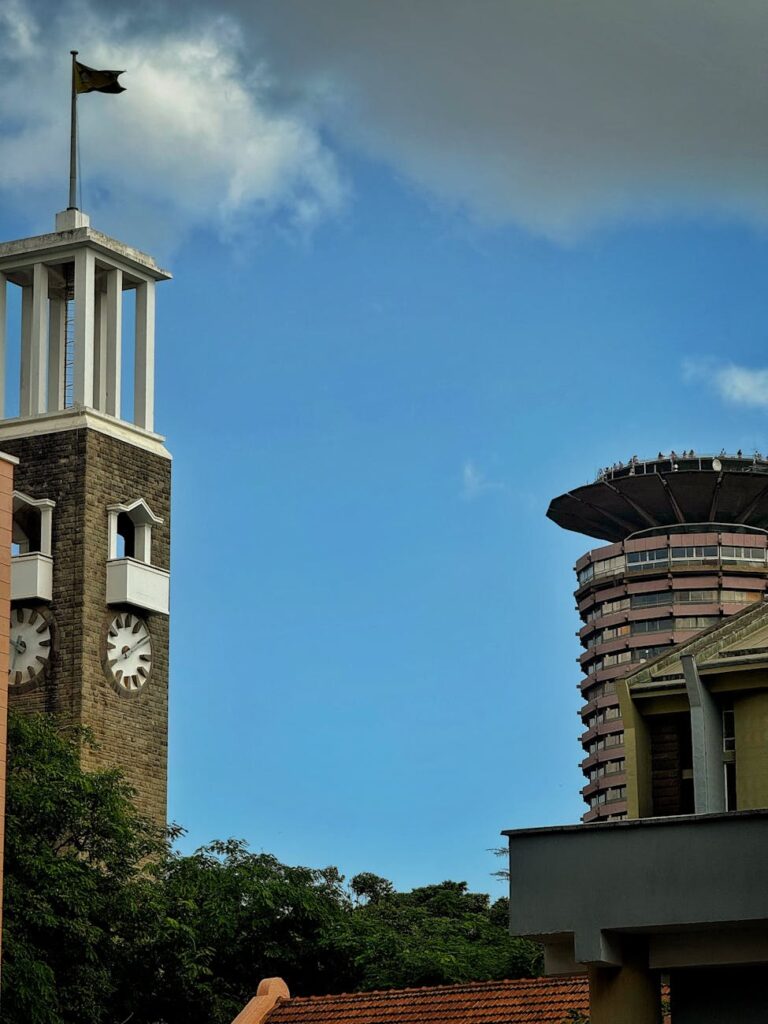
The only national park on Earth where lions roam in front of a capital city skyline. Your complete field guide to nailing the impossible shot — where African savannah meets Nairobi’s skyscrapers, in one frame.
Nairobi National Park is the world’s only national park situated inside a major capital city. Spanning 117 square kilometres just 7 kilometres south of Nairobi’s CBD, it is the only place on the planet where you can photograph lions, black rhinos, leopards, giraffes and over 500 bird species with modern skyscrapers rising on the horizon behind them. That juxtaposition — raw wilderness and glass towers in a single frame — produces images found nowhere else in the world. This guide covers every location, time window, season, gear choice and composition technique you need to make the most of it.
Prime locations
The 7 best photo spots in Nairobi National Park
Ranked and field-tested — from the iconic skyline shots to hidden gem locations most visitors never reach.
Central Plains — the Nairobi Signature Shot
This is it. The open savannah stretching from the Main Gate toward the Athi Basin is where giraffes, zebras and ostriches roam with Nairobi’s corporate towers rising clearly on the northern horizon. No other location delivers the definitive wildlife-meets-city frame as consistently and reliably. Giraffes especially — at 5–6 metres tall — are tall enough to appear at the same visual height as distant buildings when compressed with a telephoto lens, creating a surreal visual harmony that shocks viewers unfamiliar with the park.
Drive 3–5 metres left or right to swap scrub for open sky in the background. Your vehicle’s exact position determines whether you get a record shot or a publishable one. The skyline is not a distraction — it’s the entire story.
Ivory Burning Site
An elevated open field ringed by scattered acacias, with a panoramic view of both the park and the Nairobi city skyline. The site — where President Moi famously burned 12 tonnes of ivory in 1989 — adds conservation narrative depth to every image. Warthogs, zebras and giraffes wander through the area, giving excellent opportunities for wide environmental shots. At sunset, the golden glow warms the entire landscape uniformly.
Frame the ivory monument with wildlife in the foreground for a powerful conservation storytelling image. Silhouettes of giraffes at dusk against the skyline work brilliantly here.
Kingfisher Picnic Site
An elevated, shaded position near the woodland edge — the best single location in the park for birding photography. The African fish eagle, pied kingfisher, and over 40 other species frequent this zone. The elevated position also makes it ideal for sweeping dusk panoramics with city glow on the distant horizon.
Use 1/2000s+ shutter for birds in flight. At dusk, drop to 24mm and shoot a long panoramic with city lights beginning to glow on the horizon.
Athi Dam — Silhouette Perfection
Water meets wildlife meets light. Animals gather to drink and graze at the Athi Dam as the sun drops — the dam surface acts as a mirror that doubles the sky’s fire-orange reflection below the horizon. One of the park’s best locations for dramatic silhouette photography. Buffalo, eland and giraffe frequent the banks from late afternoon.
Expose for the bright sky — let animals fall into pure silhouette. ISO 100–200, f/8, 1/500s. Watch your shutter — light drops fast after 17:30.
Impala Observation Point
A hilltop viewing platform delivering the best aerial panorama of both the open parkland and the Nairobi CBD skyline simultaneously. The elevated angle changes the relationship between foreground savannah and background city — ideal for wide environmental landscape shots. Also the best spot for smartphone photographers who lack a telephoto lens.
No long lens needed here. City and savannah both fit in one unobstructed frame. Perfect for social media landscape shots and phone panoramas.
Hyena Dam & Mbagathi River
Prime hippo, crocodile and waterbird territory. Reflections on the water surface add a compositional layer unavailable on the open plains. Pelicans and cormorants concentrate here, along with occasional lion sightings at dusk. The Mbagathi River marks the southern park boundary and attracts concentrated wildlife, especially during dry season.
Pelicans and cormorants launch from the water — use burst mode at 1/2000s+ for wing extension shots. Water surface reflections give double-image compositions at dawn.
Leopard Cliff & Gorge
Rocky outcrops along the Mbagathi River Gorge where leopards rest in trees and hunt along the banks. Dramatic geological texture gives compositional depth unavailable on the open plains. The gorge scenery itself — cliff face, river, and woodland — produces striking landscape images independent of wildlife presence. Arrive before 7 AM for the best chance of a leopard sighting.
Leopards in trees + dappled morning light = compressed telephoto magic. Check rocky outcrops and the canopy of sausage and acacia trees along the gorge edge.
Light windows
Best time of day for wildlife photography
The difference between a great shot and a missed one is almost always when you arrive. Nairobi NP’s proximity to the equator means light changes fast and the quality gap between golden hour and midday is extreme.
Soft directional light, long shadows, mist over grass. Peak predator movement — lions returning from hunts, giraffes catching rim light. The light colour at this hour adds warmth and depth that midday obliterates.
Harsh overhead contrast, heat haze distortion and bleached-out skies. Wildlife retreats to shade. If stuck here, target waterhole reflections and close-up botanical details rather than skyline or long-range wildlife shots.
Warm backlight, dust particles glow amber, dramatic cloud textures. The Nairobi signature shot window — low sun + skyline + animal silhouette. Expose for the bright sky; let subjects fall dark. Light drops precipitously after 17:30.
City lights begin glowing while the sky retains deep blue tone — the rarest window for a true city-wildlife night shot with artificial and ambient light in balance. Requires a tripod (beanbag) and park exit timing awareness.
Seasonal guide
When to visit for the best photos — month by month
Nairobi’s bimodal rainfall pattern creates four distinct seasons, each producing different photographic opportunities.
Best overall for photography. Clear skies, thinned vegetation, and wildlife concentrated at water. Skyline visibility at its peak. Cool mornings (especially July–August) — pack a fleece for the 6 AM start.
Best overallExcellent light and calm air. Wildebeest calving in the Athi ecosystem draws predators — exceptional for action photography near the park edge. January delivers Kenya’s clearest skies.
Highly recommendedFresh green landscapes and dramatic storm clouds behind the skyline create moody, unusual images. Wildlife disperses slightly — harder to find but stunning when encountered. Migratory birds arrive in large numbers.
Good for dramatic skiesDense vegetation, muddy tracks and overcast skies make photography challenging. April and May are the wettest months. Some roads may become inaccessible for non-4WD vehicles. Still possible but lowest visitor numbers.
Challenging conditionsPhotographic subjects
Wildlife species & sighting likelihood
Nairobi NP is home to the Big Four (no elephants in the park — visit the Sheldrick Elephant Orphanage nearby). Sighting odds vary significantly by season and time of day.
Camera settings & compositions
Shot-by-shot photography playbook
Specific techniques, compositions and settings for Nairobi NP’s most coveted images.
Position vehicle so animals sit mid-frame with towers rising clearly on the northern horizon. Tall subjects (giraffe, ostrich) work best — they match the visual height of distant buildings when compressed by a telephoto lens. Use 200mm+ to collapse the distance between animal and city. The key insight: shifting the vehicle 3–5 metres completely changes what appears in the background. Work the position first, wait for the animal second.
Face west at Athi Dam or Hyena Dam 30–45 minutes before sunset. Meter exclusively off the bright sky — let animals become pure black shapes. The dam surface mirrors the orange sky below, giving you sky above and below the silhouette. Buffalo, eland and giraffe drinking at the waterline are the strongest subjects for this frame.
Lock continuous AF on the African fish eagle perched near Kingfisher site or Hyena Dam. Pre-focus on its perch and watch body language — it will call before it dives. When it launches, burst mode at 12fps+. The water surface below it gives a clean graphic background. Critical: shutter speed must be 1/2000s minimum to freeze wing extension without blur.
Patience beats chasing — wait at known lion territory on the central plains or near Leopard Gorge and let them come to you. Get as low as possible; shoot from the open vehicle window with a beanbag. Eye level with a lion at ground level is infinitely more powerful than shooting down from a high vehicle. Pre-focus on the area they’re moving toward. Never rev the engine or honk to get attention — calm animals yield more natural, publishable frames.
Use a wide lens (24–35mm). Shoot a 3-frame horizontal stitch at dawn before heat haze builds — overlap each frame 30%. City towers appear on the right third of the final composition; open savannah stretches left. For single-frame: put the city towers at the rule-of-thirds right and keep the horizon slightly below centre. Works equally well with a smartphone’s panorama mode.
Head to the Athi Basin area in the early morning dry-season months. Black rhinos are browsers — look for them near dense bush and acacia woodland edges rather than open grassland. A guide is strongly recommended for rhino photography. Use a 400mm+ lens and stay well back (minimum 30 metres). The goal is environmental context — rhino with the park’s landscape, not just a tight head shot.
Equipment
Camera gear for Nairobi National Park
Good preparation matters more than expensive gear at NNP — but the right lens choice makes an enormous difference to your results.
100–400mm or 200–500mm zoom. The most-used focal range in the park. Reaches rhinos and lions at safe, legal distances. If renting, this is the priority item.
24–70mm or 24–105mm. For skyline compositions, Impala Point panoramics, landscape context shots and wide environmental frames. Never leave this behind.
500–600mm (prime or zoom). Essential for kingfishers, raptors and storks. Teleconverter useful in good light — expect slight AF speed reduction.
Beanbag on vehicle window frame — faster, quieter and more stable than a tripod inside a moving vehicle. A must-have. Window clamp is an alternative. Tripods are impractical in safari vehicles.
At Impala Observation Point and the central plains, modern smartphones (iPhone 15+, Pixel 8+) with 5x optical zoom produce publishable skyline shots. Computationally stitched panoramas work excellently here.
Polariser reduces water glare for Hyena Dam reflections. ND grad balances bright sky vs dark savannah at sunset. Both are small, lightweight additions with disproportionate impact.
Note on drones: Drones are not permitted in Nairobi National Park without explicit prior authorisation from Kenya Wildlife Service (KWS). Unauthorised drone use results in equipment confiscation and fines. Even with permits, approvals are rarely granted due to wildlife disturbance risks. Do not attempt to fly a drone without written KWS permission.
Ethics & park rules
Ethical wildlife photography — rules & responsibilities
Wildlife welfare must always outrank the shot. These rules are both KWS legal requirements and moral obligations.
Planning your visit
Practical visitor information
Everything you need to know before you arrive at the gate.
Park hours & entry
Opening hours: Daily 06:00–18:00
Main gate: Langata Road (Main Gate)
Also accessible via: East Gate, South Gate
Entry fees: Check current KWS rates at kws.go.ke as fees are updated periodically. Residents, citizens, and non-residents are charged different rates.
Getting there
From Nairobi CBD: ~20 min via Langata Road
From JKIA: ~15 min to main gate
From Wilson Airport: ~10 min
Self-drive: Possible with 4WD recommended in wet season
Guided tours: Half-day from ~$45 USD, full-day from ~$60 USD
Photography-specific tips
Photo safaris: Book specialist photography vehicles with camera mounts through licensed operators
Best months for photos: June–October (dry season)
Reserve in advance: Telephoto-equipped vehicles are limited and in high demand during peak season
Nearby attractions
Sheldrick Elephant Orphanage: Adjacent to Main Gate — elephants not in the park but here
Nairobi Safari Walk: Walking trail with wildlife viewing (tripods allowed)
Giraffe Centre (Langata): Close-up giraffe photography, 5 min drive
Karen Blixen Museum: 10 min from main gate
What to bring
Clothing: Neutral/khaki tones (avoid bright colours near wildlife). Fleece or jacket for 6 AM starts (especially July–August). Sunscreen and a hat for midday breaks.
Other: Binoculars, extra memory cards, charged batteries, insect repellent for dusk sessions.
Connectivity & facilities
Mobile signal: Generally good in main gate area; patchy in the southern Athi Basin
Picnic facilities: Available at Ivory Burning Site, Kingfisher, Mokoiyet and Hippo Pools — all have tables and basic restroom facilities
Fuel/shops: None inside the park — fill up and buy supplies in Langata before entry
Ready to capture the skyline shot?
Book a specialist photography safari with a guide who knows every animal trail and light angle. Dedicated photo vehicles with camera mounts available for serious photographers.
Frequently asked questions
Your questions answered
The most common questions photographers and visitors ask before visiting Nairobi National Park.
The best time for photography is the dry season from June to October, when clear skies, thinned vegetation and wildlife concentrated near water sources combine for optimal conditions. January and February (the cool dry period) are also excellent, with Kenya’s clearest skies of the year and wildebeest calving activity drawing predators.
Within any day, the golden hours are what matter most: 06:00–09:00 (dawn) and 16:00–18:30 (dusk). Midday (10:00–15:00) produces harsh contrast, heat haze and poor wildlife activity — plan your drive times around these windows regardless of what season you visit.
Yes — this is the defining characteristic of Nairobi National Park and what makes it genuinely unique in the world. The central plains between the main gate and the Athi Basin deliver the best wildlife-skyline frames consistently. Giraffes, zebras and ostriches are the most common subjects, with Nairobi’s office towers visible on the northern horizon.
The key technique is using a 200mm+ telephoto lens to compress the spatial distance between the animal and the distant city, making them appear at the same visual plane. Positioning your vehicle correctly (often just a few metres left or right) determines whether the city appears clearly behind the subject or is obscured by bush.
A telephoto lens in the 100–400mm or 200–500mm range is the most important piece of gear — it covers most wildlife photography needs and reaches animals at safe, legal distances. A secondary wide-angle (24–70mm or 24–105mm) is essential for skyline compositions and landscape shots at Impala Observation Point.
For birds, a 500–600mm lens significantly improves results. Inside the vehicle, replace your tripod with a beanbag on the window frame — it’s faster, quieter and more stable. Modern smartphones perform well at elevated viewpoints like Impala Observation Point where a long telephoto isn’t needed. Remember: good preparation and timing matter far more than expensive equipment.
No — drones are prohibited in Nairobi National Park without explicit prior written authorisation from Kenya Wildlife Service (KWS). Even with formal applications, approvals are rarely granted due to wildlife disturbance concerns. Unauthorized drone operation results in equipment confiscation, fines and possible legal action. Do not fly a drone without confirmed KWS written permission.
Nairobi National Park is home to lions, black rhinos (at the Kifaru Ark sanctuary), leopards, buffalo, giraffes, zebras, wildebeest, cheetahs, warthogs, eland, impala, gazelle, ostrich, baboons, hyenas and over 500 bird species including the African fish eagle, martial eagle and secretary bird.
Important note on elephants: Elephants are not resident in Nairobi National Park. They can be seen at the David Sheldrick Wildlife Trust Elephant Orphanage, which is located adjacent to the Main Gate and is open to visitors each morning.
Yes, self-drive is permitted. A 4WD vehicle is recommended, especially from March through May when tracks can become muddy. The park roads are generally well-maintained during the dry season and navigable in a standard sedan on main routes.
For dedicated photography, a guided tour is strongly recommended over self-drive. An experienced guide knows where specific animals were seen that morning, can position the vehicle optimally for light angles, and understands animal behaviour well enough to anticipate movement — all of which translate directly into better photographs.
Exceptionally good. Nairobi National Park is recognised as an Important Bird Area (IBA) with over 500 recorded species across multiple distinct habitats — open grassland, acacia woodland, seasonal wetlands and riverine forest. The Athi Basin, Hyena Dam, Kingfisher Picnic Site and Langata Forest edge are the top birding photography locations.
The African fish eagle, martial eagle, secretary bird, saddle-billed stork, ostrich, crowned crane, and numerous raptors are regularly photographed here. For migratory species (European bee-eaters, steppe eagles, warblers), November through December and January through February produce the highest diversity.
Arrive at the Main Gate as close to 06:00 opening time as possible. The first 90 minutes in the park (06:00–07:30) are the single most productive photography window of the entire day. Predators are still active from overnight hunts, the air is cool and still, the light is warm and directional, and there are far fewer other vehicles. Being at the gate when it opens is the single most impactful planning decision you can make.
The Ivory Burning Site is a historically significant landmark within Nairobi National Park where President Daniel arap Moi burned 12 tonnes of confiscated ivory in 1989 as a powerful statement against elephant poaching — an act that helped galvanise international support for the ivory trade ban. A second, much larger burning of 105 tonnes took place in 2016.
For photographers, the site sits on an open elevated field with panoramic views of both the park and the Nairobi skyline — one of the best sunset photography locations in the park. Warthogs, zebras and giraffes regularly move through the area, and the monument itself provides a visually striking element for conservation-narrative compositions.
Yes — Nairobi National Park is one of Kenya’s key sanctuaries for the critically endangered black rhino, protected within the Kifaru Ark area of the park. Sightings require effort and are not guaranteed on every visit, but are relatively common during the dry season when animals concentrate near water. The Athi Basin area offers the best chances in early morning.
Maintaining the legal 30-metre minimum distance is strictly enforced for rhino photography. A guide who knows the current rhino range will dramatically improve your chances of a sighting. White rhinos (introduced) are also present in the park alongside black rhinos.
The Main Gate on Langata Road is approximately 7 kilometres from Nairobi’s CBD — around 20 minutes by car in normal traffic. From Jomo Kenyatta International Airport (JKIA), it’s approximately 15 minutes. From Wilson Airport, it’s just 10 minutes. This extraordinary proximity to the city centre is precisely what creates the unique wildlife-skyline photography opportunity the park is famous for.
Absolutely. A half-day from 06:00 to 12:00 (capturing both the full dawn golden hour and the active morning wildlife window) produces excellent results. The park’s compact size means you’re shooting quickly without long drives between locations. Giraffe-skyline shots, lion sightings and bird photography are all achievable within a 4–5 hour morning drive.
A half-day afternoon drive from 15:30 to 18:00 is equally valid for golden-hour sunset compositions at Athi Dam and the Ivory Burning Site. The most productive option if time allows is to split your visit: dawn entry for wildlife + full morning, leave at midday, then return for dusk (16:00–18:00) for the second golden-hour window.
Nairobi National Park offers something genuinely found nowhere else on Earth: the chance to photograph lions, rhinos, giraffes and over 500 bird species with a modern capital city’s skyline as the backdrop. Whether you arrive with a professional telephoto setup or a smartphone, arriving at the gate at 06:00, staying patient, and working the light will produce images that tell a story the world needs to see — that wilderness and city can, and must, coexist.
Plan your photography safari
Our specialist guides know where every animal in the park was seen this morning. Book a dedicated photography safari and arrive at golden hour with a vehicle positioned for the shot.